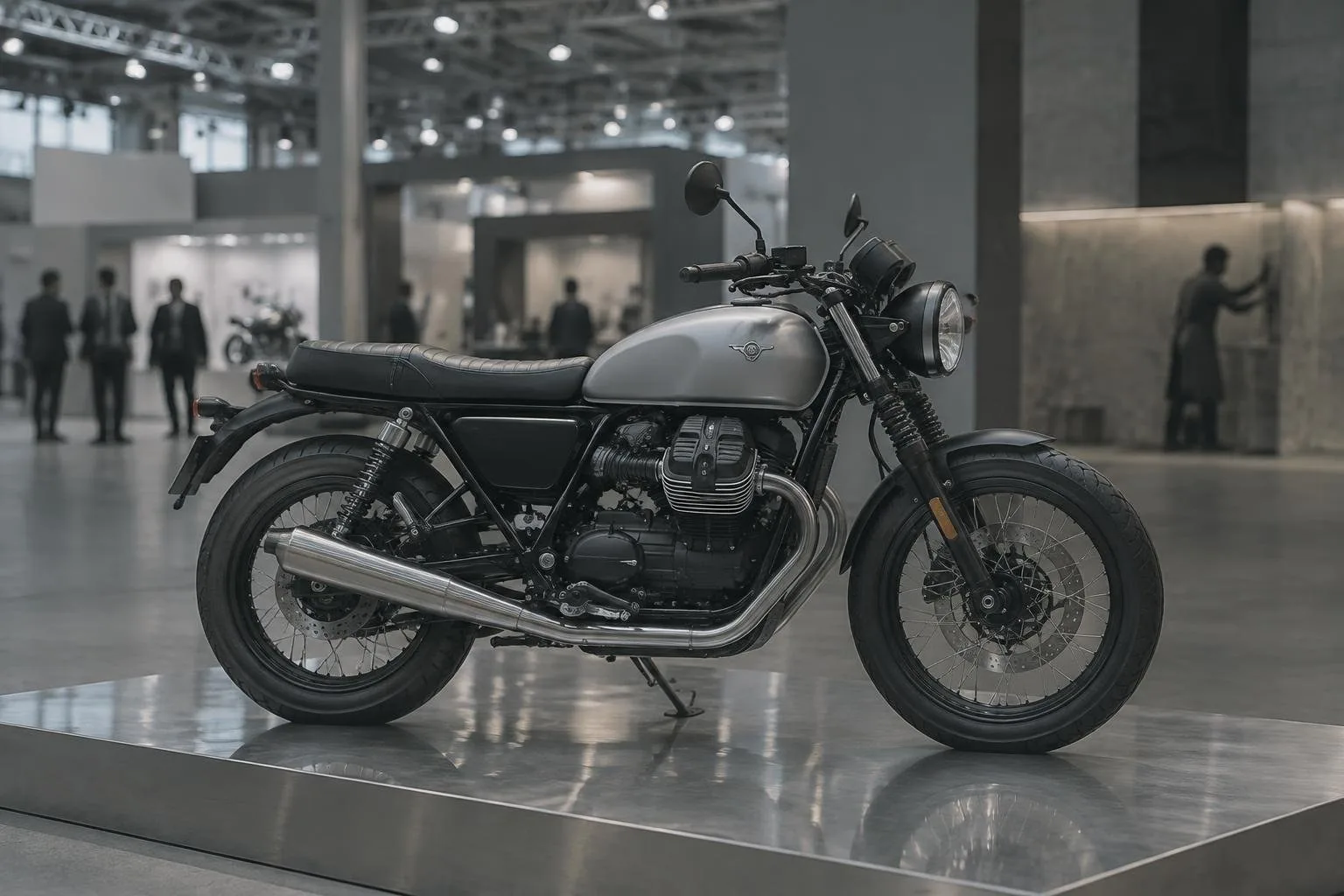
The Italian marque Moto Guzzi stepped onto the EICMA 2026 floor with a sleek preview of its upcoming 2027 model, officially named The Trip 500. Positioning itself as the most approachable machine in the lineup, the bike targets commuters, weekend riders and motorcyclists who feel oversized by the brand’s traditional V-twin offerings. At a dry weight of just 397 lb (running order) and a seat height around 31 in, the roadster aims to lower the barrier of entry without sacrificing the distinctive Guzzi character. Early teasers hinted at a sub-500cc powerplant, a minimalist trellis frame and a suite of electronic aids – all of which were confirmed when the full specification was unveiled at the show.
Engine architecture and performance figures
The heart of The Trip 500 is a liquid-cooled 457 cc parallel-twin borrowed from the Aprilia RS 457 and Tuono 457 line. The engine employs a 270° crankshaft, a layout that mimics the feel of a V-twin while keeping mass and complexity low. It produces a claimed 47.6 hp at 9,400 rpm and 32 lb-ft of torque at 6,500 rpm, with 82 % of peak torque already available at 3,000 rpm, delivering a smooth, linear power curve suited to urban riding. An assist-and-slipper clutch paired with a six-speed gearbox and chain final drive completes the drivetrain, ensuring crisp shifts and a low-maintenance rear end.
Chassis, suspension and braking technology
To keep the overall mass down, Moto Guzzi equipped the bike with a compact tubular steel trellis frame, a departure from the aluminum twin-spar used on its Aprilia siblings. The front suspension features a 41 mm upside-down fork with preload adjustment, while the rear is handled by a laterally-mounted single shock that also offers preload tuning. Both components are tuned for a blend of comfort and precise control, making the roadster amiable for both city traffic and twisty backroads. Stopping power comes from a 320 mm front disc with a radial-mount four-piston ByBre caliper and a 220 mm rear disc with a floating twin-piston caliper, complemented by a dual-channel ABS system as standard.
Electronics, ergonomics and styling cues
Modern rider aids are integrated throughout the package. A circular 3.6-inch TFT display provides clear readouts, while Bluetooth connectivity enables smartphone pairing, navigation prompts and firmware updates. Riders can select from three modes – Road, Sport and Rain – each adjusting engine mapping and traction-control thresholds. Optional extras include a quickshifter for clutch-less upshifts and a compact navigation icon set. Ergonomically, the bike offers a neutral riding stance, a 31.1-inch seat height (with low and tall options at 31.1 in and 32.3 in) and a fuel tank of 3.96 gal, granting a respectable range for daily commutes. Aesthetic details such as the flared fuel tank, the refreshed “eagle” headlight and LED lighting clusters preserve Guzzi’s heritage while signaling a contemporary look.
Target market, production and launch timeline
Moto Guzzi frames The Trip 500 as an invitation to riders who previously shied away from the brand because of weight, price or the traditional transverse V-twin layout. By offering a lighter chassis, a more modest displacement and a competitive price point – estimates hover around €6,000 – the company hopes to attract beginners, shorter statured riders and seniors seeking a manageable yet characterful motorcycle. Production will take place in one of Piaggio’s Asian facilities, most likely the Baramati plant in India, which already assembles the Aprilia 457 series. North American dealers are slated to receive stock in early 2027, with four colour schemes – Black Metropolis, Green Grove, Red Beat and a special-edition “The Opening” – planned for launch.