The Fédération Internationale de l’Automobile (FIA) is using the build-up to the 2026 FIA Karting world championship as a platform to honor seven decades of karting. With the event set for the historic La Conca circuit in southern Italy, the governing body also introduced its Global Karting Plan, a programme designed to make the sport more affordable and globally reachable.
Beyond the excitement of the upcoming races, the celebration highlights how a modest experiment in a Californian garage evolved into a cornerstone of modern motor sport.
From a lawn-mower engine to a worldwide discipline
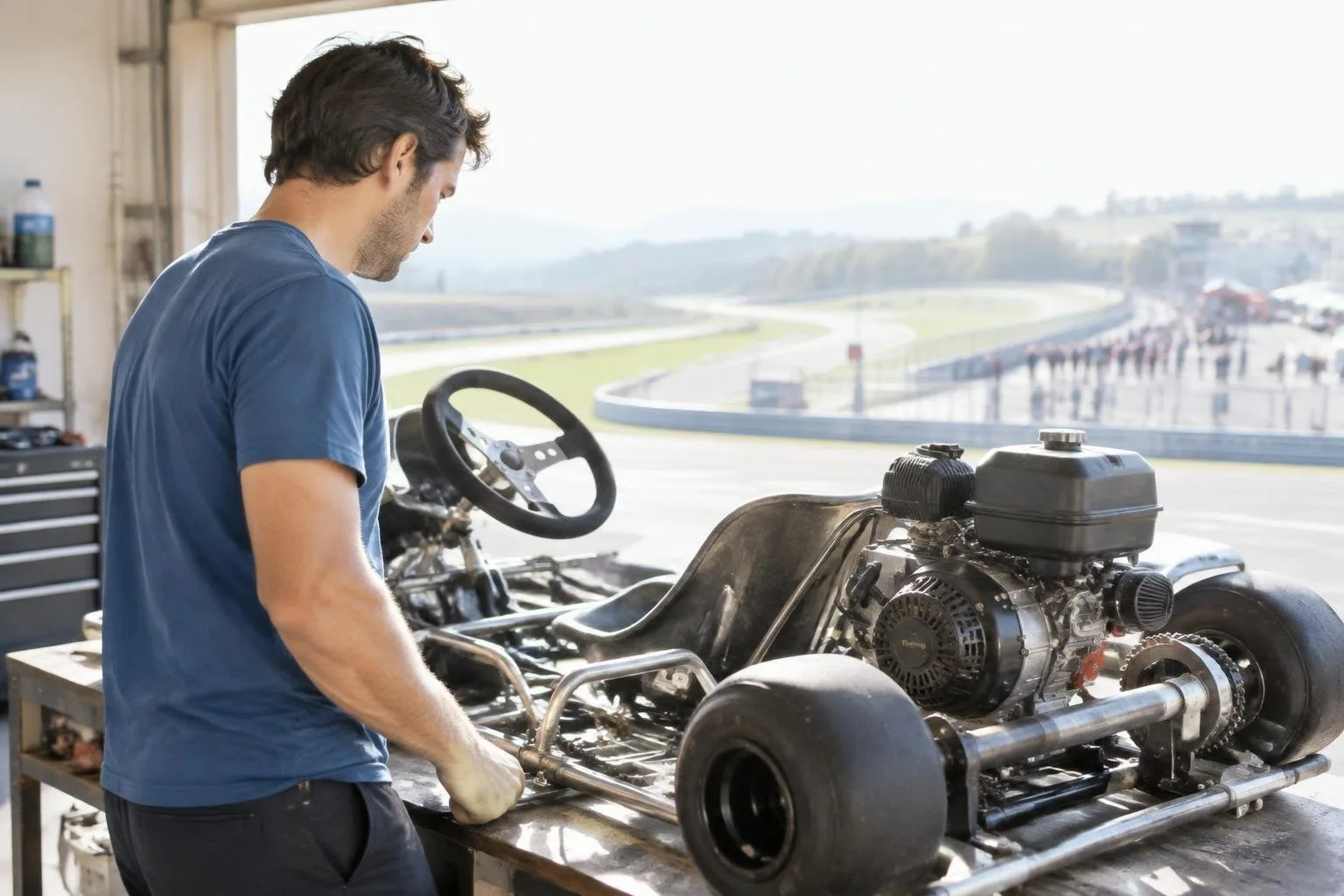
The very first kart emerged in the early 1950s when Art Ingles and Lou Borelli bolted a 2.5 horsepower West Bend lawn-mower engine onto a steel-tube chassis. This minimalist machine relied on only three controls – an accelerator, a hand-brake and a three-spoke steering wheel – a simplicity that still defines karting today. Initially a convenient way to zip around car-race paddocks, the contraption quickly found a fan-base in American supermarket parking lots, turning casual rides into competitive outings by the late 1950s.
Recognising the growing enthusiasm, the Go Kart Club of America was founded in 1957 to standardise races. Within a few years the sport crossed the Atlantic, prompting the FIA to create the International Karting Commission in 1962. The commission drafted the first technical regulations and launched continental contests such as the European Nations’ Cup. The inaugural Karting World Championship followed in 1964, and subsequent innovations – side-mounted engines and later gearbox karts – expanded the technical palette, giving rise to new categories and national series worldwide.
2026 La Conca World Championship and the stars who began in karts
Nearly 200 drivers will line up in the OK (Original Kart) and Junior classes at La Conca this weekend, vying for the most coveted title on the karting calendar. The circuit, renowned for its fast straights and tight corners, has hosted numerous international events, and its selection underscores the FIA’s commitment to showcase the sport’s heritage. Among past champions, Frenchman François Goldstein claimed five world titles between 1969 and 1975, a record later eclipsed by British ace Mike Wilson with six crowns in the 1980s. The most celebrated alumni is Alain Prost, the first kart graduate to clinch the Formula 1 World Championship, proving karting’s role as the premier talent incubator.
Current Formula 1 stars often reminisce about their karting roots. Lando norris, the 2014 KF World Champion and 2025 F1 champion, stresses that karting teaches “how to feel what is right, what is wrong” and remains the fastest route to the top tier. Charles Leclerc recalls learning set-up basics, overtaking tactics and pressure handling on kart tracks, while Pierre Gasly describes those early wet-weather sprints as “the purest form of driving”. These testimonies reinforce karting’s reputation as the sport’s most authentic learning ground.
The Global Karting Plan: cutting costs and widening the talent pool
Launched in 2024, the Global Karting Plan centers on an Arrive and Drive model where every competitor uses identical, loaned karts for the weekend. By standardising equipment, entry fees drop by roughly two-thirds compared with traditional international events, shifting the emphasis squarely onto driver skill. Dedicated regional championships have already taken shape across Asia-Pacific, South America and Europe, offering aspiring racers from all backgrounds a realistic pathway to the world stage.
FIA President Mohammed Ben Sulayem highlighted the initiative as a way to “secure the next 70 years of karting by making it more affordable, accessible and inclusive”. Akbar Ebrahim, head of the FIA Karting Commission, added that the celebration of karting’s history is “a timely reminder of the legends who have shaped our sport”. The next phase of the plan will be revealed at the FIA General Assemblies Week in Shanghai later this year, reinforcing the federation’s ambition to double global motorsport participation.