
Argomenti trattati
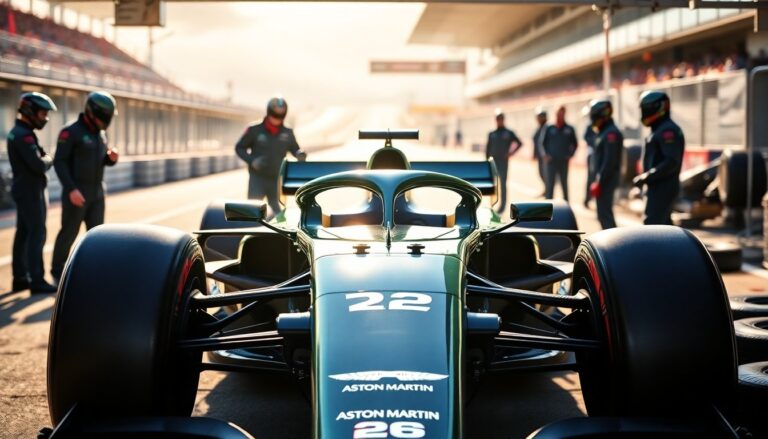
In the fast-paced world of Formula 1, Aston Martin’s recent unveiling of its 2026 F1 car, the AMR26, has generated significant interest. This vehicle represents a crucial milestone for the team, as it is the first entirely designed under the guidance of renowned designerAdrian Newey. The AMR26 made its debut last week during testing in Barcelona, showcasing the culmination of extensive engineering and innovative design.
Former strategist and current Sky Sports F1 analystBernie Collinscommended the monumental effort involved in developing this car. The team faced substantial challenges, particularly with the simultaneous overhaul of power unit and chassis regulations. As teams worldwide adapt to these new rules, Aston Martin’s strategy stands out for its ambition and technical expertise.
The design journey: Newey’s vision for the AMR26
Adrian Newey, now the Managing Technical Partner at Aston Martin, provided insights into the AMR26’s development process. Joining the team as their new wind tunnel became operational last March, Newey confronted a tight timeline. He highlighted that 2026 marks a unique moment in F1 history, with changes to both power unit and chassis regulations complicating the task for his team.
“We experienced a compressed timeline,” Newey stated. “Our model for the ’26 car only entered the wind tunnel by mid-April, putting us at a four-month disadvantage compared to our competitors.” This urgency required a relentless effort to finalize the car in time for the Barcelona shakedown, where driversLance StrollandFernando Alonsotook their first laps.
Key design elements
Newey outlined the core aspects of the AMR26’s design, starting with the car’s The arrangement of mass and wheelbase is crucial for influencing the vehicle’s balance and performance. He emphasized the importance of the front and rear suspensions, which are vital for managing airflow and optimizing aerodynamic efficiency. Notably, adjustments to thefront wingand nose shape reflect a departure from previous designs.
As he analyzed the The innovative solutions developed may differentiate Aston Martin, although he acknowledged that the design’s ultimate effectiveness will become clear once competitors reveal their vehicles. “Each team will interpret the new regulations differently, and that’s where the excitement lies,” he stated.
Breaking ground with an aggressive approach
Newey’s design philosophy has attracted attention for its aggressive yet calculated nature. “The direction we’ve taken is bold, featuring several elements that are unprecedented in our previous cars,” he explained. The tightly packaged design of the AMR26 stands in stark contrast to Aston Martin’s earlier models, requiring seamless collaboration among the mechanical design team to achieve the desired aerodynamic shapes.
This collaboration, though challenging for the mechanical designers, has led to promising results. Newey expressed pride in the team’s collective effort, emphasizing that the car’s development process illustrates their dedication and ingenuity.
Future potential and strategic development
As the season approaches, Newey remains optimistic about the AMR26’s potential for growth. He stressed the need to create a car that allows for significant evolution throughout the season. “Our goal is to avoid a vehicle that is overly optimized at launch but lacks room for growth,” he noted, highlighting a focus on fundamentals that will enable ongoing improvements.
With a keen eye on the evolving competitive landscape, Aston Martin seeks to leverage the car’s inherent flexibility and adaptability. As teams venture into this new chapter with revised regulations, the anticipation surrounding the AMR26 is palpable, and the commitment of Newey and his team suggests an exciting season ahead.