Moto Guzzi beginner’s guide: choosing your first roadster
Moto Guzzi roadsters present a distinctive blend of character, mechanical simplicity and rider presence. This guide defines what makes a Moto Guzzi entry-friendly roadster by focusing on four measurable dimensions: ergonomics, power delivery, service intervals and accessories. It explains how these factors influence everyday ownership and provides a decision framework tailored for new riders who value authenticity without sacrificing safety or budget.
Why a focused comparison matters: many new riders are drawn to the unique personality of Moto Guzzi engines and styling, but personality alone does not guarantee a good first motorcycle. Evaluating concrete attributes—seat height, weight distribution, torque mapping, scheduled maintenance and available accessories—helps match a bike to a rider’s size, skill level and financial tolerance. The article previews practical sections that analyze each dimension and then offers a structured decision framework to balance character, cost of ownership and upgrade paths.
Ergonomics: fit, confidence and control
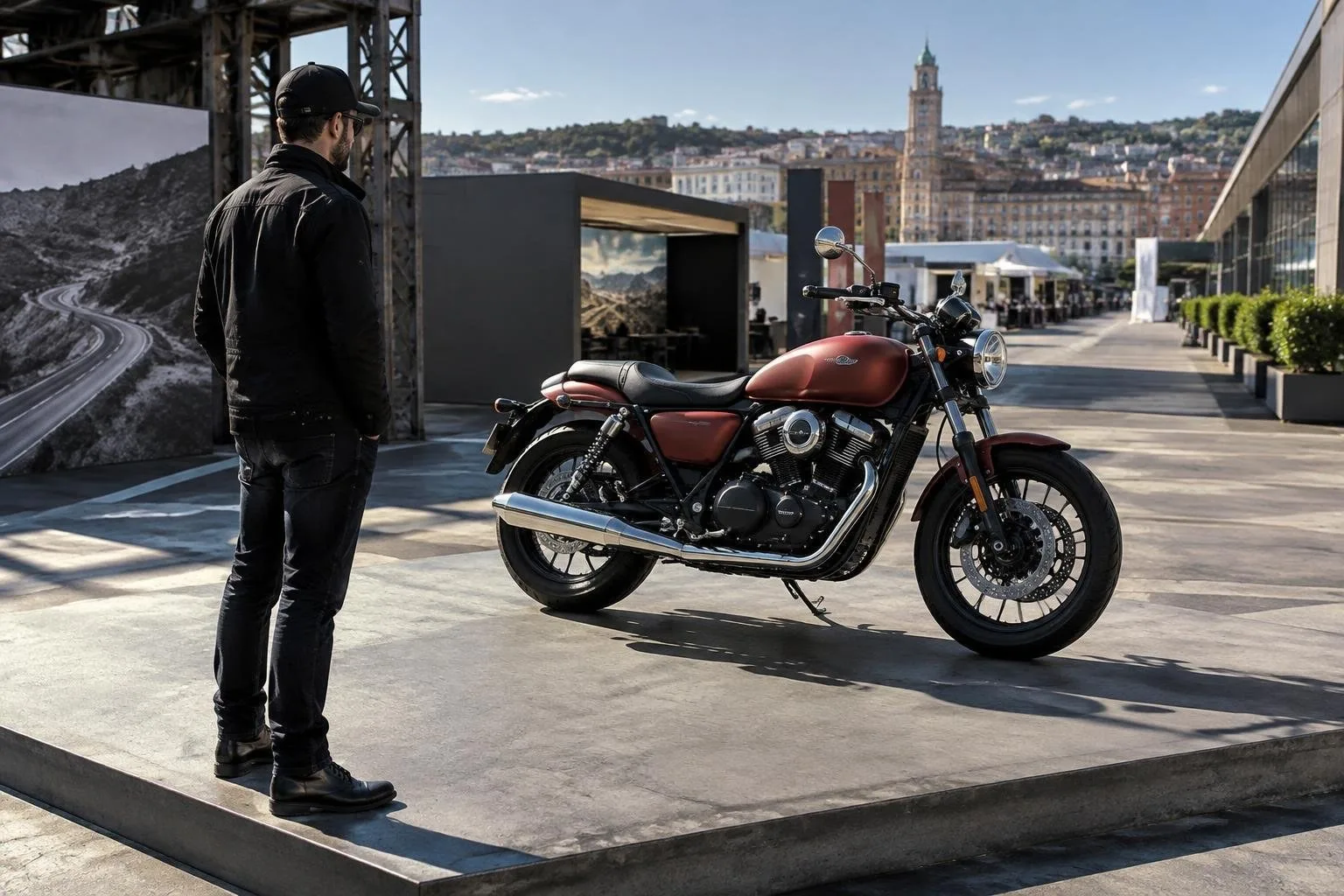
Ergonomics determine how comfortable and confident a rider feels from the first ride. Key measurements include seat height, reach to handlebars, footpeg position and overall mass. A lower seat and narrow saddle promote confidence for shorter riders, while modest handlebar reach and neutral footpeg placement reduce strain and aid slow-speed control. Pay attention to the bike’s center of gravity and how the chassis carries weight; a compact, well-balanced roadster makes maneuvers easier. Test rides and mock seating are essential: they reveal whether the rider can plant feet firmly, comfortably reach controls, and operate the brakes and clutch without stretching. Practical adjustments such as thinner seats, handlebar risers or peg repositioning create cost-effective ergonomics without altering the character of the bike.
Power delivery: usable torque versus outright horsepower
For a first roadster, the shape of the engine’s output is more important than headline horsepower. Moto Guzzi’s transverse V-twin layout typically produces strong low- to mid-range torque, which favors smooth, confidence-building acceleration rather than peaky, high-rpm power. Evaluate throttle response, gradualness of power delivery and the presence of traction aids. A motor with broad torque makes urban riding and hill starts easier for novices, while abrupt throttle mapping or overly aggressive gearing can surprise a new rider. Consider models with adjustable engine modes or mapped fuel injection that offer gentler throttle curves as an option. These features reduce the learning curve and allow the rider to explore higher performance gradually.
Service intervals and maintenance realities
Cost of ownership hinges on routine maintenance requirements and accessibility of parts and labor. Understand the motorcycle’s scheduled service intervals for valve checks, oil changes and major inspections, and whether those services are straightforward or labour-intensive. Simpler systems, easy-to-reach components and a predictable maintenance schedule lower long-term costs. Factor in consumables—tyres, brake pads and drive components—and the availability of dealer or independent mechanics experienced with Moto Guzzi engines. A sensible approach for new riders is to budget for an accelerated first-year service since initial break-in checks often occur early; planning for routine maintenance keeps the bike reliable and preserves resale value.
Accessories and upgrade paths: keep the character while evolving
Accessories define how the motorcycle adapts as a rider gains skill. Identify factory and aftermarket options for safety (ABS calibration, improved lighting), comfort (adjustable seats, wind protection), and handling (suspension upgrades, brake lines). A good entry platform accepts bolt-on changes without requiring major frame or engine surgery. Choose a roadster where suspension geometry and braking have documented upgrade pathways; progressive springs, cartridge kits and better calipers can transform handling without compromising the bike’s character. Retain original components to preserve value and allow reversible modifications as the rider’s needs evolve.
Decision framework: balancing character, cost and growth
Apply a simple three-step matrix when comparing candidates: 1) Fit and confidence — can the rider manage the bike at a standstill and at low speeds? 2) Usability — does the power delivery foster smooth learning and predictable behavior? 3) Ownership plan — are service intervals, repair costs and upgrade options aligned with the rider’s budget? Rate each bike on these axes and weight them according to personal priorities: beginners often prioritize fit and usability over absolute character, while more committed enthusiasts may accept higher maintenance for greater personality. The matrix creates a transparent way to compare models and justify trade-offs.
Insights: typical cases and exceptions
Typical cases include shorter riders favoring lower-seat variants or models with narrow seats and upright bars, and riders planning long commutes who should prioritize wind protection and ergonomics. Exceptions exist: some riders accept higher seat heights for a lighter chassis, and others prefer more torque-rich engines despite higher servicing needs. Another common trade-off is cost versus originality—customization can improve ergonomics and handling but may raise ownership complexity. Always verify that aftermarket parts do not void warranties or create unforeseen service complications.
Choosing an entry-friendly Moto Guzzi roadster is an exercise in priorities: match body dimensions and skill level to ergonomics, prefer gentle yet satisfying power delivery, budget realistically for maintenance, and select a platform that supports reversible upgrades. For immediate action, shortlist two models that meet ergonomics and power criteria, arrange two test rides in similar conditions, and obtain clear maintenance estimates from local technicians to finalize the choice. Taking these steps reduces regret and makes the first miles enjoyable and sustainable.