
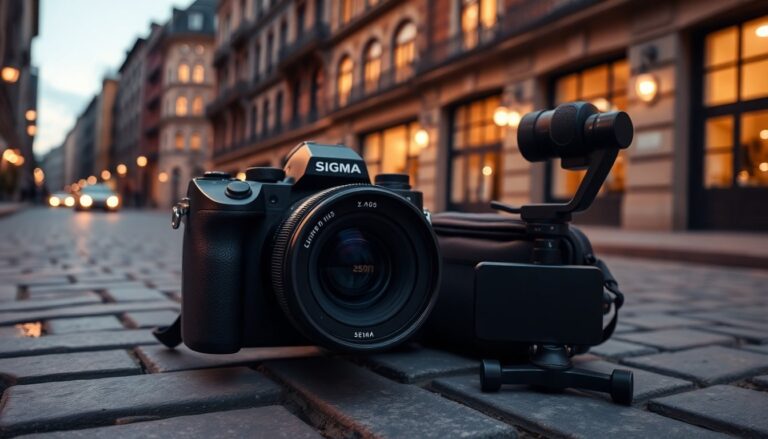
Sigma’s 15mm F1.4 DC | Contemporary squeezes surprising capability into a travel-friendly package. Built for APS-C cameras, it gives an ultra-wide field of view with a true F1.4 aperture — a rare combo that’s ideal for street and travel photographers who want dramatic perspectives without lugging heavy glass. It also performs well for architecture, low-light scenes, and lightweight gimbal setups.
Build and size
The lens comes for Sony E, Fujifilm X and Canon RF mounts; dimensions shift slightly by mount. The Sony E version measures roughly 64.0 × 64.8 mm and tips the scales at about 220 g — impressively light for an F1.4 wide on a crop sensor. Mechanically, it feels compact and balanced, which makes handheld shooting and long gimbal sessions noticeably easier.
Optical design and image quality
Inside are 13 elements in 11 groups, including an FLD element, three SLD elements and three double-sided asphericals. That blend tames chromatic and spherical aberrations and helps keep detail strong from center to edge. Sigma also minimized sagittal coma flare, so point lights near the frame border look better than you’d expect from many other wide-angle lenses — a real plus for nightscapes and astrophotography.
Aperture, bokeh and close focus
The bright F1.4 aperture does more than improve low-light sensitivity: it lets you separate subjects from their backgrounds in ways most ultra-wides can’t. A nine-blade rounded diaphragm renders out-of-focus highlights smoothly, so wide-angle portraits and environmental shots gain depth that feels organic rather than artificial. Minimum focus is 17.7 cm (7.0 in), delivering a maximum magnification of 1:7.9 — handy for close-in details and intimate environmental portraits.
Coatings, flare control and weather sealing
Multilayer coatings and careful element placement reduce internal reflections and veiling flare, preserving microcontrast even in backlit situations. The front element has a water- and oil-repellent coating for easier cleaning, and the barrel features dust- and splash-resistant seals. It’s not a dive lens, but these protections cut downtime and maintenance when you’re out shooting in imperfect weather.
Autofocus and video friendliness
Autofocus runs on a stepping motor driving a small focus group; the result is fast, quiet and smooth focusing that suits both stills and video. The lens plays nicely with camera-based Face/Eye AF, shows minimal focus breathing, and keeps a stable angle of view during focus pulls — all useful traits for run-and-gun filmmakers and gimbal operators.
Controls and handling
The focus ring offers a pleasing, damped action for tactile control. Most mounts include a dedicated aperture ring for hands-on exposure adjustments; Canon RF bodies instead get a customizable control ring. Buttons and switches have positive detents and remain usable with gloves, which photographers working outdoors or at motorsport events will appreciate.
Mount differences and service options
Canon RF models are a touch longer and heavier than their Sony and Fujifilm counterparts, which can affect gimbal balance and handholding comfort over long days. If you change systems, Sigma’s mount-conversion service is a practical option to avoid buying multiple copies of the lens.
Who should consider it
This lens is for shooters who prize mobility and versatility: travel and street photographers, content creators, family and environmental portrait shooters, and astrophotographers looking for a fast, wide option without the weight penalty. It’s also a smart pick for video creators who want smooth AF and minimal breathing on gimbals. Motorsport and action photographers will find the wide view useful for immersive pit-lane or in-car shots, while the F1.4 aperture helps when light levels drop or mixed lighting complicates exposure.
4 DC | Contemporary strikes a compelling balance between optical performance and portability. It won’t replace large, pro-level wide primes for every application, but for anyone seeking an ultra-wide that’s bright, light and versatile, it’s a standout choice.