
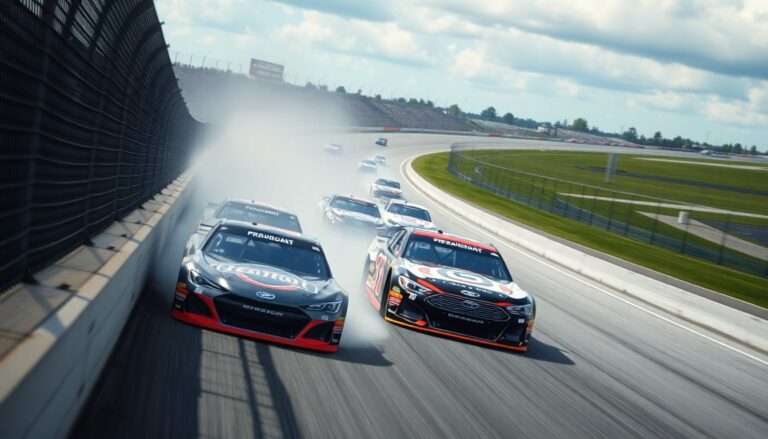
Opening weekend of the NASCAR Craftsman Truck Series feels like two shows in one: the high-speed theater of Daytona and the hands-on, grassroots lab at Bristol. Daytona’s pack racing — airing on FOX Sports 1 on Feb. 13, — demands aerodynamic precision and split-second cooperation among the field. Meanwhile, Bristol continues to be a crossroads where drivers slip into drag, dirt late models, sprint cars and even e-sports, testing raw adaptability and widening the sport’s audience. Together these venues reveal how engineering, driver skill and modern media combine to shape both competition and spectacle.
How the crossovers actually work – The core of any successful crossover is the ability to translate vehicle behavior across very different machines. A stock truck and a sprint car respond to steering, braking and throttle in fundamentally different ways: cornering balance, brake bias and the feel of weight transfer change with the platform. – Drivers recalibrate sensory cues — visual references, seat position, steering ratio — while engineers retune sensors and filters so telemetry reflects each vehicle’s vibration and aerodynamic profile. – Flexible data pipelines and modular telemetry systems matter. Teams that can repurpose streams, retrain models and rapidly validate setups on simulators cut adaptation time dramatically. – Broadcasters turn complex technical differences into viewer-friendly narratives by mixing onboard camera angles, live telemetry overlays and focused commentary, which shapes what casual fans notice and what core fans debate.
Pros and cons of cross-discipline appearances Pros: – High-profile crossovers draw media attention and new sponsor activations, expanding reach beyond the usual fanbase. – Drivers sharpen racecraft: dirt and sprint drives improve throttle modulation and door-to-door instincts, while simulators allow rehearsal of rare scenarios without hardware risk. – Short, targeted stints in other formats can produce measurable gains in close-quarters racing and restart execution.
Cons: – More seat time in other disciplines increases injury and equipment risk, and stretches team resources and logistics. – Frequent guest appearances can blur competitive parity and overshadow series regulars. – Wealthier teams that can fund multi-format programs may gain an outsized advantage, complicating sporting fairness.
Practical takeaways for teams and broadcasters – Engineers mine dirt and sprint data for suspension and tire-wear insights useful on short-track trucks; sim sessions let drivers rehearse traffic and restart scenarios. – Investment in high-fidelity simulators and augmented-reality tools shortens learning curves and turns occasional crossovers into tangible performance gains. – Broadcasters should continue using telemetry comparisons and clear onboard sequences to demystify technical contrasts for viewers; engaging graphics and sound cues convert casual watchers into repeat viewers.
Market landscape and commercial dynamics – NASCAR’s ladder system and independent sprint/dirt promoters coexist, creating scouting and sponsorship opportunities. When a big-name driver appears in a niche event, attendance and streaming spikes — though the effect varies by region and platform. – Rights holders and networks tailor packaging for different markets (U.S, U.K, Australia) and pivot between linear and streaming windows to capture fragmented audiences. – Promoters measure success with ticket sales, streaming numbers and social engagement; teams weigh those commercial gains against longer-term championship objectives. Expect series and broadcasters to keep fine-tuning schedules and partnerships as they chase both spectacle and sporting credibility.
Daytona specifics: what to expect Feb. 13, – Daytona’s restrictor-plate-style racing centers on aero stability and draft craft. Teams dial shallower splitter angles and controlled rake to preserve top speed; optimal drafting lines can trim whole seconds per lap. – Pit strategy is all about timing — short fuel windows and the risk of rejoining amid the densest packs make opportunistic stops crucial. – The entry list mixes veterans, Hall of Famers and crossover athletes; that cocktail raises unpredictability and the chance of multi-truck incidents. Expect FOX Sports 1 to market the race as must-see TV, leaning into the drama of cooperative drafting and split-second lane changes.
Bristol’s role as a hands-on proving ground – Bristol’s tight geometry and nearby drag facilities make it ideal for drivers to swap disciplines and test techniques that reward precision and aggression. – Short-track setups prioritize mechanical grip, brake management and progressive suspension response; those attributes translate back into improved restart execution and cornering confidence in truck races. – Local events and dirt programs are fertile scouting grounds: they help young drivers and seasoned veterans alike keep their car control sharp.
Simulator and telemetry evolution – Simulators now model tire slip curves, suspension kinematics and transient aero effects with increasing fidelity. Standardized telemetry formats let engineers compare throttle application, steering rate and yaw across vehicles. – Teams that approach simulators as part of an iterative loop — virtual run, on-track shakedown, data review, setup refinement — reduce lap-time variance and speed up acclimation. – Beware overfitting: simulator output is guidance, not gospel. Controlled on-track validation remains essential.
Notable crossover moments – Historical and recent examples show the payoff of cross-discipline experience: Richard Petty’s 1965 win in the NHRA B/Altered class at Bristol Dragway; Austin Dillon’s victory in a 604 Late Model feature at Bristol Dirt Nationals; Bubba Wallace’s Super Late Model success; William Byron’s back-to-back wins in the eNASCAR iRacing Pro Invitational Series at virtual Bristol. – These stories underline how grassroots runs and virtual practice feed real-world results.
How the crossovers actually work – The core of any successful crossover is the ability to translate vehicle behavior across very different machines. A stock truck and a sprint car respond to steering, braking and throttle in fundamentally different ways: cornering balance, brake bias and the feel of weight transfer change with the platform. – Drivers recalibrate sensory cues — visual references, seat position, steering ratio — while engineers retune sensors and filters so telemetry reflects each vehicle’s vibration and aerodynamic profile. – Flexible data pipelines and modular telemetry systems matter. Teams that can repurpose streams, retrain models and rapidly validate setups on simulators cut adaptation time dramatically. – Broadcasters turn complex technical differences into viewer-friendly narratives by mixing onboard camera angles, live telemetry overlays and focused commentary, which shapes what casual fans notice and what core fans debate.0
How the crossovers actually work – The core of any successful crossover is the ability to translate vehicle behavior across very different machines. A stock truck and a sprint car respond to steering, braking and throttle in fundamentally different ways: cornering balance, brake bias and the feel of weight transfer change with the platform. – Drivers recalibrate sensory cues — visual references, seat position, steering ratio — while engineers retune sensors and filters so telemetry reflects each vehicle’s vibration and aerodynamic profile. – Flexible data pipelines and modular telemetry systems matter. Teams that can repurpose streams, retrain models and rapidly validate setups on simulators cut adaptation time dramatically. – Broadcasters turn complex technical differences into viewer-friendly narratives by mixing onboard camera angles, live telemetry overlays and focused commentary, which shapes what casual fans notice and what core fans debate.1
How the crossovers actually work – The core of any successful crossover is the ability to translate vehicle behavior across very different machines. A stock truck and a sprint car respond to steering, braking and throttle in fundamentally different ways: cornering balance, brake bias and the feel of weight transfer change with the platform. – Drivers recalibrate sensory cues — visual references, seat position, steering ratio — while engineers retune sensors and filters so telemetry reflects each vehicle’s vibration and aerodynamic profile. – Flexible data pipelines and modular telemetry systems matter. Teams that can repurpose streams, retrain models and rapidly validate setups on simulators cut adaptation time dramatically. – Broadcasters turn complex technical differences into viewer-friendly narratives by mixing onboard camera angles, live telemetry overlays and focused commentary, which shapes what casual fans notice and what core fans debate.2