
Argomenti trattati
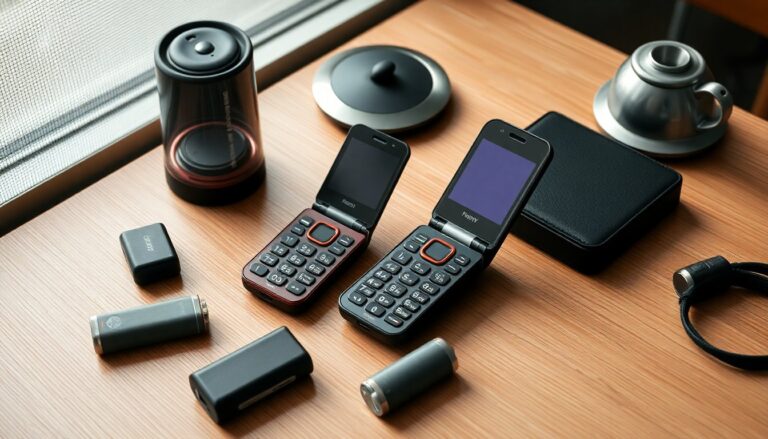
The F1 Horizon Cardinal is a flip phone aimed at users who want a pared-back mobile experience without the cost or complexity of flagship models. It preserves the original F1’s straightforward interface while upgrading hardware for everyday durability and longer runtime. The Cardinal adds a larger battery, USB‑C charging, stronger haptics and a more rugged chassis. Each unit ships complete with a battery, a USB‑C wall charger, a charging dock and a charging cable.
The device introduces tiered software options that let owners control their connectivity and interruptions. The base configuration emphasizes core offline features with a limited set of online tools. Some advanced services and cloud-enabled functions are available only through subscription.
What the phone offers
The Cardinal targets users who prioritise focus, durability and predictable running costs. Hardware upgrades address common complaints about compact phones: battery life, charging convenience and build resilience. From an ESG perspective, the inclusion of a user-replaceable battery and standardised USB‑C charging supports longer device lifecycles and easier repairs.
Software-wise, the phone separates essential functions from optional services. The default profile keeps connectivity minimal and limits background data. Users may opt into online features such as cloud sync, navigation and app modules through paid tiers. This approach aims to reduce unnecessary energy use at the device level and to give buyers control over recurring costs.
Sustainability is a business case: a modular, repairable design can lower total cost of ownership and reduce waste. Leading companies have understood that making phones easier to maintain extends product lifespans and appeals to value-minded consumers. The Cardinal’s combination of basic offline utility and optional online services presents a clear trade-off between simplicity and convenience.
Communication details and limitations
The device supports text and picture messaging and basic voice calls. Its camera and touchscreen handle simple media capture and review. The design favours straightforward interactions over advanced features.
Connectivity options are intentionally limited. The phone offers Bluetooth for wireless accessories but is not compatible with Apple AirPods. It can join Wi‑Fi networks for data transfer and act as a hotspot to share mobile data with nearby devices.
Using the phone as a hotspot exposes connected devices to an unfiltered network. Any device using that connection relies on its own security settings and filters. Access requires the hotspot password set on the device.
These limitations reflect a trade‑off between simplicity and versatility. For motorsport enthusiasts, the phone can serve as a reliable backup for calls and messaging during events. It is not suited to heavy media streaming or advanced app ecosystems.
From an ESG perspective, the Cardinal’s pared‑down feature set can extend usable lifespan and reduce energy draw compared with flagship models. Sustainability is a business case when manufacturers prioritise repairability and low‑impact components.
Practical implementation tips: use the device for essential communications and offline media. Configure a strong hotspot password. Keep connected devices updated with their own security software. Disable hotspot when not in use to conserve battery and data.
Leading companies have understood that clear product positioning helps users make better choices. For drivers and track crews seeking a durable, distraction‑free phone, the Cardinal offers a focused toolset with predictable behavior.
What to watch next: expect manufacturers to balance low‑complexity devices with modular connectivity features that prioritise security and energy efficiency.
Following the earlier discussion of connectivity and low‑complexity devices, this section outlines key compatibility limits that affect migration to the Cardinal and practical steps to mitigate them.
The Cardinal does not support RCS messaging. If contacts send RCS messages—common on many Android devices—group texts may not arrive on the Cardinal. Ask group participants to change settings to send messages as MMS if you need to receive group conversations on the device. Test messaging with a small group before a full switch to avoid missed communications.
The device deliberately omits all Google services and apps. It ships without a web browser, social apps, an app store, or video recording and playback capability. The unit also lacks TAG Approval. These absences reflect a design choice: the Cardinal is positioned as a focused, limited‑feature device rather than a general‑purpose smartphone.
From an operational standpoint for automotive and motorsport enthusiasts, the implications are straightforward. Expect fewer background services, lower energy draw, and a smaller attack surface for digital threats. Leading companies have understood that designing for purpose can reduce complexity while protecting essential functions.
Sustainability is a business case when product scope is constrained. From an ESG perspective, a device that foregoes streaming and heavy app ecosystems can have lower lifecycle energy use and simpler end‑of‑life pathways. Manufacturers should disclose component sourcing and recycling options if buyers are to evaluate environmental trade‑offs.
Included accessories and support
Accessory bundles and after‑sales support vary by seller. Before purchase, confirm which items are included, warranty length, and available repair pathways. Typical checks: whether a charger or hands‑free kit is supplied, regional support centres, and the availability of replacement parts.
For users migrating from feature‑rich phones, plan practical workarounds. Keep a secondary device for navigation, media, or app‑dependent services. For team communications, adopt a prearranged messaging mode such as MMS or an alternative platform supported by all participants.
Expect manufacturers to continue balancing low‑complexity designs with modular connectivity options that prioritise security and energy efficiency.
Packaging and inclusions
Sunbeam supplies each F1 Horizon Cardinal with a set of core accessories. The package includes a replaceable battery, a USB‑C wall charger, a dedicated charging dock and a charging cord. For full technical specifications, consult the F1 Horizon spec sheet provided by Sunbeam.
Online services and regional coverage
Certain connected features require a Sunbeam Premium subscription. Paid services include talk to text, hourly weather updates and radar, and points of interest (POI) within the navigation app. Basic navigation and weather functions are available on the device, while enhanced real‑time capabilities depend on the premium tier.
From an ESG perspective, subscription‑driven features entail ongoing data transfers and cloud processing. Sustainability is a business case: manufacturers and fleet managers should weigh the operational benefits against the additional energy and bandwidth demands.
Practically, users can limit data consumption and costs by favouring offline maps, scheduling large updates over Wi‑Fi, and disabling premium features when not required. Leading companies have understood that balancing on‑device functionality with optional cloud services reduces both emissions and running costs.
Network compatibility and operational limits
Sunbeam’s Cardinal model sold for North and South America does not include the complete set of LTE bands used in many countries across Europe, Africa, and Asia. Missing bands may prevent the device from connecting to local mobile networks. Prospective buyers should verify compatibility on the Coverage page before travel or purchase.
Why this matters for international travel
Without the required bands, voice and data services may be intermittent or unavailable. Roaming could fail even when a local carrier appears supported on paper. The restriction affects users who rely on mobile internet for navigation, telemetry uploads, or live timing during events.
Practical usage scenarios
The F1 Horizon Cardinal is suited to users seeking a simple, durable device for calls, basic messaging and navigation. It serves as a practical second phone for trips within supported regions. It also fits as a primary device for users who prefer limited connectivity or for families wanting a controlled online environment.
Hotspot use enables internet access for connected devices. That creates an unfiltered link to online services. Event teams and travelling mechanics should manage which devices connect and what content is accessed when the Cardinal functions as a hotspot.
Business and sustainability perspective
Sustainability is a business case when device design reduces unnecessary features and extends service life. From an ESG perspective, simplified hardware can lower lifecycle emissions through fewer components and longer use cycles. Leading companies have understood that balancing on‑device functionality with optional cloud services reduces both emissions and running costs.
Recommendations for motorsport travellers
Before travel, confirm the Cardinal’s band support against the local carriers you will use. Carry a verified backup device if you need guaranteed global connectivity. For team use, restrict hotspot access to authorised devices and log data transfers tied to telemetry or timing systems.
Check the Coverage page and mobile carrier band lists to avoid service interruptions while travelling or operating at events.
Cardinal offers tangible reliability gains but carries known limitations
The Cardinal builds on the original F1 with a larger battery and USB‑C, which improve daily reliability and durability for motorsport use. These hardware changes make the device more dependable during long event days and reduce the frequency of mid‑race charging interruptions.
From an ESG perspective, longer battery life and a standard charging port can also lower device turnover and electronic waste. Sustainability is a business case for teams and organizers that source equipment at scale.
Assess software, multimedia and roaming needs before buying
The Cardinal still limits access to some app ecosystems, full web browsing experiences and certain multimedia features compared with general‑purpose smartphones. If your workflow depends on specific apps, streaming video at events, or comprehensive global roaming, those constraints should factor into procurement decisions.
Verify technical details and regional compatibility
Consult the official F1 Horizon spec sheet and the Coverage page on the Sunbeam website for complete technical specifications, supported bands and subscription details. Check carrier band lists and subscription terms to avoid service interruptions while travelling or operating at events.
Leading companies have understood that matching device capabilities to operational needs avoids costly field failures. Confirm the Cardinal’s supported bands, software limits and service coverage to ensure the device meets your requirements.