
Argomenti trattati
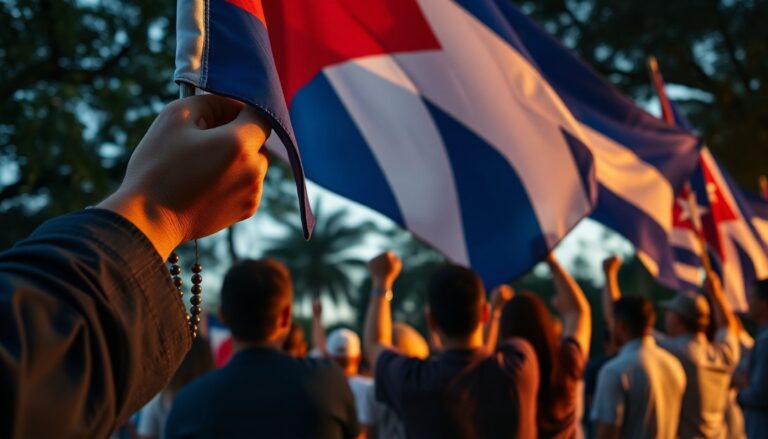
On March 21, 2026, the city of Hialeah announced a planned “Free Cuba Rally” to be held at Milander Park as an expression of solidarity with Cubans calling for political transformation. The event, set to run from 7 p.m. to 10 p.m., brings together activists, faith leaders, artists and members of the exile community to deliver a public message aligned with the Trump administration‘s push for leadership change in Havana. Organizers framed the gathering as a peaceful show of support for a future they describe as democratic and liberated from the current one-party system.
City officials emphasized Hialeah’s unique role: with a large Cuban-origin population—roughly eight in ten residents trace their roots to Cuba—the municipality describes the rally as a civic response from a community with deep personal and familial ties to events on the island. Hialeah Mayor Bryan Calvo issued remarks underscoring the city’s intent to “honor” Cuban resilience and to advocate for an envisioned post-regime scenario rooted in civic engagement and reconstruction. The municipal statement positioned the rally as both symbolic and practical: a visible backing of U.S. policy goals while offering local support networks for exiles and advocates.
Organizers, participants and local messaging
The lineup of participants — from community organizers to religious figures and cultural artists — was described as intentionally broad to reflect a cross-section of voices within the Cuban-American community. Event planners said the demonstration would remain nonviolent and highly visible: banners, speeches and cultural performances were expected to highlight both the suffering reported in Cuba and the aspirations for a different political arrangement. Officials framed key terms such as regime change and post-regime transition as goals focused on civil liberties and governance reform rather than violent overthrow, stressing a preference for international pressure and diplomatic channels combined with domestic activism.
U.S. administration stance and policy demands
The rally’s timing coincided with heightened statements from top U.S. officials advocating for an end to Cuba’s communist leadership. President Trump and Secretary of State Marco Rubio have publicly argued that Cuba represents the next front for expanding U.S. influence and have called for Miguel Díaz-Canel and other senior officials to step down. Administration demands outlined in public briefings include the release of political prisoners and measures toward political and economic liberalization as preconditions for easing sanctions. Those priorities mirror the rally’s public messaging and help explain why municipal leaders framed the event as part of a broader international campaign.
Specific administration statements
In recent comments reported by press outlets, the president suggested Cuba was vulnerable after infrastructure failures on the island, including a nationwide power outage, remarks that portrayed the government as weakened and potentially susceptible to rapid change. The administration has not, however, outlined a clear successor or transitional governance plan it prefers, and public statements have mixed diplomatic pressure with tougher rhetoric. The rally organizers used these public positions to amplify calls for accountability and rapid reform while asserting the need for peaceful, civic solutions.
Cuban government response and diplomatic notes
Havana’s diplomatic corps pushed back, with Cuban Deputy Foreign Minister Carlos Fernández de Cossío reiterating that the island’s political system and the office of the president are not negotiable with foreign governments. He emphasized that dialogue with Washington could continue in technical and mutual-interest areas, but rejected any talks that would include handing over authority or renegotiating the political structure. This rebuttal frames a central tension: international pressure for change versus Cuba’s insistence on sovereignty and the integrity of its political institutions.
Local significance and regional implications
The Hialeah rally illustrates how diaspora communities can shape public debate and amplify foreign-policy goals at the municipal level. For many attendees, the demonstration served as both an emotional outlet and a strategic statement intended to influence national policy. Observers note that while local rallies cannot by themselves produce regime change abroad, they can increase political salience and reinforce the administration’s leverage by signaling strong domestic backing. References to prior regional events—such as the removal of Venezuela’s leader in a widely reported operation—were used by critics and proponents alike to frame potential outcomes, but specifics on any future scenario remain uncertain and contested by both U.S. officials and Cuban authorities.
As the night at Milander Park unfolded, the combination of local mobilization and national rhetoric made clear that Hialeah’s demonstration was both a community event and a node in a larger geopolitical conversation. Whether the rally will have measurable diplomatic effects is unresolved, but it reflects an active, engaged diaspora intent on shaping Cuba’s future through public advocacy, aligned with certain U.S. policy prescriptions.