
Spanish Motorcycle Grand Prix — a livelier look
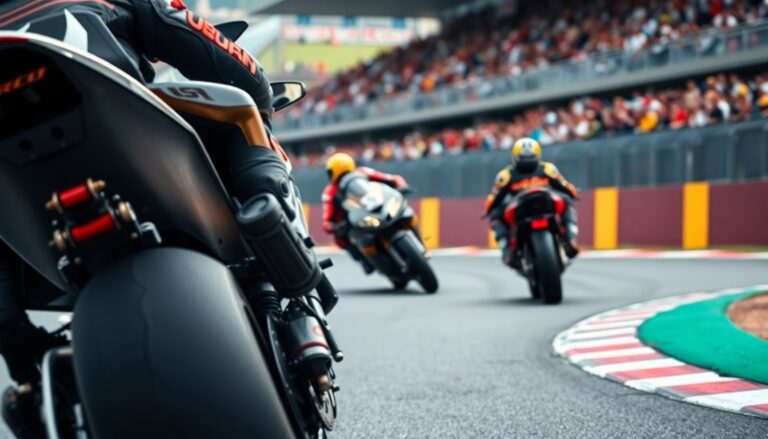
The Spanish grand prix is one of the highlights of the calendar, most often hosted at Circuito de Jerez – Ángel Nieto just outside Jerez de la Frontera in Andalusia. Packed grandstands, a compact layout and superb paddock and broadcast facilities make Jerez a favorite for fans and teams alike. Its sweeping medium-speed corners and tight hairpins have turned the track into a practical proving ground for tyre wear, braking performance and overtaking opportunities — a place where machine balance and rider craft are exposed in equal measure.
What a GP weekend actually feels like
Race weekends follow the familiar MotoGP, Moto2 and Moto3 rhythm: practice, qualifying and the race. But there’s a lot more behind the scenes. Tyre allocations and fuel rules dictate pit strategies, while electronic control systems and homologation limits shape what engineers can try. Race control keeps a constant eye on safety and can deploy safety cars or red flags when needed; marshals and medical teams stand ready to act. For crew engineers, Jerez’s mix of flowing sections and tight turns is a relentless laboratory for chassis setup, braking stability and power delivery.
Circuits, safety and operations — why the venue matters
Putting on a Grand Prix involves close coordination between federations, circuit owners and local authorities to meet strict homologation and safety standards. Permanent circuits like Jerez offer reliable runoff areas, well‑placed cameras and consistent pit logistics — all things that improve safety and TV production. By contrast, street circuits (think the old Montjuïc layout) bring drama and atmosphere but demand temporary infrastructure and tighter safety margins. Track surface quality, kerb profiles, pit-lane design and robust connectivity for live transmission all influence lap times, reliability and the viewing experience. That’s why resurfacing, improved drainage and broadcast upgrades are routine investments.
Different venues, different payoffs
– Permanent tracks: predictable logistics, better safety and permanent media facilities. They can, however, feel less exotic.
– Street circuits: high spectacle and tourism value, but costly and complex to run.
– Historic tracks: rich heritage and passionate crowds, yet often expensive to bring up to modern safety standards.
Jerez manages to strike a sweet spot — modern amenities without losing the technical corners that create close, exciting racing.
Commercial side: naming rights and sponsorship trends
Naming rights remain a vital income source. Promoters sell title packages, partner slots and supplier deals that bundle on-track signage, hospitality and broadcast inventory. Long-term deals tend to yield the best return, but frequent name changes can erode a race’s identity. Over the decades sponsorship has shifted—from tobacco to betting and energy drinks, and now toward lifestyle and beverage brands. From 2026 the event will be listed in English as the Estrella Galicia 0,0 Grand Prix of Spain, reflecting that commercial evolution.
Practical value for teams, promoters and regions
Teams treat Jerez as a development stop: it’s ideal for testing tyre compounds, suspension settings and aero tweaks before long continental stretches. Promoters and broadcasters exploit the layout for hospitality, camera sightlines and fan zones. Local governments often use the race to boost tourism, upgrade infrastructure and improve emergency services — improvements that can benefit the area long after the weekend’s podium celebrations.
A brief history of tracks and character
Although Jerez has been the modern mainstay since the late 1980s, earlier Spanish Grands Prix bounced between venues like Jarama and the street circuit at Montjuïc. Each left a different imprint: Jarama tested mechanical grip through tight sequences, Montjuïc rewarded guts and precision on narrow city streets, while Jerez blends flowing sectors with technical corners — ideal for both television drama and on-track battles.
Champions, records and manufacturers
The event’s record book spans changing classes and eras. Ángel Nieto tops the list with 11 wins in 50cc and 125cc classes; Valentino Rossi recorded nine victories across categories. Riders such as Jorge Lorenzo and Dani Pedrosa also enjoyed multiple wins at Jerez. Recent headline winners include Francesco Bagnaia and Álex Márquez in 2026. On the manufacturer side, Honda and Yamaha have amassed large tallies historically; Kalex dominated Moto2 in the 2010s and 2020s thanks to a balanced, predictable chassis. Ducati’s rise in modern MotoGP has shifted development priorities across the paddock and often benefits satellite teams through improved supply chains.
Turning data into speed
Performance at a Grand Prix is a continuous loop of hypothesis, simulation and track validation. High-frequency telemetry, timing loops and dense sensor arrays feed models that reveal tyre thermal windows, suspension kinematics and aerodynamic loads. Tiny changes to geometry or damping produce measurable handling differences; smarter traction maps and tyre management often decide late-race pace. Teams that can rapidly translate simulation results into on-track changes typically gain an advantage, though specialists must balance single-track performance against season-long durability.
The Spanish Grand Prix remains more than a race. Between Jerez’s technical layout, the shifting commercial landscape and the intense behind-the-scenes engineering, the event showcases both the sport’s tradition and its constant evolution.