
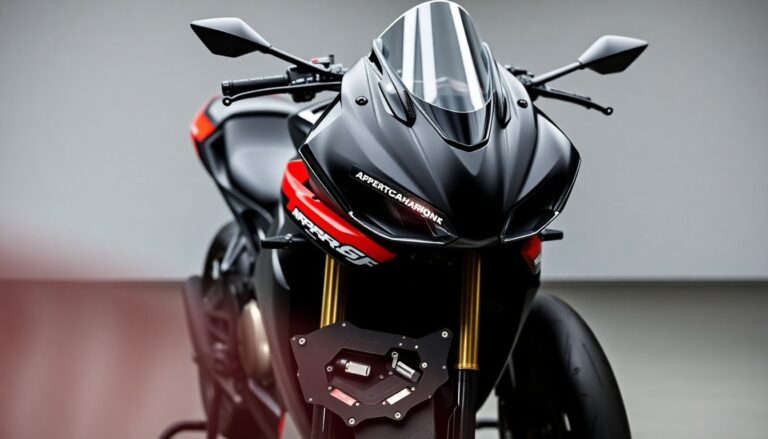
Aprilia has quietly added a clever aerodynamic tweak to the RS-GP: a double duct hidden beneath the fairing. Spotted after MotoGP testing in Buriram, the system draws air from small intakes under the rider’s forearms and channels it through a new internal pathway that routes flow around the bike’s upper section. The idea grew out of work at Aprilia’s technical office, driven by Fabiano Sterlacchini and Marco De Luca, and highlighted by motorsport director Franco Nugnes.
Why bother with something so discreet? Because marginal gains matter—especially in MotoGP. This isn’t a showy wing or an obvious bodywork overhaul; it’s a careful piece of airflow management designed to change pressure and clean up the air that leaves the radiator. By guiding expelled cooling air away from the region directly in front of the radiator, the duct reduces turbulent pockets that otherwise can wrap hot air around the rider’s torso and arms.
How the double duct works
Rather than replacing the RS-GP’s existing S-duct—an F1-inspired channel that pulls air from a lower fairing section and feeds it back out near the windshield—the double duct supplements it. One opening on each side of the fairing feeds the new internal bypass, increasing the amount and speed of air moving through the bodywork. The result is a larger, smoother air path that lowers front-end pressure and diminishes the turbulent wake behind the radiator outlet.
Pressure and turbulence control
Smoothing that downstream flow does a few things at once. It cuts down the localized turbulence that can trap heat around the rider, stabilises the aerodynamic centre under varying yaw and lean angles, and helps keep handling more predictable during trail braking. Easier-to-forecast flow behaviour reduces on-track risk and preserves consistency lap after lap—small improvements that add up in endurance and tyre wear.
Practical gains for rider comfort and packaging
One immediate benefit is thermal relief. With less hot air pooling behind the radiator, the rider experiences a cooler envelope over race distances—which can matter hugely for concentration and stamina. Designers also say the layout simplifies cooling-system packaging by steering expelled air clear of sensitive cockpit areas, easing serviceability and on-track maintenance.
The change was deliberately low-key: integrated within existing bodywork to avoid upsetting balance, mass distribution or homologation constraints. Concealing the ducts avoids new external protrusions that might create fresh vortices or extra drag, keeping the bike’s silhouette intact while still extracting performance.
Validation and next steps
Aprilia’s engineers are validating the concept through on-track running and wind-tunnel correlation—part of a broader aerodynamic programme that has included work at the Toyota wind tunnel in Cologne. They’re iterating duct size and geometry to strike the best trade-off between increased mass flow and parasitic losses, and will rely on wind-tunnel coefficients and telemetry to quantify benefits.
Collaboration and development philosophy
The duct’s evolution came from targeted CFD studies and comparative tunnel runs, with internal aerodynamicists guiding the flow simulations and chassis and cooling specialists weighing up thermal trade-offs. External partners supplied tunnel hours and independent correlation data. The team’s approach favoured incremental, test-driven changes over a radical redesign—minimising execution risk while chasing measurable gains.
Competition and wider implications
Adopting an internal double-duct shows how teams can find performance by rearranging what’s already there rather than adding conspicuous appendages. If wind-tunnel and on-track data hold up, the concept could influence how other teams balance cooling, aerodynamics and electronics within the constrained volume around the radiator. From a regulatory perspective, concealed ducts are often easier to justify under MotoGP bodywork rules than large external devices.
Whether it becomes a widespread fix across the paddock will depend on comparative runs and endurance validation. For now, it’s a neat example of how meticulous airflow management—rather than headline-grabbing hardware—can still move the needle in top-level racing.