
Argomenti trattati
“`html
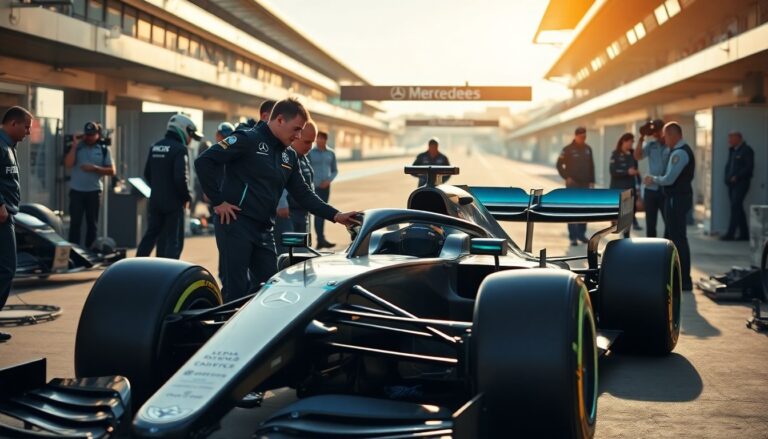
As the world of Formula 1 evolves, Mercedes finds itself adapting to significant changes imposed by the FIA. The introduction of ground-effect cars presented numerous challenges for the team, which faced a downturn after a period of unprecedented success. With the FIA’s recent clampdown on flexible wings, Mercedes had to recalibrate its strategies moving into the next season.
The onset of the ground-effect era was not kind to the Silver Arrows. After dominating the championship with eight consecutive titles, the transition to new regulations left them scrambling to maintain their competitive edge. The flexible wings that were initially a part of their design strategy have since come under scrutiny, leading to a period of adjustment for the team.
Drivers’ Perspectives on Ground Effect Cars
Notably, the drivers have had mixed feelings about the ground effect cars that will soon be phased out. Seven-time champion Lewis Hamilton has been vocal about his dissatisfaction with the current generation of cars. In a recent interview, he stated, “There is not a single thing I will miss about these cars. Literally, there’s nothing. I haven’t enjoyed it.” His sentiments resonate with many in the paddock who are ready for a change.
Similarly, Carlos Sainz, who replaced Hamilton at Ferrari, echoed these thoughts. Reflecting on his struggles with the ground effect cars, he remarked, “I had to relearn a couple of different skills that I didn’t know I would need to drive a Formula 1 car. I’m glad it’s over, and hopefully next time I can go back to a more natural driving style.” This sentiment highlights the challenges that drivers faced in adapting to the unique handling characteristics of these vehicles.
A Mixed Bag of Opinions
However, not all drivers share the same view. Nico Hulkenberg, currently racing for Sauber, expressed a more balanced perspective. He acknowledged that while the handling could be cumbersome, particularly in terms of following other cars closely, there were aspects of the performance that he appreciated, especially during qualifying. “I think just the following, particularly this year, has really become very, very bad,” he said, emphasizing the difficulties faced in close racing.
The Future of Formula 1 Regulations
Looking ahead, the Formula 1 landscape is set to change drastically with new regulations that will reshape the cars. The FIA has introduced a significant reduction in the reliance on ground effect aerodynamics, which has sparked excitement among many drivers wanting a return to more traditional racing dynamics. The upcoming changes include smaller and lighter cars, with a reduction of 30 kilograms, and the replacement of the Drag Reduction System (DRS) with active aerodynamics on both the front and rear wings.
Engine regulations are also evolving, with a shift towards a balanced power distribution of 50% between electric and internal combustion engines fueled by sustainable biofuels. These updates aim to foster a more competitive environment and attract new manufacturers into the fold, offering opportunities for innovation and strategic development.
Key Challenges and Opportunities Ahead
Despite the challenges posed by the regulatory changes, there is a sense of optimism among teams. The FIA’s clampdown on flexible wings is intended to level the playing field, but there are concerns about whether teams like Mercedes will retain their competitive advantages. The controversy surrounding certain engine loopholes has ignited discussions among manufacturers, with some fearing that the early season could be overshadowed by protests against teams perceived to have an unfair edge.
Nonetheless, the path forward is not without its complexities. Manufacturers like Ferrari and Audi have voiced their concerns over potential disparities in engine performance, especially with the compression ratio limitations that have been introduced. As teams prepare their engines for the new season, the implications of these regulations will play a crucial role in determining the competitive landscape.
In conclusion, as Formula 1 navigates through these transformative changes, Mercedes and its drivers are gearing up for a new era. With the ground effect cars soon to be a thing of the past, the challenge now lies in adapting to the evolving regulations while maximizing performance and maintaining a competitive edge.
“`