
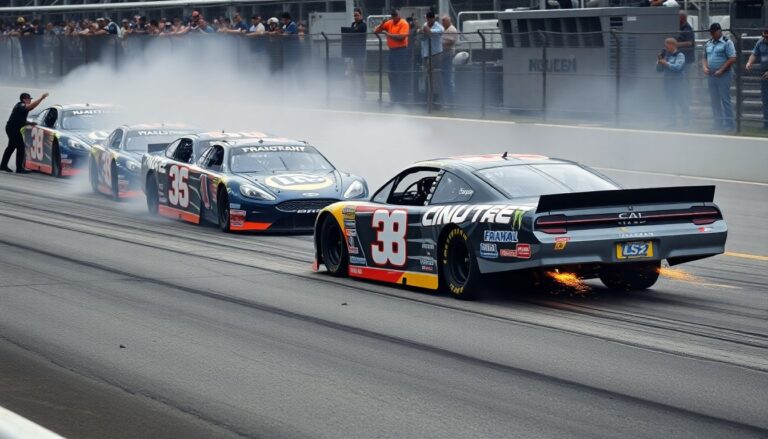
Tyler Reddick chased down victory in a chaotic Daytona 500 on Feb. 15, prevailing amid a final-lap scramble that left teams, fans and broadcasters arguing about how NASCAR managed late-race cautions. At daytona international Speedway the racing was dramatic and messy — and the weekend’s officiating choices amplified every consequence, from fuel strategy to split-second drafting decisions.
A quieter caution policy Race control took a noticeably hands-off approach to late-race incidents across the Cup and Truck races, signaling that they would often let the final lap run under green unless a wreck or debris created an immediate danger. That message reshaped how crews thought about the finish: with fewer expected late cautions, fuel margins tightened and timing became everything. Different race directors applied that stance at different moments, though, and those inconsistencies became a hot topic all weekend.
Big wrecks, small margins Daytona served up multiple large wrecks and constant lead changes, increasing the tactical pressure on teams. On superspeedways, where drafting and timing matter more than outright horsepower, the chance that a late caution would not be called raised the stakes for staying out on older tires or gambling on marginal fuel. Some teams pivoted from impulsive gambles to precise fuel-conservation plans, treating fuel as a controllable variable rather than a hope. Others found their math undone by sudden, uncalled spins and then by multi-car incidents that finally did draw a yellow.
How fuel strategy shaped the ending Crews retooled pit models and radio instructions to squeeze every possible lap from their tanks during long green-flag runs. That paid off unevenly. In several cases, drivers who conserved fuel were able to mount late attacks; in others, teams lost positions when a late incident triggered a caution they hadn’t planned on. The closing moments of the race became a chess match at 200 mph — coordinated lane switches, temporary alliances and last-second choices about whether to push or protect.
Examples from Daytona Stage 2 and the race’s final laps produced huge, elimination-style wrecks that reshuffled contenders in an instant. Meanwhile, isolated spins that didn’t earn a yellow frustrated crews who’d banked on more intervention. Drivers like Bubba Wallace logged long stretches out front thanks to savvy conservation; Michael McDowell briefly inherited the lead during pit cycles. Small timing advantages on pit road and a clean exit from a stop translated into huge gains on track, while misjudged fuel windows dropped others out of contention.
Reddick’s moment Tyler Reddick led for the first time on the final circuit and seized the moment amid two dramatic incidents in the closing seconds. The first crash unfolded with no yellow; the second involved enough cars that officials ultimately stopped the field, effectively locking in the result. Reddick crossed the line to claim his first Harley J. Earl Trophy, delivering a win for 23XI Racing and a celebratory Victory Lane appearance with co-owner Michael Jordan. It was a victory that mixed tactical patience with opportunism — exactly the kind of payoff superspeedways so often produce.
Reaction and the conversation about officiating Responses were split. Some praised the cleaner, greener finishes and argued that allowing more laps to run under green made for a better spectacle. Others warned that the approach increased the risk of fuel-related DNFs and put drivers in tougher safety calculations. NASCAR emphasized that safety is the priority and that officials make real-time judgments based on the specifics of each incident. Still, the episode highlighted how quickly race control calls can change race trajectories — sometimes as decisively as pit strategy or aerodynamics.
What’s next for teams and NASCAR Expect teams to spend the coming weeks digging through telemetry and pit-stop data, tightening fuel models and rehearsing alternate pit sequences in simulations. Engineers will tweak late-race tactics; crews will refine communications for the kinds of rapid decisions Daytona demanded. NASCAR, meanwhile, is likely to keep clarifying guidance on end-of-race cautions so crews can plan with less uncertainty. More explicit protocols would help teams set pit windows and risk tolerances with greater confidence.
For stakeholders outside the garage, the race was also a marketing and media event: sponsors and teams will mine viewership spikes and engagement metrics around the finish, using that data to shape activation plans for the season. Ultimately, the takeaway from Daytona is straightforward: small procedural shifts and split-second judgments carry outsized consequences in modern NASCAR. The sport — officials, teams and broadcasters alike — will now have to decide whether to favor predictability or drama going forward, and they’ll make that decision with telemetry and postrace reviews firmly in hand.