
Argomenti trattati
The landscape of grassroots motor sport saw two notable national efforts that focused on accessibility, skills development and fresh formats. In Peru, the Touring y Automóvil Club Del Perú closed its season with Festiracing , a two-day celebration held on 20–21 December at the Kartódromo de Asia that mixed fan engagement with formal training. Meanwhile in Norway, the national federation launched an electric karting project in based on the Arrive and Drive concept, using a fleet of 17 electric karts to create an approachable entry point for children aged 9 to 12. Both efforts leaned on structured training and innovation to broaden participation.
Each programme targeted different but complementary parts of the grassroots ecosystem: Peru prioritized the dual goals of community celebration and the certification of race officials, while Norway emphasized sustainable, user-friendly karting to introduce young people to competition. Both projects were supported by FIA initiatives—the Peruvian event by the FIA Motorsport Training Programme and the Norwegian project by the FIA Motor Sport Funding Programme—underscoring how federation-backed funding and education can underpin successful local interventions.
Peru: Festiracing as a festival and training hub
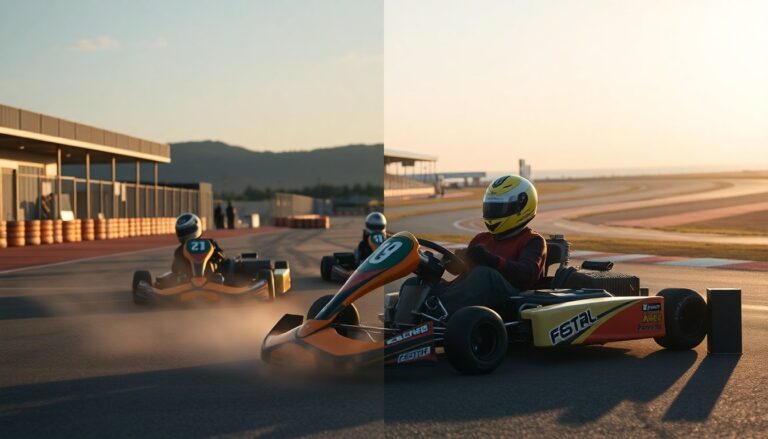
Festiracing combined approachable fan experiences with structured official preparation. The Kartódromo de Asia hosted more than 500 attendees over the two days, offering free karting sessions, sim racing areas, exhibitions, seminars and driver meet-and-greets that made the event family-friendly and accessible. Importantly, the festival also served as the final training stage for 60 prospective race officials, covering karting, rally and circuit regulations, plus practical on-track demonstrations focused on incident response and safety roles. This mix ensured that the event was not only entertaining but also reinforced a pipeline of qualified personnel.
Training pathways and practical exercises
The Peruvian programme implemented a structured pathway for candidate officials, integrating classroom instruction with live demonstrations. Practical sessions showcased the roles and responsibilities of safety marshals, incident commanders and stewards, while seminars delivered the regulatory context needed to officiate national events. The aim was to increase the number of certified officials available across Peru so that the national calendar could grow with consistent, robust governance. By coupling education with community outreach, the ASN sought to make entering motor sport both welcoming and professionally supported.
Norway: electric karts and the arrive and drive model
In Norway, the emphasis was on creating a low-barrier sporting experience by combining sustainability with accessibility. The project used the Arrive and Drive format—where participants simply turn up to race without owning equipment—and deployed 17 electric karts at three venues: Varna, Rudskogen and Trøgstad. Sessions combined basic driving theory, safety modules, tailored coaching and a concluding race simulation. The target group of 9 to 12 year olds received an introductory experience designed to demystify competition while minimizing logistical and financial barriers.
Scaling and political visibility
The Norwegian initiative drew high-profile support: government figures, including the Minister of Transport and Communication, participated as event starters, and parliamentarians attended, signaling broad public backing. The federation announced plans to extend the age range to 16 and to introduce a higher-level ‘pro’ course for young drivers with prior experience. These next steps aim to create a clear progression from first exposure to more advanced training, helping to raise standards and retain participants within the sport over time.
Common lessons and lasting impact
Although different in format, the Peruvian and Norwegian efforts share core principles: make motor sport accessible, pair participation with formal learning, and create pathways that sustain long-term involvement. Peru’s blend of entertainment and formal officiating training strengthens event governance and community ties, while Norway’s electric, sustainable approach lowers entry barriers and appeals to families and schools. Both programmes illustrate how targeted investment—especially when aligned with FIA support—can expand grassroots engagement, improve safety and cultivate future competitors and officials.
Looking ahead, these models provide templates for ASNs and clubs elsewhere: integrate public-facing, fun activities with rigorous training; use sustainable technologies such as electric karts to attract new demographics; and design progression pathways so novices can evolve into skilled participants or qualified officials. By combining celebration, education and innovation, national federations can ensure grassroots motor sport grows inclusively and resiliently.