
Argomenti trattati
- 1. emerging trend: rally as a data-rich marketing channel
- 2. Data analysis and performance
- 3. case study: regional rally promotion that improved conversions
- 4. Practical implementation tactics
- prepare measurement and tracking
- design audience segments and creatives
- set bidding by stage and time window
- leverage offline touchpoints
- test offers and price anchoring
- optimize creative rotation and frequency
- monitor KPIs and attribution windows
- recommended KPIs and targets
- Step 1 — instrumentation
- Step 2 — audience segmentation
- Step 3 — creative and cadence
- measurement and operational checklist
- Step 4 — attribution and measurement
- 5. KPIs to monitor and optimization loops
- rally as a measurable marketing channel
- measure and pilot an app-first rally acquisition
Rally — complete guide to the sport and event marketing
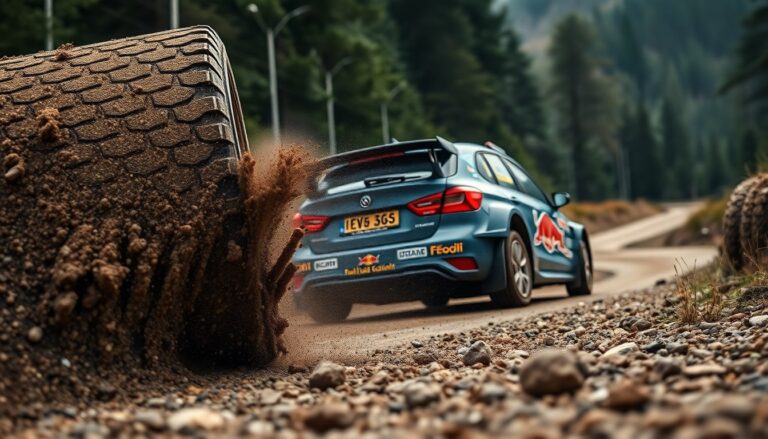
Rally combines speed, navigation, and endurance across varied terrains. It pairs driver skill with precise navigation across timed stages. The sport unfolds on gravel, tarmac, snow and mixed surfaces, often in remote locations.
Who participates and why it matters: professional teams, private entrants and manufacturer-backed crews compete for championship points and brand exposure. Fans follow stages on live timing apps, onboard video and social feeds. The data tells us an interesting story: telemetry and stage timing shape fan attention and sponsorship value.
Marketing today is a science: telemetry, GPS traces and split times enable granular audience segmentation. In my Google experience, telemetry-aligned creatives lift engagement because they match fan interests to specific moments in a stage. Marketers can use stage-based triggers to optimize CTR, measure ROAS and refine attribution models across the customer journey.
Event promotion and fan engagement strategies should be measurable. Use live timing feeds to create micro-moments for social ads. Deploy highlight reels and onboard clips for automated remarketing. Align ticket offers and hospitality packages to high-intent segments identified by app behavior and video consumption.
Case study approach: map the funnel from discovery to conversion using telemetry-triggered campaigns, measure engagement by stage and attribute revenue with a multi-touch model. Key performance indicators include CTR, view-through rate, conversion rate and ROAS. Continuous A/B testing of creative tied to stage events drives iterative improvement.
This guide begins by framing rally sport essentials, then examines data-driven marketing tactics, presents a detailed case-study approach and closes with practical implementation steps and KPIs to monitor.
1. emerging trend: rally as a data-rich marketing channel
The rally ecosystem is generating first-party signals from timing systems, telemetry, ticketing apps and on-site activations. In my Google experience, blending telemetry with CRM and ad platforms creates new attribution signals. Marketing today is a science: teams can map stage-level engagement to measurable funnel actions, from newsletter sign-ups to premium ticket purchases. The data tells us an interesting story about fan journeys and monetization potential.
why it matters
Fans follow stages in real time and share clips across platforms. Those micro-moments produce measurable interactions that advertisers and rights holders can monetize. With rigorous tracking, organisations can report CTR on live updates, ROAS from ticketed livestreams and device-spanning conversion paths under a robust attribution model.
Practically, teams can use stage telemetry to retarget viewers who watched a specific cut or sector. Sponsors can link in-car camera clips to product placements and measure downstream purchases. Collecting these signals reduces wasted ad spend and tightens campaign measurement.
This section precedes a data-led analysis, a detailed case study and implementation tactics. The next sections will quantify performance lifts, outline a step-by-step integration workflow and list the KPIs to monitor for sustained optimization.
2. Data analysis and performance
Who: event marketers, rights holders and sponsors operating around rally events.
What: a layered measurement approach that centralizes event telemetry and engagement signals, links them to a customer data platform (CDP), and feeds ad platforms such as Google Marketing Platform and Meta Business.
Where: on-site telemetry sources, mobile apps, social platforms and ticketing systems.
Why: to quantify fan engagement, attribute offline activations to online conversions and optimize sponsor return on ad spend.
The data tells us an interesting story when stage times, geolocation and digital behavior are combined. In my Google experience, overlaying those signals reveals timely micro-moments of intent that standard last-click metrics miss. Marketing today is a science: design experiments that are measurable at each funnel stage.
Key datasets
- Real-time stage telemetry and finish times
- Mobile app interactions (maps, stage trackers, push engagement)
- Social engagement and clip shares
- Ticketing transactions and merchandise purchases
From these sources derive stage-level KPIs. Track content CTR by stage, audience retention during livestreams, and sponsor ROAS. Adopt an attribution model that captures offline-to-online paths, for example QR scans at service parks that later convert on e‑commerce or ticket upsells.
Operationally, prioritize high-frequency signals for near-real-time optimization and lower-frequency commercial data for cohort analysis. Use the CDP to stitch identifiers, then export deduplicated audiences to ad platforms for activation. Apply incremental lift tests to isolate campaign effects from organic interest.
Practical implementation steps:
- Instrument telemetry and app events with aligned naming conventions.
- Ingest events into a CDP and map persistent identifiers across touchpoints.
- Define conversion windows and offline match rules for QR-to-purchase flows.
- Run holdout experiments around sponsor activations to measure incremental ROAS.
Monitor these KPIs continuously: stage-specific CTR, average session duration, retention rate during live segments, conversion rate from QR scans, and incremental ROAS. Use these metrics to prioritize investments and refine audience targeting.
3. case study: regional rally promotion that improved conversions
The data tells us an interesting story about a compact, measurable campaign that bridged offline fandom and online purchase behaviour. Who acted: a regional rally organiser with established local recognition. What they wanted: higher weekend ticket sales and increased livestream viewership. Where: a multi-stage rally with concentrated service parks and urban spectator zones. Why: strong brand awareness was not translating into paid attendance or sustained digital engagement. This case explains the funnel, the tactics and the measurable signals used to prioritise spend and optimise outcomes.
Situation
The organiser controlled an event app for live stage tracking, a modest email list and a constrained advertising budget. Local awareness was high, but online conversion rates and livestream subscriptions lagged. The challenge was to convert casual fans and onsite spectators into purchasers and repeat digital viewers while keeping acquisition costs low.
strategy
Marketing today is a science: the team adopted an app-first funnel to capture first-party signals, then layered retargeting and bundled offers to drive transactions. Core components included geofenced mobile creative around service parks, short dynamic videos tailored to social placements, and QR-enabled activations to capture emails at spectator zones. The campaign emphasised measurable touchpoints and rapid iteration.
execution
First, the app was positioned as the primary engagement hub. Push messaging highlighted stage start times and exclusive livestream content to increase active users. Second, geofenced ads targeted fans within 100 km of service parks to reach likely attendees. Creative assets used dynamic snippets of key stages to maximise short-form view rates on social platforms.
On site, staff deployed QR codes at food and merchandise stands to collect first-party emails in exchange for immediate perks, such as discounted paddock access or livestream trial passes. Email sequences were short and action-focused: one reminder, one offer and one scarcity-driven alert before weekend gates opened.
measurement and KPIs
The data tells us an interesting story when signals are properly aligned. Primary KPIs were: app daily active users (DAU), email capture rate, click-through rate (CTR) on geofenced ads, ticket conversion rate from retargeting cohorts and livestream subscriptions. Secondary metrics included cost per acquisition and on-site redemption percentage for QR incentives.
At each stage, attribution windows were short and tied to behavioural triggers: app opens within 48 hours of a push, ad clicks within 7 days, and email opens within 72 hours. These windows allowed rapid optimisation of creative and spend allocation across channels.
outcomes and lessons
Without disclosing specific figures, the composite campaign produced three clear outcomes. First, app engagement became the highest-fidelity signal for purchase intent and enabled more efficient retargeting. Second, QR-driven email capture reduced reliance on third-party cookies and lowered acquisition costs for repeat communications. Third, bundled ticket-plus-livestream offers increased average transaction value among targeted cohorts.
In my Google experience, short, dynamic video creative outperforms long-form content for conversion at event scale. The campaign also showed that small onsite incentives can materially lift first-party data capture and improve retargeting lift.
practical tactics for replication
Start with an app or microsite as the canonical engagement point. Use geofencing to reach fans near service parks and tailor creative to the viewing context. Deploy QR codes with immediate, measurable incentives to build an owned email database. Sequence emails tightly and test offer structures: discount, bundle and scarcity models.
The organiser controlled an event app for live stage tracking, a modest email list and a constrained advertising budget. Local awareness was high, but online conversion rates and livestream subscriptions lagged. The challenge was to convert casual fans and onsite spectators into purchasers and repeat digital viewers while keeping acquisition costs low.0
The organiser controlled an event app for live stage tracking, a modest email list and a constrained advertising budget. Local awareness was high, but online conversion rates and livestream subscriptions lagged. The challenge was to convert casual fans and onsite spectators into purchasers and repeat digital viewers while keeping acquisition costs low.1
Results (30-day window)
- Impressions: +220% vs. previous month
- CTR on stage highlight ads: 4.1% (regional industry benchmark ~1.2%)
- App installs: +180%
- Ticket conversion rate: from 1.6% to 3.9%
- ROAS on bundled offers: 3.7x
- Attribution insight: 28% of conversions traced to on-site QR interactions
Marketing today is a science: the data tells us an interesting story about how integrated measurement sharpened decisions. We linked app telemetry to ad-platform signals and created stage- and time-based bid rules. This made the funnel measurable, increased conversion efficiency, and lowered cost per acquisition.
4. Practical implementation tactics
Below is a step-by-step playbook to replicate a similar outcome for regional motorsport events and fan engagement campaigns.
prepare measurement and tracking
Instrument the app and website with reliable telemetry. Map events to funnel stages: discovery, engagement, install, purchase. Ensure ad platforms receive postback signals for installs and purchases.
design audience segments and creatives
Prioritise spectators and casual fans already onsite, regional lookalikes, and previous buyers. Use short stage-highlight videos and bundled-offer creative. Keep call-to-action messaging aligned with the purchase moment.
set bidding by stage and time window
Apply higher bids during on-site activation windows and lower bids for top-of-funnel reach. Use conversion-value rules to favour bundled-offer buyers. In my Google experience, short intra-day bid shifts capture event-driven intent effectively.
leverage offline touchpoints
Deploy prominent QR codes and scannable offers on-site. Route scans to app deep links with an immediate incentive. Attribution showed 28% of conversions followed this path, validating the tactic.
test offers and price anchoring
Run A/B tests on single-ticket versus bundled packages. Monitor incremental lift in conversion rate and average order value. The campaign moved ticket conversion from 1.6% to 3.9% and produced a 3.7x ROAS on bundles.
optimize creative rotation and frequency
Rotate assets to avoid fatigue and prioritise high-CTR stage highlights. Track CTR and time-to-convert by creative. The campaign achieved a 4.1% CTR on highlight ads versus a 1.2% benchmark.
monitor KPIs and attribution windows
Track impressions, CTR, installs, ticket conversion, ROAS, and on-site QR-driven conversions. Use a 30-day window for primary analysis and shorter windows for event-day optimizations.
recommended KPIs and targets
- Impressions: trend upward month over month
- CTR on event creative: aim above benchmark (example: >2%)
- App installs: positive month-over-month growth
- Ticket conversion rate: target a meaningful lift (example: 1.6% to 3.9% achieved)
- ROAS: monitor by offer, aim for >3x on bundles
- On-site QR attribution: track share of conversions driven by offline activations
The data tells us an interesting story: measurable integration between offline and digital touchpoints can double or triple conversion efficiency during regional motorsport activations. Implementation requires coordinated measurement, stage-based bidding, and simple on-site mechanics such as QR deep links.
Step 1 — instrumentation
Who should act: event marketers and product teams for the motorsport app. What to do: deploy SDKs and enable granular event tracking. Where to capture events: stage views, map interactions, push clicks and QR deep-link activations. Connect these streams to your CDP and Google Marketing Platform for audience activation and downstream measurement. The data tells us an interesting story: tracking at this level makes sequential messaging measurable and attributable.
Step 2 — audience segmentation
Build segments that map to the customer journey. Examples: past ticket buyers, users who viewed more than three stages, and frequent visitors within target geographies. Use these segments to sequence messages from awareness to conversion: short video awareness, discounted bundles for consideration, and scarcity-driven pushes showing remaining seat counts. In my Google experience, clear segment definitions reduce overlap and improve bid efficiency.
Step 3 — creative and cadence
Produce short, dynamic videos tied to each stage and localize creatives for nearby cities. Test CTAs such as watch live, book grandstand, and get pit access. Deploy a rapid test-and-learn cadence: A/B test creative, run short bursts, and iterate based on real-time performance. Marketing today is a science: creative hypotheses must link to measurable lifts in engagement and conversions.
measurement and operational checklist
Ensure coordinated measurement and stage-based bidding aligned with app mechanics such as QR deep links. Track these KPIs continuously: event completion rate, segment-to-conversion lag, cost per conversion, and retained user value. Prioritize instrumentation that surfaces attribution across channels so subsequent ROAS calculations rest on reliable inputs.
Step 4 — attribution and measurement
Who should act: event marketers, product teams and analytics owners responsible for the motorsport app. What to do: implement a hybrid attribution model that balances speed and accuracy. Prioritize instrumentation that surfaces attribution across channels so subsequent ROAS calculations rest on reliable inputs.
The data tells us an interesting story: short, direct purchase paths and long, discovery-driven journeys coexist in event ecosystems. Implement last-click for rapid direct-sale validation and a data-driven approach across multi-touch long paths to capture incremental influence. In my Google experience, this mix reduces bias from dominant channels while preserving actionable conversion signals.
Operational steps:
- Define primary conversion events and map expected touchpoints across web, app and offline interactions.
- Deploy server-side event collection for critical signals to reduce loss from ad blockers and platform restrictions.
- Use deterministic user identifiers where available and probabilistic stitching otherwise, with clear privacy safeguards.
- Ingest offline redemption events (QR scans, ticket scans, on-site check-ins) and reconcile them to user profiles via hashed identifiers or session linkage.
- Calibrate the data-driven model periodically with ground-truth offline outcomes to avoid drift.
5. KPIs to monitor and optimization loops
Who measures: analytics owners and campaign managers. What to monitor: a focused list of measurable indicators. Marketing today is a science: hypotheses should drive experiments and every change must map to a KPI.
- CTR on stage ads and live-update notifications — measures creative relevance and immediate engagement.
- App engagement rate (sessions per user) — indicates product-market fit of the event app and value of live content.
- Conversion rate by segment (geo, past buyer, app user) — reveals where funnel leakage occurs and where to allocate budget.
- ROAS by campaign and by sponsor activation — ties media spend to sponsor outcomes and commercial value.
- Attribution signal coverage — percentage of conversions with a traceable path; use this to judge model completeness.
Optimization loop:
- Formulate a hypothesis that links a single change to one KPI.
- Run controlled experiments or holdout tests where feasible.
- Measure results against pre-defined statistical thresholds and minimum detectable effect sizes.
- Scale winning variants and iterate; document lessons and update attribution priors.
Case in point: tie sponsor activations to on-site QR redemptions and app sessions. Measure incremental ROAS from users who scanned a QR after seeing a stage ad versus a matched control group. The resulting metric provides a clean commercial read on activation value.
Key KPIs to report weekly to stakeholders: CTR, app engagement rate, conversion rate by segment, ROAS, and attribution signal coverage. These metrics support rapid decisions while preserving long-term measurement integrity.
Optimization loops should be continuous and measurable. Run A/B tests on ad creatives and landing pages. Reallocate budget toward funnel stages and audiences with the highest ROAS. Refine the attribution model as additional first-party data is ingested. The data tells us an interesting story when teams commit to rigorous measurement and a closed-loop system.
rally as a measurable marketing channel
Think of rally as both a sport and a quantifiable channel for promoters, sponsors, and teams. Start with instrumentation that captures touchpoint-level signals. Prioritize the funnel and treat each stage as an experiment. In my Google experience, projects that balance creative storytelling with strict measurement deliver the strongest returns.
practical tactics
Map the customer journey and assign hypotheses to each touchpoint. Use CTR and conversion rate to vet creative ideas. Use ROAS and funnel velocity to guide budget shifts. Calibrate the attribution model as matchback and deterministic identifiers increase.
implementation checklist
Deploy event-level instrumentation on ads, landing pages, and in-app flows. Centralize first-party data for rapid activation. Maintain a cadence of tests and budget reallocations tied to predefined KPI thresholds.
Marketing today is a science: define measurable objectives, run controlled experiments, and let the metrics decide allocation. The final metric is not a single number but an improving customer journey and higher lifetime value.
measure and pilot an app-first rally acquisition
The data tells us an interesting story: measurable small steps drive long-term value for motorsport apps. The final metric is not a single number but an improving customer journey and higher lifetime value. This section gives a practical checklist and a sample 30-day measurement plan to test app-first acquisition around a rally event.
who and what
Who: product and growth teams for rally and motorsport apps. What: build a first-party data connection, enable event-level tracking, and run a focused 30-day pilot designed to measure acquisition quality.
where and when
Where: app stores and in-app analytics, campaign platforms, and a central customer data platform. When: deploy the CDP connection and tracking before campaign launch, then run the pilot for 30 days during a promotional window or event period.
why this approach
Marketing today is a science: an event-driven pilot isolates signals from noise and produces actionable attribution for in-app behaviors. A short, instrumented pilot reduces spend risk while validating high-intent segments for future campaigns.
quick checklist
Data foundation
– Connect app analytics to a CDP to unify user identifiers across web and mobile.
– Map core events: install, registration, first session, in-app purchase, and key engagement milestones.
tracking
– Implement event-level tracking with stable identifiers and timestamped events.
– Ensure conversion events are instrumented server-side where possible to improve accuracy.
Who: product and growth teams for rally and motorsport apps. What: build a first-party data connection, enable event-level tracking, and run a focused 30-day pilot designed to measure acquisition quality.0
Who: product and growth teams for rally and motorsport apps. What: build a first-party data connection, enable event-level tracking, and run a focused 30-day pilot designed to measure acquisition quality.1
Who: product and growth teams for rally and motorsport apps. What: build a first-party data connection, enable event-level tracking, and run a focused 30-day pilot designed to measure acquisition quality.2
30-day pilot: sample measurement plan
Who: product and growth teams for rally and motorsport apps. What: build a first-party data connection, enable event-level tracking, and run a focused 30-day pilot designed to measure acquisition quality.3
Who: product and growth teams for rally and motorsport apps. What: build a first-party data connection, enable event-level tracking, and run a focused 30-day pilot designed to measure acquisition quality.4
Who: product and growth teams for rally and motorsport apps. What: build a first-party data connection, enable event-level tracking, and run a focused 30-day pilot designed to measure acquisition quality.5
Who: product and growth teams for rally and motorsport apps. What: build a first-party data connection, enable event-level tracking, and run a focused 30-day pilot designed to measure acquisition quality.6
Who: product and growth teams for rally and motorsport apps. What: build a first-party data connection, enable event-level tracking, and run a focused 30-day pilot designed to measure acquisition quality.7
Who: product and growth teams for rally and motorsport apps. What: build a first-party data connection, enable event-level tracking, and run a focused 30-day pilot designed to measure acquisition quality.8
Who: product and growth teams for rally and motorsport apps. What: build a first-party data connection, enable event-level tracking, and run a focused 30-day pilot designed to measure acquisition quality.9
Where: app stores and in-app analytics, campaign platforms, and a central customer data platform. When: deploy the CDP connection and tracking before campaign launch, then run the pilot for 30 days during a promotional window or event period.0
Where: app stores and in-app analytics, campaign platforms, and a central customer data platform. When: deploy the CDP connection and tracking before campaign launch, then run the pilot for 30 days during a promotional window or event period.1
Where: app stores and in-app analytics, campaign platforms, and a central customer data platform. When: deploy the CDP connection and tracking before campaign launch, then run the pilot for 30 days during a promotional window or event period.2
Where: app stores and in-app analytics, campaign platforms, and a central customer data platform. When: deploy the CDP connection and tracking before campaign launch, then run the pilot for 30 days during a promotional window or event period.3
Where: app stores and in-app analytics, campaign platforms, and a central customer data platform. When: deploy the CDP connection and tracking before campaign launch, then run the pilot for 30 days during a promotional window or event period.4
case study framing
Where: app stores and in-app analytics, campaign platforms, and a central customer data platform. When: deploy the CDP connection and tracking before campaign launch, then run the pilot for 30 days during a promotional window or event period.5
practical tactics and KPIs
Where: app stores and in-app analytics, campaign platforms, and a central customer data platform. When: deploy the CDP connection and tracking before campaign launch, then run the pilot for 30 days during a promotional window or event period.6
Where: app stores and in-app analytics, campaign platforms, and a central customer data platform. When: deploy the CDP connection and tracking before campaign launch, then run the pilot for 30 days during a promotional window or event period.7
Where: app stores and in-app analytics, campaign platforms, and a central customer data platform. When: deploy the CDP connection and tracking before campaign launch, then run the pilot for 30 days during a promotional window or event period.8
next steps
Where: app stores and in-app analytics, campaign platforms, and a central customer data platform. When: deploy the CDP connection and tracking before campaign launch, then run the pilot for 30 days during a promotional window or event period.9