
Argomenti trattati
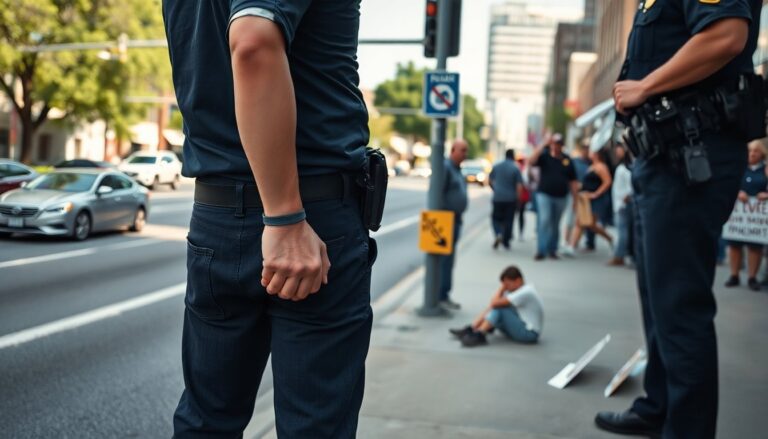
On March 28, 2026, Memphis Police were called to the area around 2nd Street and Beale Street after attendees at an organized gathering moved off park property and into the roadway. Organizers had permission to use Robert R. Church Park, but the issued permit did not authorize a march. What began as a permitted assembly became a street-level obstruction when participants entered the travel lanes, prompting officers to respond with the dual priorities of restoring traffic flow and ensuring the safety of both demonstrators and the public.
The situation developed over an extended period as officers repeatedly asked the crowd to relocate to the sidewalk. For roughly 40 minutes, uniformed personnel issued verbal instructions and warnings requesting that participants remove themselves from the roadway. Despite those efforts, a group of people moved toward MLK Ave and Fourth, where several individuals linked arms, forming a human chain and intentionally preventing vehicles from passing. The sustained occupation of the street escalated enforcement decisions and set the scene for detentions.
Timeline of events
The sequence began with a lawful assembly in the park and diverged once march activity occurred without authorization. Officers first observed the crowd in the roadway and made a series of clear, public commands asking them to return to the sidewalks. After approximately 40 minutes with no compliance from some participants, police began to detain those who continued to block vehicular movement. During the process of making arrests, some individuals resisted physical custody, and one officer used pepper spray as an intermediate force option. In total, six people were taken into custody at the scene.
Police actions and tactics
Communication and warnings
Officers used repeated verbal instructions as the primary tool to resolve the obstruction, emphasizing de-escalation and lawful direction. The deployment of warnings over a sustained 40-minute window demonstrates an effort to avoid physical confrontation and to allow participants the chance to comply voluntarily. The use of pepper spray occurred only after attempts to clear the roadway and detain noncompliant individuals encountered resistance. Police reports note that officers aimed to balance enforcement with concern for public safety, restoring access to roadways while attempting to limit harm.
Detention and resistance
Authorities detained six people at the scene; three of those detained were formally charged following the incident. Several arrestees reportedly interlocked their arms in a deliberate effort to maintain the blockade, which complicated removal and increased the likelihood of physical resistance. When officers proceeded to effect arrests, resistance by some individuals prompted escalation consistent with training and departmental policy. The events were documented by officers and are part of the investigatory record that will inform potential additional actions.
Legal outcomes and ongoing investigation
The incident remains under active inquiry by Memphis Police. Of the six detained, three have been charged: Rueben Burch, 33, faces counts of disorderly conduct, obstructing a highway/passageway, interfering with an officer serving process, and resisting official detention. Adam Nelson, 41, is charged with disorderly conduct, failure to obey a traffic officer, and obstructing a highway/passageway. David Rahaim, 42, faces charges of disorderly conduct, obstructing a highway/passageway, and resisting official detention. The department has stated that the matter is being investigated further and that additional details will be released as appropriate.
Officials also reminded event organizers and the public that a permit authorizes specific activities within a designated area and that departing those terms—such as initiating an unauthorized march into traffic—can lead to enforcement. The incident highlights the tension that can arise when demonstrations intersect with busy transportation corridors and underscores the importance of clear communication between organizers and city authorities. As the investigation continues, the city will review reports, witness statements, and any available video to determine the full context and whether further charges or administrative actions are warranted.