
Executive summary
Mexico has evolved into a lynchpin of North American automotive manufacturing. Our review of trade records, company filings and sector studies shows components routinely cross the US–Mexico border multiple times before final assembly. Production spans light vehicles, heavy-duty trucks and a vast auto‑parts network. Investment decisions, trade rules and OEM footprints shape where factories and suppliers locate, while technology pressure—especially electrification, batteries, lightweight materials and low‑emission heavy‑duty solutions—is reshaping supplier opportunities. What follows maps the clusters, reconstructs how value flows through the system, names the key actors and outlines the commercial and policy implications for suppliers and policymakers.
How the picture emerges (evidence base)
We drew on customs ledgers, export manifests, investment filings, procurement notices and corporate reports. These sources consistently show multi‑stage production: stamped bodies, transmissions and electrical modules often move back and forth across the border during build cycles. USMCA’s rules of origin and Mexico’s web of trade agreements create the economic logic for many sourcing decisions, enabling tariff‑free movement for qualifying parts and encouraging regional supply integration. Official shipment data support the headline numbers cited below.
Supply‑flow reconstruction: how things move
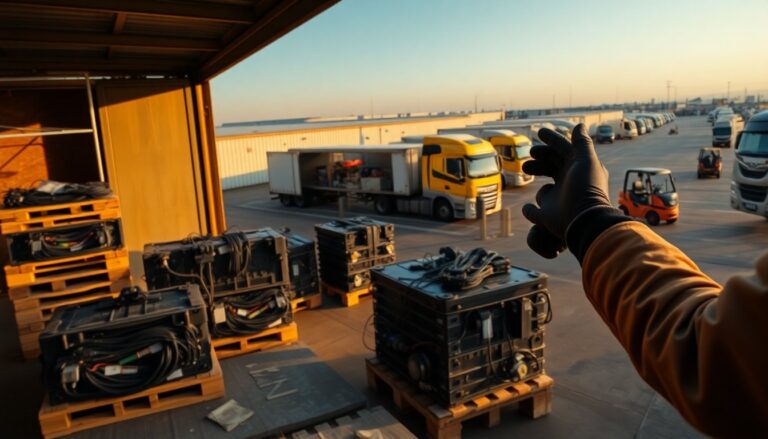
A typical value chain starts with stamping and machining in regional clusters, moves to module assembly at tier suppliers, then to systems integration and final assembly. OEMs tend to site plants close to border logistics corridors and major ports so components—battery modules, drivetrains, chassis subassemblies—can pass through several value‑adding steps before vehicle completion. That iterative movement exploits cost, scale and proximity advantages while allowing suppliers and assemblers to meet tighter technical standards for electrified and emissions‑controlled vehicles.
The geography: regional clusters and what they mean
Manufacturing is concentrated in distinct corridors:
– Northern states (e.g., Coahuila, Nuevo León): headline assembly and heavy‑truck production.
– Western corridor (Guanajuato, Querétaro): mix of passenger‑vehicle output.
– Central states (Puebla, State of Mexico): dense assembly and parts ecosystems.
Across multiple cases, supplier density rises sharply within roughly 100 km of major plants—reducing transit times, inventory buffers and increasing traceability. That proximity is deliberate: it shortens lead times for just‑in‑time logistics and simplifies quality control. But it also concentrates systemic risk—local disruptions cascade quickly through nearby suppliers and assembly lines.
Scale and trade figures (2026)
– Light‑vehicle exports: USD 104.8 billion (≈79.7% destined for the United States).
– Heavy‑duty vehicle exports: ~USD 52.9 billion.
– Auto‑parts exports: ~USD 106 billion.
Mexico ranked among the top global producers in each category. The light‑vehicle segment alone is supported by 37 assembly plants across 12 states, operated by major global brands.
Who drives the sector
Three groups shape outcomes:
1. OEMs — Anchor assembly, set platform requirements, and steer local supplier demand. Major light‑vehicle plants in Mexico include operations from Audi, BMW, Ford, GM, Honda, Hyundai, Kia, Mazda, Nissan‑Infiniti, Mercedes‑Benz, Stellantis, Toyota and Volkswagen.
2. Tiered suppliers — From large multinational Tier‑1 firms investing in battery systems and lightweight materials to thousands of domestic Tier‑2 and Tier‑3 firms producing castings, harnesses, seating and tooling.
3. Policy and logistics actors — Trade rules, state incentives, ports, freight forwarders and regional development agencies that enable cross‑border flows and influence site selection.
Investment patterns and FDI
Foreign direct investment remains central. In 2026 U.S. investors led inflows with roughly 45% of FDI into the automotive‑related sector, followed by Japan (12%) and Germany (10%). About half of reported investment targeted transportation equipment—tooling, modules and powertrain manufacturing. Investors cite tariff predictability under USMCA and Mexico’s network of FTAs as key reasons to commit capital regionally.
Technology trends and procurement signals
There’s a clear tilt toward electrification and sophisticated electronics. Procurement notices and tender appendices repeatedly request:
– Battery technology and cell/module integration
– High‑voltage management systems and power electronics
– Printed circuit boards, telematics hardware and charging infrastructure
– Lightweight assemblies, thermal management and powertrain electronics
Heavy‑duty fleets also seek multi‑fuel engines, hydrogen‑ready systems and advanced diagnostics.
These tenders increasingly bundle hardware with software and lifecycle support—favoring suppliers who can deliver electro‑mechanical integration, certification and remote diagnostics.
Implications for suppliers and policymakers
Commercial and technological consequences are immediate:
– Opportunity: Suppliers with battery‑pack expertise, thermal and cell‑integration capability, power electronics and lightweight structural know‑how stand to win business as electrification accelerates.
– Risk: Heavy reliance on the U.S. market and concentrated regional clusters raise exposure to demand swings, policy shifts and localized disruptions.
– Capabilities: Firms lacking software, certification pathways or emissions reporting will face longer qualification timelines. Conversely, companies that can bundle hardware, firmware and services will be more competitive.
– Infrastructure & workforce: Logistics bottlenecks, port and rail performance, and the availability of trained technicians and engineers will determine whether regions can capture higher‑value production.
Near‑term outlook: what to watch
Expect continued demand for electrification components, battery assembly capacity and materials innovation, along with:
– Supplier upgrades and selective on‑shoring of advanced modules.
– Expanded local R&D and engineering centers tied to OEM platforms.
– Investments in logistics, customs modernization and workforce training.
Key indicators to monitor: investment approvals, export volumes, supplier contract announcements, certification outcomes and procurement calendars (industry events such as INA Paace Automechanika, Automotive Meetings and Expo Transporte ANPACT often precede formal tenders).
Practical advice for market entrants
– Align technical capabilities with OEM platform requirements and certification standards (AMIA and INA registries matter).
– Prioritize proximity to targeted assembly clusters or secure logistics partnerships.
– Combine hardware competence with software, diagnostics and lifecycle services to shorten qualification windows.
– Track procurement notices and certification timelines to time market entry and pilot programs effectively.
Final note
Mexico’s auto ecosystem blends scale, proximity and a rising technological agenda. That mix creates fertile ground for suppliers who can meet certification, integration and logistics demands—but it also rewards nimble adaptation as electrification and trade dynamics reshape where and how vehicles are built. We will continue updating these findings as new filings, tenders and investment announcements become available.