
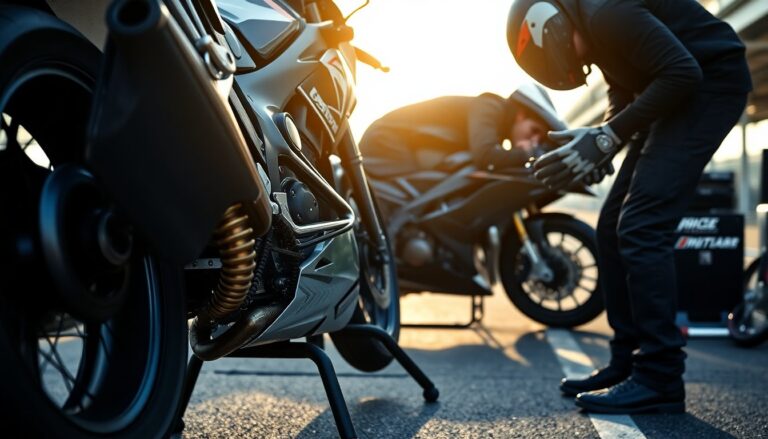
Penrite steps up as naming-rights partner, and ASBK is gearing up for change. The sponsorship brings fresh funding and commercial muscle to Australia’s top circuit-racing series, while organisers prepare a phased move to a summer calendar in 2027. The 2026 season will act as a bridge year: new riders, altered logistics and technical priorities will all test how teams adapt ahead of the full switch.
What Penrite’s partnership actually means
– Who and what: Penrite Oil becomes the championship’s naming-rights partner. Race organisers remain in control of sporting and technical decisions, while Penrite’s branding and activation will feature across paddocks, broadcasts and hospitality programs.
– Timing: The partnership starts with the 2026 season and runs through the transition toward a summer schedule in 2027.
– Why it matters: Naming-rights sponsors typically underwrite event operations, marketing and broadcast enhancements. Expect more investment in production values, paddock activation and prize support—elements that can lift the weekend experience for fans and increase exposure for teams and riders.
Commercial change driving technical and broadcast priorities
– Sponsors today want measurable returns. That often means technical collaborations, bespoke content and priority broadcast slots—not just logos on leathers. For ASBK, that commercial logic will affect decisions from TV windows to paddock programming.
– Broadcasters and partners favour larger audiences and better weather windows, which helps explain the move to a summer calendar. That shift changes operational rhythms: teams must rethink cooling, tyre strategies and component durability, while circuits will need to enhance shade, hydration and medical provisions for hotter race weekends.
– Media expectations will push for upgraded live production—more on-bike data, richer digital content and primetime broadcast scheduling. Organisers and teams that integrate media workflows with race operations stand to gain the most.
2026: a transitional season with practical consequences
– The 2026 calendar will act as a stepping stone. Expect compressed pre-season testing, staggered rule updates and more coordination between promoters, broadcasters and manufacturers to avoid clashes with other major events.
– For teams, that means tightened logistics and potentially higher short-term costs: travel windows, transport bookings and parts inventories will require earlier planning than in past seasons.
– Smaller operations should budget for these changes now; without proactive planning, the transitional year could strain resources.
What competitors need to focus on
– Rider preparation: shift endurance and training towards heat-adapted protocols, and run tyre-degradation simulations for higher ambient temperatures. Cooling systems, rider hydration and recovery protocols will be vital.
– Technical prep: prioritise chassis stability and tyre longevity over peak lap times. Incremental electronics and suspension tweaks tend to yield the most consistent race results across a season.
– Logistics: audit supply chains, lock down transport slots early, and standardise spare-part kits to reduce downtime during compact race schedules.
– Media readiness: riders and teams who deliver consistent content—interviews, behind-the-scenes clips and quick-turnaround social assets—will be more attractive to sponsors.
Rider and team headlines for 2026
– The 2026 grid blends international experience and local talent. Notable names include Roberto Tamburini and domestic up-and-comers such as Yaofei Liu (Jason), Miles Nicholas (Milz) and Orlando Peovitis. Many newcomers debuted at Phillip Island or early-season rounds on models like the Yamaha YZF-R3 and Kawasaki Ninja 400.
– Performance this transitional year will be key to future contracts and testing priorities as teams position themselves for the 2027 summer calendar.
Equipment, training and small gains that matter
– Training: combine track sessions with cycling and running to improve motorcycle-specific endurance. Marginal physiological improvements and data-led coaching shorten rookie adaptation times.
– Technical focus: reliability and consistency matter more than chasing one-off lap records. Crews report that stable chassis setup and predictable tyre management win championships.
– Practical upgrades: finalise compatibility checks for sponsor-supplied lubricants and consumables before adoption; run baseline performance tests to measure gains or issues.
Travel, luggage and fitment—an underappreciated element
– Heavy travel schedules make modular luggage and secure mounting systems essential. Priorities: adaptable systems for sprint vs endurance events; mounting solutions compatible with varied frames; and swap-ready tool/spare kits for quick turnarounds.
– Best practices: document torque settings, preserve centre-of-gravity balance, and train crews in secure packing and post-transport inspections. Using certified, model-specific carriers reduces on-the-road fabrication and failure risk.
Practical checklist for teams now
– Run heat-performance simulations and lock in component testing for higher temperatures.
– Audit mounting points and inventory critical spares; create a standard swap kit for every chassis.
– Coordinate with sponsors early on product compatibility and promotional commitments.
– Align media workflows: short-form content templates, telemetry highlights and paddock clips increase sponsor value.
– Secure transport and accommodation bookings well in advance to avoid cost spikes during the transitional calendar.
Broader context: regional and international events to watch
– The wider motorcycle calendar is busy: cross-discipline events and international movements shape team priorities and logistics. Expect overlapping commitments—from Oceania motocross fixtures to endurance and off-road series—that will pressure equipment, personnel and shipping schedules.
What Penrite’s partnership actually means
– Who and what: Penrite Oil becomes the championship’s naming-rights partner. Race organisers remain in control of sporting and technical decisions, while Penrite’s branding and activation will feature across paddocks, broadcasts and hospitality programs.
– Timing: The partnership starts with the 2026 season and runs through the transition toward a summer schedule in 2027.
– Why it matters: Naming-rights sponsors typically underwrite event operations, marketing and broadcast enhancements. Expect more investment in production values, paddock activation and prize support—elements that can lift the weekend experience for fans and increase exposure for teams and riders.0