
Argomenti trattati
“`html
The World Rally Championship (WRC) has always been a stage for adrenaline and skill. However, the recent debut of the Rally Saudi Arabia has sparked discussions among drivers regarding its extreme nature. Held in Jeddah from November 25 to 29, this rally presents unique challenges that could impact performance and safety. As the season’s final event, the stakes were high for competitors. Yet, the question arises: is this event too demanding for the cars and tires used in rally racing?
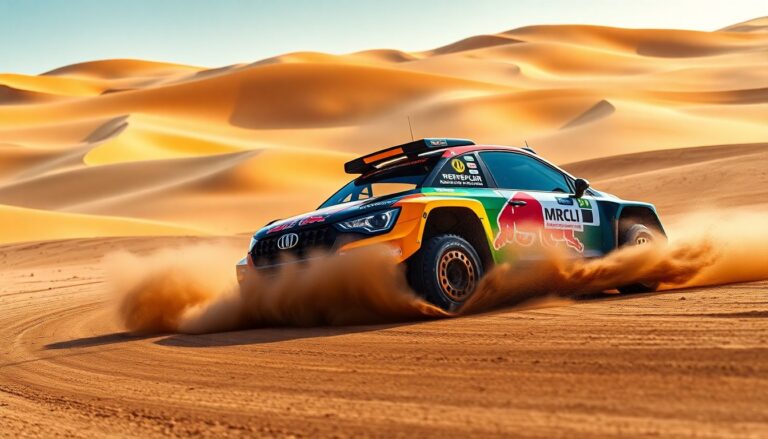
Saudi Arabia’s first entry into the WRC calendar is not merely a race; it is an experience defined by harsh landscapes and varying terrains. As teams navigated the rocky and sandy paths, they faced a blend of rapid stretches and treacherous conditions that tested their vehicles to the limit.
The unique terrain of Rally Saudi Arabia
Based in the coastal city of Jeddah, the Rally Saudi Arabia combines smooth, fast roads with challenging sections that test even the most experienced drivers. The event consisted of seventeen special stages, covering a competitive distance of approximately 319.44 kilometers (198.49 miles). Some parts of the course allowed for high-speed driving, while others required meticulous caution due to rougher, more abrasive surfaces.
Adverse conditions and their impact
One notable aspect of this rally is the transition between different types of terrain, which can quickly shift from smooth stretches to rocky paths. This variability demands not only expert driving skills but also a deep understanding of vehicle dynamics and tire management. Many drivers expressed concerns about how their cars would cope with such extremes, emphasizing the importance of adapting their strategies to this new environment.
Due to the lack of pre-existing data and established benchmarks for the terrain, teams entered the rally with limited information about their vehicles’ performance. This uncertainty added complexity to the event, making it not just a test of speed but also of engineering and adaptability.
Drivers’ reactions and future implications
As the rally unfolded, drivers and teams voiced a mix of admiration and apprehension regarding the harsh conditions. While many acknowledged the thrilling aspects of racing in such a unique location, others argued that the extreme nature of the event could compromise safety and performance. The consensus appeared to be that while the Rally Saudi Arabia deserves a place on the WRC calendar, it might not be suitable for a championship decider.
Seeking balance in rally design
In light of these discussions, organizers must strike a balance between excitement and safety. The WRC must consider the implications of hosting such demanding races, especially when determining championship outcomes. Ensuring that vehicles can withstand the rigors of the terrain, without compromising driver safety, is paramount.
The event saw drivers like Thierry Neuville and Martijn Wydaeghe claim victory, showcasing the skill required to navigate the challenging course. Their success highlights the potential of the event but also underscores the need for careful consideration of future rally designs to maintain the integrity of the championship.
A new chapter for the WRC
The debut of the Rally Saudi Arabia marks a significant moment in WRC history, offering a glimpse into the future of rally racing. As the championship evolves, events like this will undoubtedly shape the landscape of competitive motorsport. The challenges presented by the harsh desert environment may push teams and drivers to innovate and adapt, ensuring that the spirit of rallying remains alive in this new frontier.
“`