
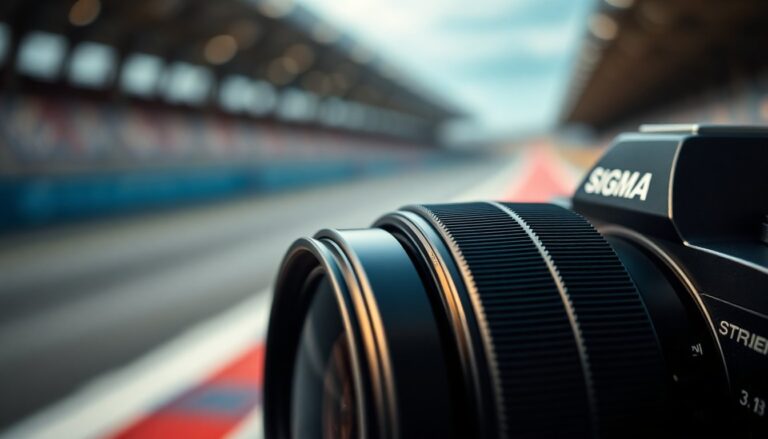
Sigma’s new 35mm f/1.4 Art DG II arrives as a clear-headed tool for photographers who put resolution and neutrality first. Tested briefly on full‑frame Leica L and Panasonic LUMIX S bodies in real-world shoots (studio, street, trackside), it shows the kind of clean, clinical rendering that makes retouching and color grading straightforward — but it isn’t built to flatter every creative taste.
What it is
– A compact, weather‑resistant 35mm f/1.4 prime in Sigma’s Art line, designed for high resolving power and minimal optical coloration.
– Uses a 67mm filter thread for broad accessory compatibility.
– Positioned for pros and serious enthusiasts working in editorial, product, landscape, and commercial workflows.
Optical character
– Strong wide‑open sharpness with consistent detail across the frame at typical working apertures.
– Low distortion and well‑controlled chromatic aberration make it ideal for subjects where legibility matters (vehicle liveries, instrument panels, product texture).
– Deliberately neutral “blank‑slate” rendering: very little native warmth or pronounced micro‑contrast. That’s excellent for precision work, less so if you crave vintage or filmic character straight from the lens.
Handling and autofocus
– Smaller and lighter than many older Art primes, so it encourages daily carry and feels comfortable on a tripod or handheld.
– Build quality and weather sealing are robust for a fast 35mm.
– Autofocus is fast and repeatable for static and moderately moving subjects; quieter focus drive benefits studio work. However, it’s not Sigma’s most aggressive AF implementation — tracking in fast action or low‑light portraiture depends a lot on the camera body you pair it with.
Where it shines
– Editorial car photography, technical parts, studio product shots, landscapes and any situation where maximum detail and neutral color are priorities.
– Heavy-cropping or large-print workflows that demand pixel-level clarity.
Limitations and trade-offs
– Photographers who want lush bokeh, strong in‑camera personality or the fastest possible subject tracking may prefer alternatives (older character lenses, f/1.2 variants, or bodies with higher-end AF systems).
– The decision to prioritise optical purity and a reduced footprint has left a small usability gap for rapid panning and high-speed action unless matched to a very capable AF platform.
Practical takeaway
If your workflow values faithful color, clean files and fine detail — and you’re willing to add character in post if needed — the DG II is a compelling, portable choice. If you rely on aggressive AF tracking or want native optical “soul,” try it on your own camera before committing.
What’s next
These impressions come from limited field evaluations; full lab measurements and extended high‑speed tests are still pending and will better define performance under extreme conditions. Independent testing will be useful to confirm how the lens behaves in prolonged, high‑tempo shooting environments.