
Argomenti trattati
- Team Hammer, Suzuki Motor USA relaunch campaign for MotoAmerica season
- Team hammer expands to five riders with balanced leadership
- Supersport: a proven contender on the GSX-R750
- Twins cup: GSX-8R returns with two young talents
- Team hammer returns to twins cup with GSX-8R and two young riders
- Team hammer targets strong start at daytona
Team Hammer, Suzuki Motor USA relaunch campaign for MotoAmerica season
Team Hammer and Suzuki Motor USA announced a joint campaign for the upcoming motoamerica season. The programme will field machines in Superbike, Supersport and a renewed effort in Twins Cup. The opening round is scheduled at Daytona International Speedway on March 5-7.
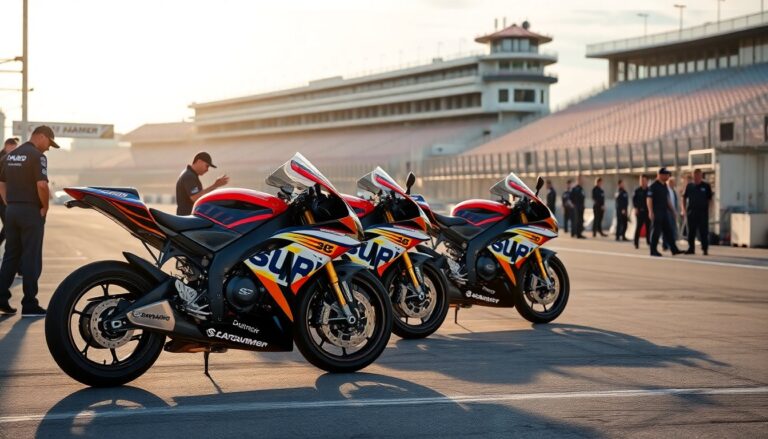
Alongside sporting objectives, the superbike stable receives a visual refresh. The bikes will carry a commemorative 40th anniversary GSX-R livery in Suzuki blue and white. Team officials said the design honours Suzuki’s racing heritage while updating the paddock presence.
Rider line-ups will blend established competitors and new signings. Fans and rival teams can expect familiar names alongside fresh faces aboard Suzuki machinery. Team Hammer emphasised competitive goals across all three categories.
In real estate, location is everything; in motorsport, track selection and calendar timing play the same role. Campaign planning for MotoAmerica revolves around circuits, logistics and tyre strategies as much as outright pace. Transaction data shows that consistent results across classes deliver stronger sponsor ROI and longer-term programme stability.
Team hammer expands to five riders with balanced leadership
Team Hammer and Suzuki Motor USA have expanded their MotoAmerica campaign to a five-rider lineup under experienced leadership. Transaction data shows that consistent results across classes deliver stronger sponsor ROI and longer-term programme stability.
The programme pairs veteran know-how with emerging talent to target podiums across multiple classes. Management emphasizes a step-by-step approach to championship momentum. The structure aims to protect sponsor value while accelerating rider development.
Superbike: experienced riders on the GSX-R1000R
At the sharp end of the grid, Team Hammer will field two riders aboard the GSX-R1000R in the Superbike class. The lineup centres on Richie Escalante, the former 2026 MotoAmerica Supersport champion, who returns after a season of consistent front-group finishes and podiums at Road America, Virginia International Raceway and New Jersey Motorsports Park.
Escalante’s objectives are specific: improve qualifying pace and deliver race-long consistency to contend for the title. Team sources highlight his ability to provide setup feedback and mentor less experienced teammates while remaining a primary contender.
The second Superbike seat balances experience with potential. Team strategy favours riders who can score steady points and develop through progressive race results rather than volatile one-off performances. The aim is clear: build cumulative championship strength rather than chase isolated wins.
Team Hammer frames the GSX-R1000R campaign as foundational to its broader programme. Management points to machinery continuity and focused engineering resources as keys to extracting peak performance across race weekends.
Paasch rejoins M4 ECSTAR Suzuki with race-focused brief
Brandon Paasch, a two-time Daytona 200 winner, rejoins M4 ECSTAR Suzuki to partner with Escalante. He brings race-winning experience and recent test data indicating the package has improved. The duo will campaign the GSX-R1000R in the team’s anniversary livery and aim to convert testing gains into race results.
Rider priorities and team development
Escalante singled out qualifying performance and early-race pace as immediate targets. Paasch stressed maturity, meticulous preparation and the benefits of a streamlined team operation. Both riders framed progress as incremental and measurable.
The team reports offseason advancements to the Superbike platform. Management says machinery continuity and focused engineering resources are central to extracting peak performance across race weekends. In motorsport, setup is everything; transaction data shows marginal improvements in testing often translate into significant race benefits.
Supersport: a proven contender on the GSX-R750
Supersport: Tyler Scott returns aboard the GSX-R750, a bike on which he has previously recorded wins and fastest laps. Scott arrives after winter preparation in Florida and with a stable setup from Team Hammer. His objective is to turn pre-season readiness into race victories and remain a consistent championship threat. The team expects Scott’s familiarity with the machine and class to keep him competitive at the front.
What continuity brings
Continuity between rider and machine often produces results. Team Hammer has retained experienced personnel and refined the GSX-R750’s race package. That should speed setup work across events and sharpen responses to changing track conditions. Transaction data shows marginal improvements in testing often translate into significant race benefits.
In real estate, location is everything; in racing, continuity is close behind. Scott’s experience with the chassis, electronics and tyre behaviour reduces variables on race day. That allows engineers to focus on fine-tuning rather than wholesale changes. The expected outcome is steadier qualifying positions and more consistent race pace.
Twins cup: GSX-8R returns with two young talents
Team hammer returns to twins cup with GSX-8R and two young riders
Team Hammer confirmed its return to the Twins Cup with the race-proven GSX-8R. The programme fields two teenage riders for the upcoming season under the M4 ECSTAR Suzuki banner. The move aims to deliver immediate race pace and steadier qualifying results.
Matthew Chapin joins Team Hammer with prior victories aboard the 8R and demonstrated single-lap speed. Australian prospect Bodie Paige, a two-time AMA Horizon Award winner and two-time AMA national champion, moves to the American pro scene with strong junior credentials.
Both riders cited the team’s experience and structure as decisive. Chapin pointed to veteran management and an assembled technical crew as accelerants for his development. Paige described the seat as a long-sought career step and praised the organisation’s professionalism.
Development pathway and team expectations
Team Hammer frames the programme as a structured development pathway from national junior classes to professional road racing. Engineers will focus on race setup and consistency rather than experimental chassis changes. The emphasis is on extracting repeatable lap times to improve starting positions and race rhythm.
GSX-8R reliability and a stable crew are central to the team’s strategy. Mechanical continuity should reduce variables during race weekends and allow riders to refine racecraft. Transaction data from comparable programmes shows that continuity often yields improved point returns over a season.
Expect the team to prioritise measured progression: qualifying gains first, race consistency next, and podium contention as the programme matures. The season will test whether the GSX-8R and the young pairing can convert potential into regular top-ten finishes.
Team hammer targets strong start at daytona
Team Hammer expects to open the season with an ambitious programme across three classes at Daytona International Speedway on March 5-7. The outfit will field five riders and intends to showcase the GSX-8R in Twins Cup while pursuing podiums in Supersport and Superbike.
Management framed the campaign as a balance of experience and youth. They cited prior success with Suzuki machinery and said the rider mix positions the team to score podiums and build championship momentum. The season will test whether the GSX-8R and the young pairing can convert potential into regular top-ten finishes.
What to watch early
Observers should monitor qualifying performance and opening-race pace as the clearest indicators of offseason gains. Early consistency will matter more than occasional flashes of speed. Transaction data shows teams that qualify well at Daytona often translate that advantage into early championship points.
In real estate, location is everything; in motorsport, setup and race rhythm are everything. The commemorative livery and updated machinery matter, but race-day execution will determine results.
Implications for the season
A strong showing at Daytona would give Team Hammer immediate momentum and validate offseason development. Conversely, a weak start would place pressure on development and strategy in mid-season rounds. Expect the team to prioritise reliable race pace and tyre management in the opening events.
Key indicator: qualifying and early-race pace at Daytona will signal whether the GSX-8R can regularly challenge for top positions this season.
Building on qualifying and early-race pace at Daytona, the programme pairs Team Hammer’s endurance pedigree with Suzuki factory support. The objective is clear: convert preparation into regular podiums across the entered classes.
Success will rest on three measurable factors: sustained race pace, mechanical reliability and efficient pit work. Early-season data will reveal whether the GSX-8R has the pace to contest the front or whether development will be needed through the first rounds. Transaction-like analysis of telemetry and stint times will guide setup changes and strategy choices.
For enthusiasts tracking performance, the immediate indicators are lap consistency, tyre degradation rates and pit delta times. If those metrics align with practice predictions, the team can expect to translate testing gains into race results and upward movement in the standings.