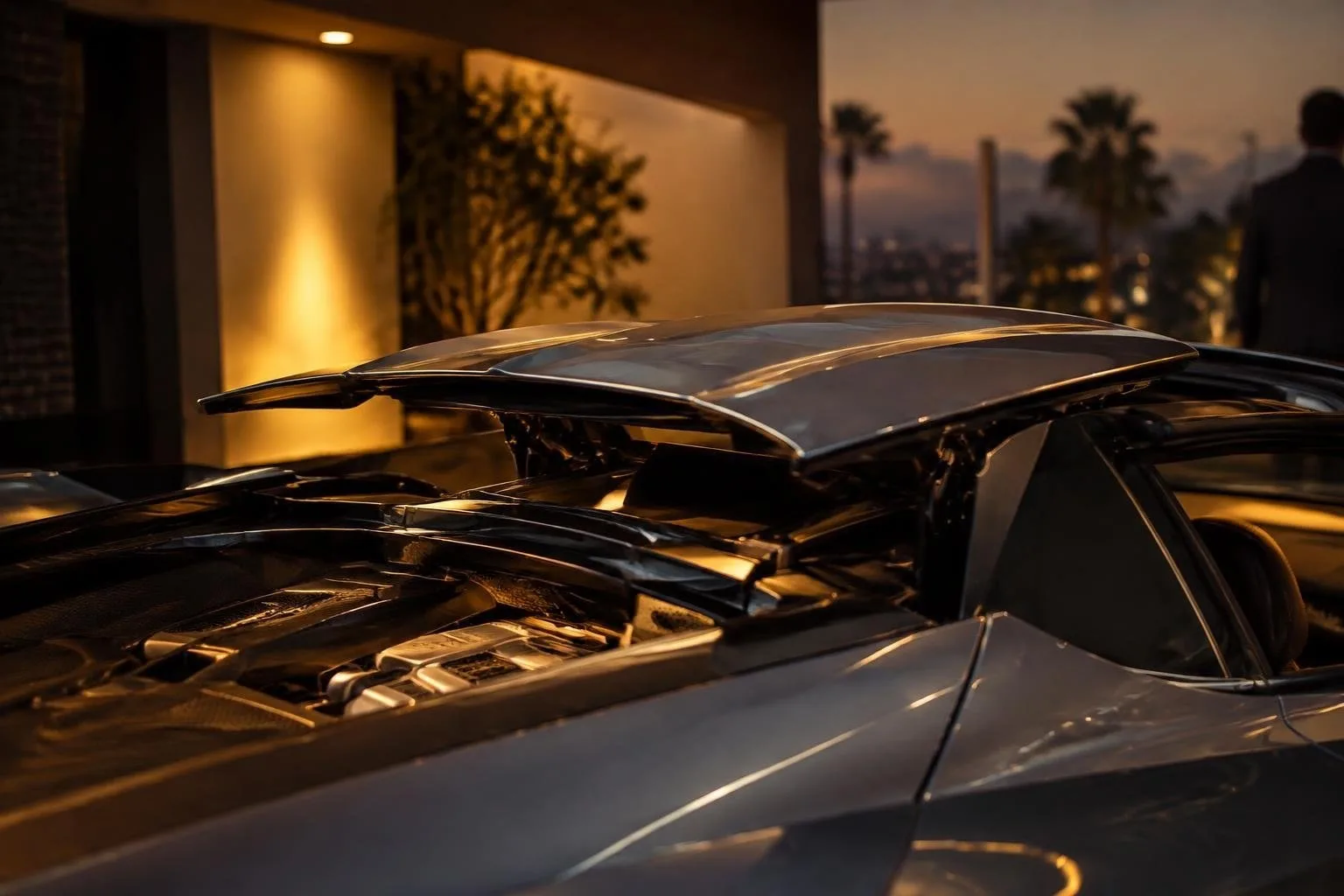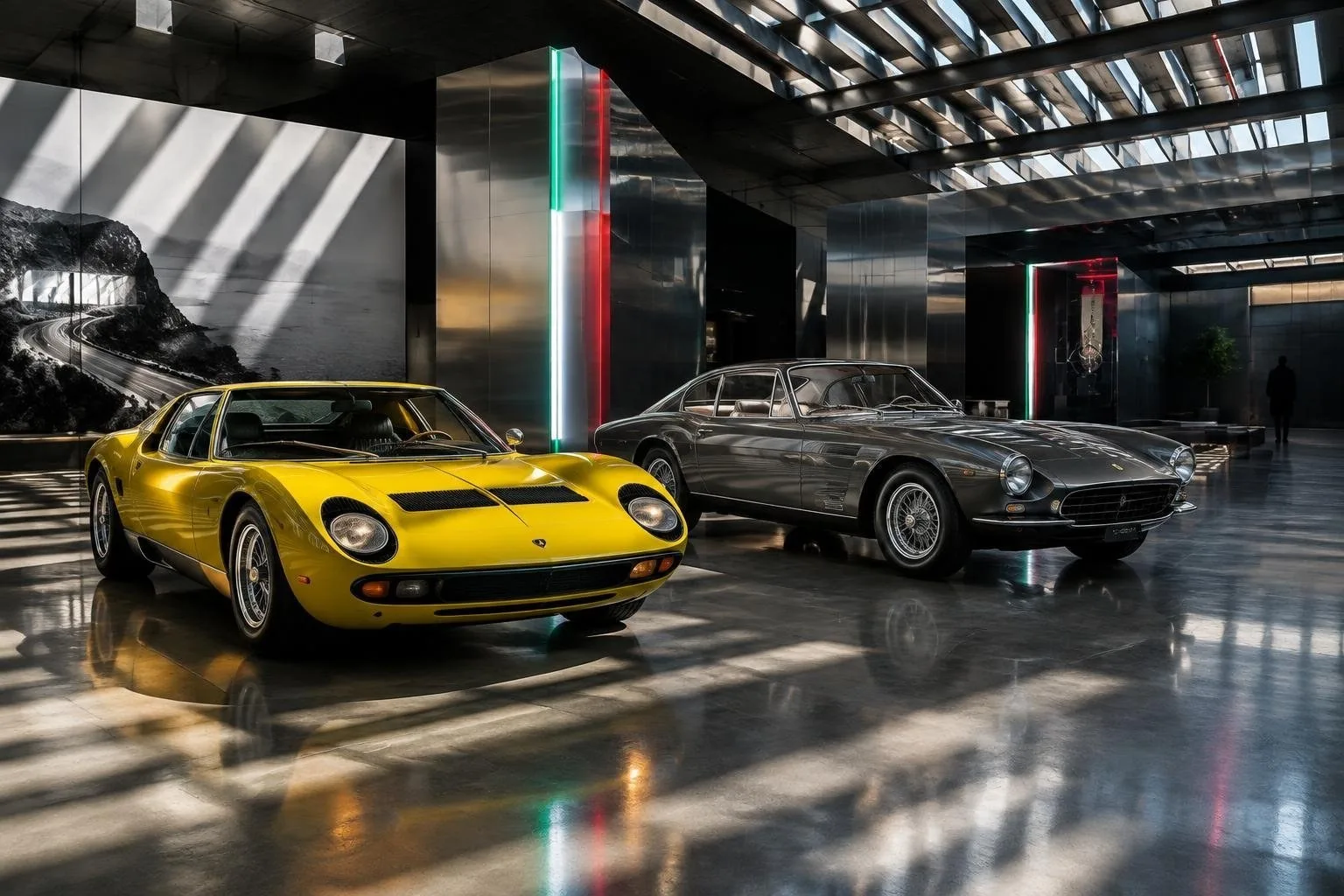
In November 2026 the Milano AutoClassica fair turned its spotlight on a minimalist yet powerful Lamborghini stand. Only two cars occupied the space, but each carries a weight of history that spans the brand’s first decade. The Miura SV and the 400 GT 2+2 sit side by side, offering visitors a visual dialogue between the raw energy of the first supercar and the understated elegance of the early grand tourer.
Both machines emerged from the workshop in Sant’Agata during a period when Ferruccio Lamborghini was still shaping his automotive identity. While the Miura SV would later become synonymous with the modern supercar archetype, the 400 GT 2+2 embodied the original intent of creating a luxurious yet spirited V12 tourer. Their joint presence at the show underscores the duality that defined Lamborghini’s early philosophy.
Miura SV: the birth of the modern supercar
The Miura SV debuted at the Salón de Turín in 1966 and remained in production until 1973. Its hallmark is a V12 engine placed transversely behind the cockpit, a layout that broke with the conventional front-engine design of contemporary sports cars. The engine delivers 385 CV, propelling the car to a claimed top speed that varied between 256 km/h and 293 km/h depending on the final-drive ratio. A wheelbase of 2500 mm, a total length of 4360 mm and a width of 1760 mm gave the Miura a low, aerodynamic silhouette that still commands attention.
Design responsibilities fell to a young Marcello Gandini, who was under thirty when he crafted the iconic fastback shape. The striking “eyelash” headlights and flowing side panels became visual cues for the emerging supercar class. Engineering leadership came from Paolo Stanzani and Gian Paolo Dallara, who rotated the previously front-mounted V12 by ninety degrees to create the chassis known as TP 400. This engineering decision reduced overall length, increased agility, and set a precedent for mid-engine layouts in road-legal performance cars.
400 GT 2+2: the elegant grand tourer of Lamborghini’s infancy
Beside the Miura, the 400 GT 2+2 represents the company’s first attempt at a refined grand tourer. Though less flamboyant, it showcases the same V12 powerplant, tuned for smoother delivery rather than outright speed. The model reflects the original ambition of Sant’Agata to deliver a vehicle that combined comfort with high-performance capability, a philosophy that would later influence the brand’s premium positioning.
Ferruccio Lamborghini envisioned the 400 GT 2+2 as a luxurious four-seat coupe, suitable for long journeys without sacrificing the excitement of a sports car. Its understated lines and restrained styling offered a sober counterpoint to the Miura’s aggressive stance, reinforcing the brand’s ability to address divergent market expectations from the very beginning.
Engineering legacy and the people behind the legend
The structural concept of the Miura began as a naked chassis, presented at the 1965 Salón de Turín under the designation TP 400. Nuccio Bertone was tasked by Ferruccio Lamborghini to find a coachbuilder capable of dressing the chassis, leading to the involvement of the young designer Marcello Gandini. The resulting body married form and function, translating the mechanical boldness of the transverse V12 into a visual language that defined the era.
Testing duties fell to Bob Wallace, Lamborghini’s official test driver. Wallace pushed the Miura SV along the same mountain roads used during its original development, assessing the car’s handling and revealing intrinsic challenges such as front-end lightness and oil-circulation dynamics inherent to the rear-engine layout. These insights informed refinements that kept the Miura competitive throughout its production run.
Looking sixty exact years ahead, the influence of the Miura’s architecture is evident in later mid-engine sports cars, from the Lancia Stratos to modern models like the Honda NSX. While the transverse V12 itself did not become a mainstream solution, the principle of placing the power unit behind the driver reshaped sports-car engineering. The 400 GT 2+2, meanwhile, laid the groundwork for Lamborghini’s later grand-touring offerings, proving that performance and comfort could coexist under a single brand identity.
By juxtaposing these two cars, Milano AutoClassica offers more than a nostalgic display; it provides a concise narrative of Lamborghini’s divergent yet complementary paths: one leading to the extreme performance segment, the other to refined luxury. The exhibition invites enthusiasts to appreciate how two distinct design philosophies emerged from the same workshop, each contributing to the mythos that continues to define the marque today.