
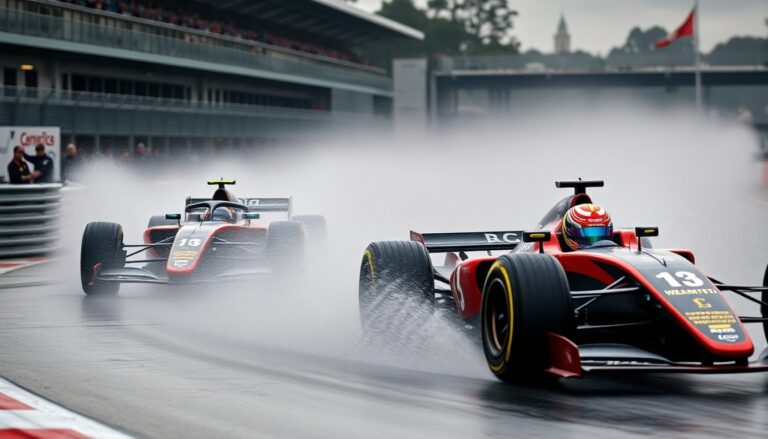
Max Verstappen took victory in a topsy-turvy Australian Grand Prix at Albert Park, prevailing in a race defined by sudden downpours, multiple incidents and frantic tyre calls. Rain turned strategy into a guessing game, safety cars and a red flag repeatedly reset the order, and teams that read the conditions quickly reaped the rewards.
Race summary
Light showers at the start soon hardened into heavier rain. The field began on intermediates, but grip levels swung wildly and contact in the midfield brought out the safety car early. As showers intensified, race control eventually showed the red flag while marshals cleared debris from a multi-car clash at Turn 3. When the action resumed, the surface was patchy — drying in places, waterlogged in others — and the race evolved into a stop‑start chess match between wets, intermediates and the occasional gamble on slicks.
Verstappen and Red Bull timed their calls best. Clean driving, precise tyre changes and crisp radio coordination allowed Verstappen to leapfrog rivals during pit sequences and protect his advantage on-track when it mattered. Others paid for hesitation: delayed tyre swaps and cautious choices left some teams trailing after costly stops and repairs.
Tactical fallout
The result hands Verstappen and Red Bull a sizeable early-season boost in both drivers’ and constructors’ standings. More than raw pace, the race underlined how quickly momentum can swing when weather and luck collide. Teams that adapted on the fly moved up the order; those slower to react lost valuable points.
Beyond the scoreboard, the weekend produced a trove of lap-by-lap telemetry — brake temps, tyre surface readings, hydraulic behaviour — that engineers will pore over. Early analysis has already flagged brake-cooling and hydraulic management as pressure points for several outfits. Expect modified wet‑weather packages and revised pit procedures at the next round.
Team and driver reactions
Red Bull celebrated Verstappen’s composure and the pit wall’s timing; the team credited close driver‑engineer communication for the win. Rival principals described Albert Park as unpredictable, where decision-making outweighed outright speed. “It became a race of choices as much as laps,” one team boss said, summing up the mood in the garages.
Several squads confirmed they will conduct coordinated engineering reviews to tighten up wet‑condition preparedness. Mechanics and strategists want clearer decision trees for split-second tyre calls and improved setups to handle alternating standing water and drying lines.
Technical takeaways
Telemetry showed dramatic swings in tyre surface temperature during transitions, and engineers noted stress on brake ducts and pad life under stalled cooling cycles. Suspension that can be dialed between grip extremes proved a clear advantage. Teams collected detailed data to build compromise setups better suited to circuits where weather can flip in minutes.
Stewards and penalties
Race stewards are continuing their post-race checks. A number of on-track incidents are under review, and penalties — time additions and position adjustments — have already been applied in some cases, reshaping the provisional finishing order. Scrutineers also carried out tyre-allocation and parc fermé inspections to ensure declared sets matched what ran on-track. Final results will be confirmed once those enquiries finish. Verstappen left with the win, but the weekend’s bigger story was how quickly fortunes changed when rain arrived: the teams that matched courage with clean execution came away with the spoils, while others returned to the factory with homework to do on wet-weather performance.