
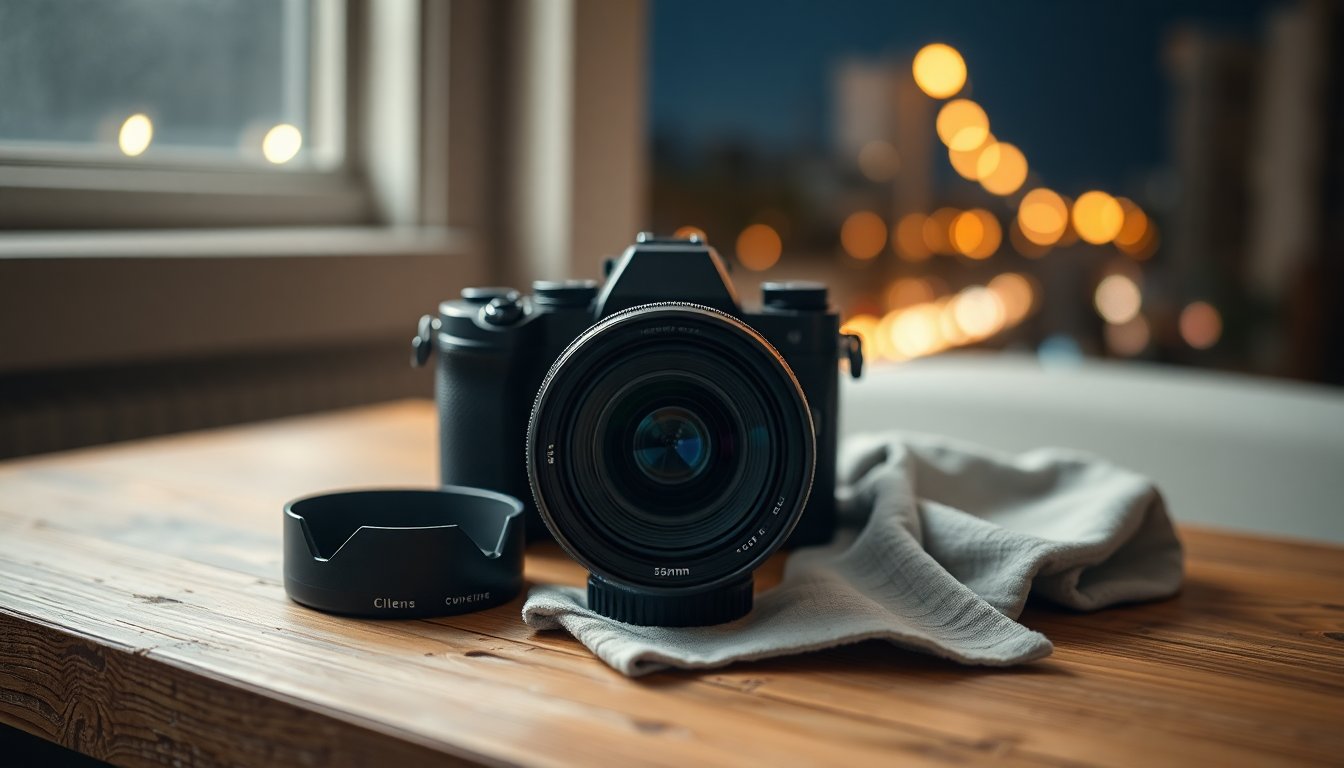
The following review was written after extended use of the Viltrox EVO 35mm F1.8 mounted on Nikon Z bodies. Disclosure: the lens was provided free of charge by Viltrox for testing and the reviewer retained editorial independence. The article also references available retail pricing: the lens carries a $395 USD MSRP and had a 10% promotional discount available until April 26, 2026. If you shoot walk‑around or environmental portraits, the 35mm focal length often occupies a sweet spot between context and subject intimacy; this review assesses whether the EVO brings exceptional value in that role.
Design and handling
The EVO feels compact and well‑engineered for its price bracket. It weighs about 350g, uses a 58mm filter thread, and sports a metal/plastic mix that reads solid in hand. Mechanical highlights include a dedicated aperture ring, an aperture declicking switch, an AF/MF toggle, a custom function button, and a rubber gasket at the mount for weather resistance. A convenient USB‑C port is integrated into the mount for firmware updates, reducing exposure of ports to the elements. The included petal hood, however, is the weak link: its plastic bayonet binds easily and can feel underbuilt compared with the otherwise confident finish of the barrel.
Mounting and balance
On smaller Nikon Z bodies the lens balances very well, with the center of gravity biased toward the mount. It sits unobtrusively on a Zf and feels compact on mirrorless rigs, though it can look undersized paired with larger pro bodies. The focus ring features satisfying resistance for manual adjustments, while switches are stiff and precise; overall the tactile package is impressive for a sub‑$400 optic.
Autofocus and video behavior
Autofocus runs on stepping motors and is quiet and generally responsive. In AF‑S for static subjects the lens is reliable and fast; for fast action in AF‑C the hit rate is acceptable but not class‑leading. On a Z9 chasing a runner, bursts produced mixed results—some frames nail focus while neighboring frames occasionally miss. For video, the focus transitions show subtle stepping at wide apertures and some breathing can be observed during small subject distance shifts. The motors are quiet enough to be unobtrusive on audio tracks, but the stepping character may be noticeable in talking‑head material.
Practical implications
If your work is mainly portraits, street, or travel photography, the AF system will be more than serviceable. If you need rock‑solid continuous AF for fast sports or critical commercial video focus pulls, expect limitations tied to the stepper motor architecture and occasional focus hunting during aggressive subject motion.
Optical performance and rendering
Optically the lens is the headline: Viltrox uses a multi‑element formula including three high‑refractive (HR), two extra‑low dispersion (ED), and one aspherical (APO) element to combat typical issues. The result is a lens that shows excellent sharpness and microcontrast even at F1.8. Remarkably, chromatic aberration and fringing—often abbreviated as LoCA—are effectively suppressed across apertures, a rare feat at this price point.
Bokeh character and close focus
Where the EVO diverges from expectation is in background rendering. Despite the modern correction, bokeh can be somewhat nervous and structurally busy, especially against complex backgrounds like branches or fences. Cat‑eye shapes appear when shooting near the minimum focus distance (about 13.4 inches), and the overall blur can feel jittery in scenes with many linear elements. The lens offers a 0.15x magnification—useful, but not a macro replacement. Stopping down to mid‑apertures yields predictably increased edge‑to‑edge sharpness, with F5.6–F8 delivering uniform resolution.
In summary, the Viltrox EVO 35mm F1.8 is an intriguing package: it combines modern optical correction and a rich feature set—aperture ring, function button, firmware updates via USB‑C, and mount weather sealing—while introducing a distinctive, sometimes divisive bokeh personality. For photographers who prioritize compactness, low chromatic aberration, and wide‑open sharpness on a budget, this lens is a compelling option. Those seeking ultra‑creamy background blur with extremely predictable rendering may prefer alternative 35mm designs. Either way, the EVO stakes a unique claim in the crowded 35mm field.


