
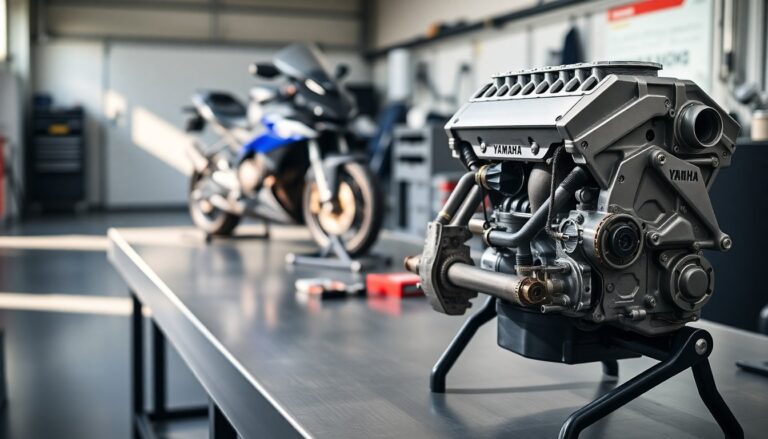
Yamaha doubles down on motorsports: new structure, a V4 YZR‑M1 and clearer talent pathways
Yamaha Motor Co., Ltd. is reorganising its motorsports arm for 2026 with a sharper, longer‑term game plan. Rather than running ad‑hoc race programmes, the company has created a central motorsports unit and committed to a single high‑performance engine architecture in MotoGP. Expect a more coordinated push across factory and supported teams, plus a stronger pipeline from junior series to the world stage.
New structure: MS Value Creation Department
– Purpose: centralise strategy, technical direction, stakeholder relations and delivery across Yamaha’s racing activities.
– Focus areas: engine, chassis, electronics and aerodynamics workstreams; talent acquisition and development; faster tech transfer from track to customer products.
– How it changes things: closer alignment of track engineers with production teams, modular design to reduce lead times, and parallel testing pipelines to prove concepts for both racing and commercial use.
MotoGP technical direction: V4 YZR‑M1 from 2026
– Decision: Yamaha will race a V4‑layout YZR‑M1 in MotoGP starting in 2026, after evaluating inline‑four and V4 concepts.
– Why it matters: the V4 aims to deliver a consistent, high‑performance baseline for factory‑linked entries and accelerate development toward the 2027 regulation window.
– Race strategy: both factory‑linked teams will focus on refining the V4 in race conditions, sharing rider feedback each weekend to speed chassis, electronics and aero convergence.
– Development balance: Yamaha will run the race programme while also prototyping concepts for 2027—splitting resources but preserving a route to longer‑term competitiveness.
– Engineering priorities: engine mapping, traction control tuning, gearbox ratios, suspension geometry and aero updates tuned to the V4’s mass and torque profile. Emphasis on rideability, reliability and thermal/drivetrain durability.
Data, testing and talent
– Telemetry and structured track tests will drive short‑cycle updates during race weekends and longer‑term prototype validation.
– Young riders and junior engineers will be rotated through factory operations to accelerate learning and build institutional knowledge for future platforms.
– Modular components and commonality across programmes aim to reduce costs and speed manufacturing of race‑proven parts for customers.
Racing footprint for 2026
Yamaha’s 2026 programme remains broad but strategically concentrated across the sport’s most important series:
– MotoGP (factory and satellite entries)
– Moto2 (BLU CRU Pramac Yamaha)
– World Superbike (WorldSBK)
– Endurance World Championship (EWC)
– Motocross (MXGP/MX2)
– AMA Supercross/Motocross and MotoAmerica
Operations are coordinated regionally by Yamaha’s European and North american teams, handling logistics, rider support and technical development. Race machines are based on the YZF‑R and YZ platforms, adapted for each championship’s rules.
Selected team highlights and rider lineups
– MotoGP: factory and satellite squads, with riders such as Fabio Quartararo, Álex Rins and Jack Miller.
– Moto2 (BLU CRU Pramac Yamaha): Izan Guevara, Alberto Ferrández.
– WorldSBK: Pata Maxus Yamaha Official Team campaigning the YZF‑R1 with Andrea Locatelli and Xavi Vierge.
– EWC: Yamalube YART Yamaha EWC Official Team on YZF‑R1 endurance spec machines.
– MXGP: Monster Energy Yamaha Factory MXGP Team running the YZ450FM with Maxime Renaux.
Why this mix works: the dual strategy balances short‑term podium ambitions with long‑term talent and technical development. Factory efforts increase the likelihood of immediate results while satellite and junior teams feed future riders and technical insights back into the system.
BLU CRU: the rider and talent ladder
– Scope: BLU CRU is Yamaha’s global programme to identify, train and progress young riders from regional spec cups to international championships.
– Pathways: examples include the Yamaha R3 BLU CRU FIM World Cup and regional series in Asia‑Pacific and Latin America. Top graduates can move into WorldSBK, WorldSSP, WorldSPB or the BLU CRU Pramac Yamaha Moto2 programme.
– Development beyond racing: BLU CRU provides media training, physical preparation, technical familiarisation and education in professional team routines.
– Success metrics: race results, consistency, technical feedback ability and professional conduct determine promotions inside the ladder.
Yamaha Motor Co., Ltd. is reorganising its motorsports arm for 2026 with a sharper, longer‑term game plan. Rather than running ad‑hoc race programmes, the company has created a central motorsports unit and committed to a single high‑performance engine architecture in MotoGP. Expect a more coordinated push across factory and supported teams, plus a stronger pipeline from junior series to the world stage.0
Yamaha Motor Co., Ltd. is reorganising its motorsports arm for 2026 with a sharper, longer‑term game plan. Rather than running ad‑hoc race programmes, the company has created a central motorsports unit and committed to a single high‑performance engine architecture in MotoGP. Expect a more coordinated push across factory and supported teams, plus a stronger pipeline from junior series to the world stage.1
Yamaha Motor Co., Ltd. is reorganising its motorsports arm for 2026 with a sharper, longer‑term game plan. Rather than running ad‑hoc race programmes, the company has created a central motorsports unit and committed to a single high‑performance engine architecture in MotoGP. Expect a more coordinated push across factory and supported teams, plus a stronger pipeline from junior series to the world stage.2