
Argomenti trattati
The Japanese Grand Prix at Suzuka produced a mix of cold calculation and raw drama as Mercedes’ kimi antonelli converted a chaotic sequence into a second straight victory. A mid-race incident involving Haas rookie Ollie Bearman — later measured at 50G on impact — brought out the safety car and fundamentally altered pit strategies and track order. When the dust settled, Antonelli stood on top, McLaren’s Oscar Piastri took second and Ferrari’s Charles Leclerc completed the podium, while questions about the new hybrid systems and boost mode resurfaced among the driving ranks.
How the race unfolded at Suzuka
At the start, Piastri leapt from third on the grid to claim the early lead while both Mercedes machines slipped back from the front row. Antonelli initially dropped to sixth but methodically climbed through the field, using strong pace and opportunistic overtakes to regain ground. Pit stop sequencing played a decisive role: Leclerc stopped early, Piastri followed, and Mercedes elected to run their cars longer. That differing strategy created gaps and temporary advantages that were then wiped away by a sudden neutralisation when Bearman hit the barriers at the high-speed Spoon corner. The timing of the safety car allowed Antonelli to pit and emerge in the lead, a swing that ultimately decided the front order.
The crash, its mechanics and immediate effects
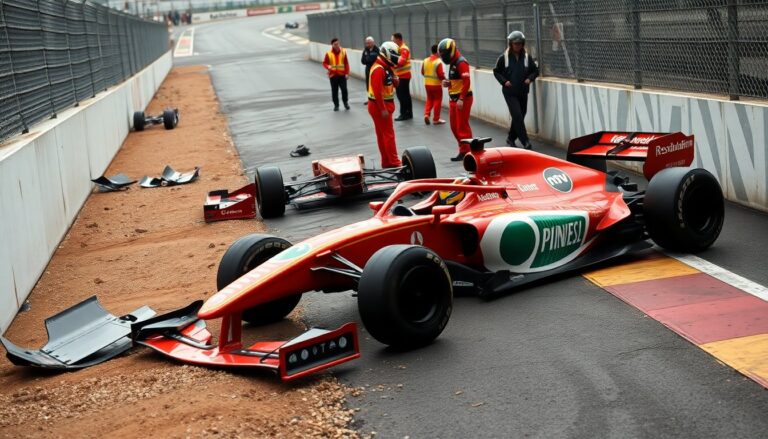
Bearman’s accident was among the most alarming incidents of the weekend, captured clearly on onboard footage. He closed rapidly on Alpine’s Franco Colapinto and, according to observers, encountered a huge difference in approach speeds that forced evasive action. The impact measured roughly 50G, and while Bearman walked away and was cleared medically with only a contusion, the incident highlighted a technical and safety issue: differences in deployed and harvested energy can produce dramatic closing speed differentials. The immediate sporting consequence was the neutralisation that shuffled pit windows and handed Antonelli a fortuitous pathway back to the front.
Closing speeds and technical implications
Drivers have repeatedly flagged concerns about the way the 2026 powertrains behave when switching between harvesting and deployment. The term closing speed describes how quickly one car can gain on another when one is deploying electrical energy while the other is harvesting. That phenomenon, seen in Bearman’s case, will be a key topic for the FIA and teams to examine during the break before the next race. Engineers will focus on software mapping, deployment windows and whether regulatory tweaks or operational guidance can reduce the abrupt differential that creates risk at high-speed corners.
Voices from the paddock and pop-culture levity
Amid the seriousness there was light relief inside the podium cooldown room, where Antonelli, Piastri and Leclerc watched replays of the incident. Piastri cracked a deadpan joke referencing Leclerc’s earlier radio complaint about the season’s boost mode, quipping that he “finally sees what you mean about the mushroom,” nodding to the Mario Kart analogy that has circulated widely. The comparison — with drivers likening sudden bursts of extra speed to a video-game power-up — has been used by several competitors to describe the new regulations. The Suzuka weekend added an ironic cultural footnote: the event coincided with celebrations tied to a long-running gaming franchise, bringing the metaphor into sharper focus for fans and media.
Championship and team ramifications
Antonelli’s win not only delivered momentum but also made him the youngest leader in the standings, underlining his rapid ascent and Mercedes’ ability to capitalise when circumstances align. Piastri’s podium marks a strong recovery for McLaren after a difficult start to the season, while Leclerc’s consistent pace keeps Ferrari firmly in contention. Conversely, Red Bull and Max Verstappen continued to struggle with a package that has failed to respond as expected under the new rules. The upcoming break offers teams time to analyse the data, refine hybrid systems tuning and prepare for debates about safe deployment practice at race speed.
Looking ahead, the fallout from Suzuka will have both a sporting and a regulatory dimension: teams will chase marginal gains in strategy and software, while governing bodies weigh whether further clarification or intervention is needed to manage energy deployment differentials. For now, the race is remembered for a commanding teenage win, a frightening high-speed crash that fortunately had a benign medical outcome, and a now-famous quip about mushrooms that captured the lighter side of an otherwise intense weekend.