
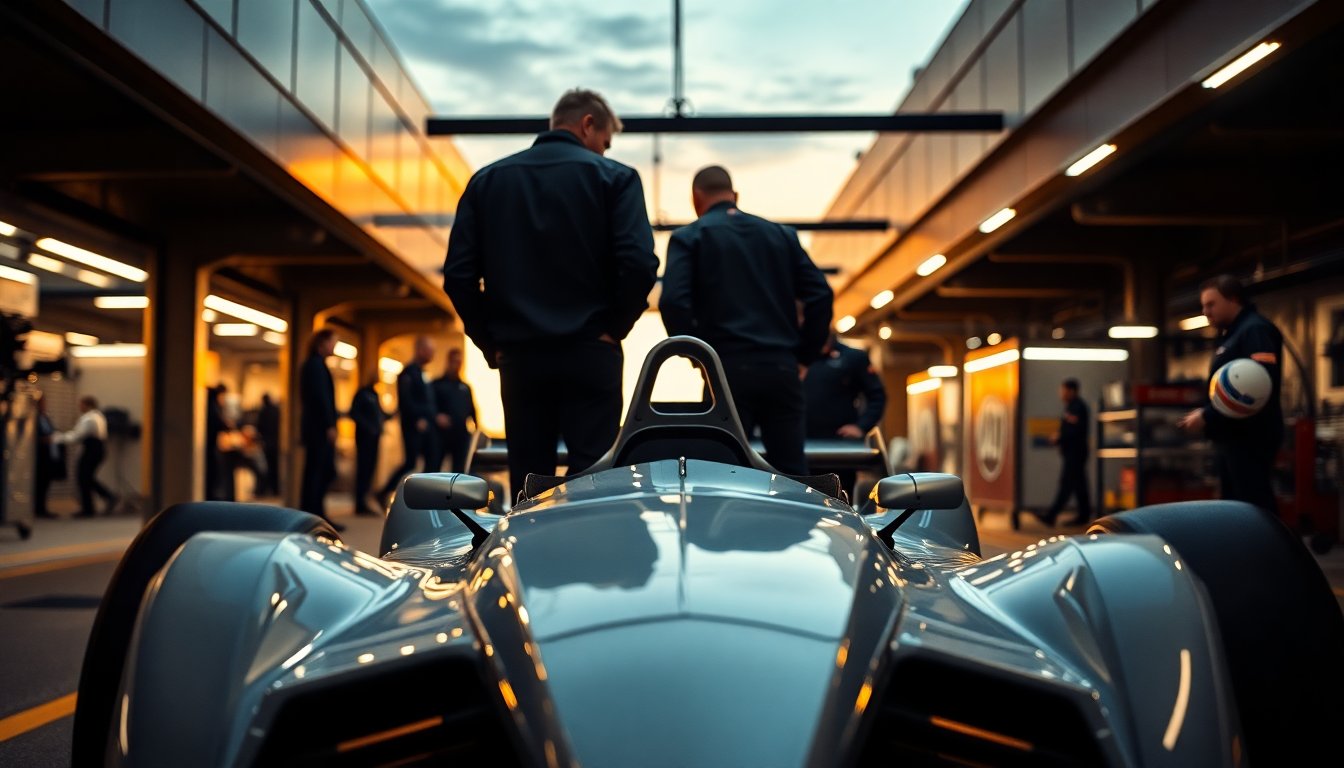
The world of Formula 1 blends technical ingenuity, athletic skill and global spectacle. Once rooted in the early European grand prix events of the 1920s, modern F1 traces its formal championship beginnings to the first World Championship season, whose opening event was the British Grand Prix at Silverstone on May 13, 1950. Today the series has expanded its reach—fuelled by documentaries, movies and broader pop culture—so that newcomers can quickly find entry points into the sport. The open-wheel and single-seater cars remain the defining equipment, but the pageantry, team strategy and driver rivalries are what capture the imagination of fans around the globe.
At its core Formula 1 is a championship fought on two fronts: individual drivers aim for the Drivers’ Championship while teams (known as constructors) contest the Constructors’ Championship. Each weekend centers on a single race called a Grand Prix, and support sessions of practice and qualifying set the grid before race day. While the sport requires cutting-edge engineering, the human element is equally crucial—drivers are among the fittest professional athletes, and split-second decisions on track can swing both race results and title battles.
Race formats, speeds and event timing
Grand Prix distances vary with layout and location, but the minimum race length is typically 190 miles, with the notable exception of Monaco which is 160 miles. A standard event runs for roughly 90 minutes of racing, although interruptions such as safety cars or yellow flag periods can extend the on-track time to about two hours. In terms of pace the machinery is astonishing: typical top speeds fall between 200 and 233 miles per hour, and the fastest recorded top speed in competition stands at 234.9 mph, achieved by Valtteri Bottas. Weekend structure normally places practice sessions on Friday, qualifying on Saturday and the main race on Sunday, with some weekends also featuring shorter sprint events.
How points, sprints and championships work
Points are the currency of championship contention and only the top finishers score on Sunday. For a full Grand Prix the distribution awards 25 points to the winner, followed by 18, 15, 12, 10, 8, 6, 4, 2 and 1 down to tenth place. Sprint races use a compressed scale where the top eight drivers earn points: 8, 7, 6, 5, 4, 3, 2 and 1. Because championships have been decided by single points in past seasons, every position and every bonus point matters when teams and drivers plan strategy across the year.
Practical implications for teams and drivers
Constructors field two drivers each, so performance feeds both individual glory and the team total. In 2026 there are 10 registered teams and a total of 22 drivers competing for wins and points. The dual objectives produce layered dynamics: teammates cooperate on development and race strategy while also vying for personal championship positions. That tension drives many of the storylines fans follow all season, and it’s one reason why even mid-field battles can have large consequences for the overall standings by the end of the year.
Teams, drivers and the 2026 line-up
The 2026 field includes established names and newer entries. The ten constructors and their driver pairings are: Mercedes-AMG PETRONAS Formula One Team – George Russell and Andrea Kimi antonelli; Oracle Red Bull Racing – Max Verstappen and Yuki Tsunoda; Scuderia Ferrari HP – Lewis Hamilton and Charles Leclerc; BWT Alpine Formula One Team – Pierre Gasly and Jack Doohan; MoneyGram Haas F1 Team – Esteban Ocon and Oliver Bearman; Visa Cash App Racing Bulls Formula One Team – Liam Lawson and Isack Hadjar; Aston Martin Aramco Formula One Team – Fernando Alonso and Lance Stroll; Audi Revolut F1 Team – Nico Hulkenberg and Gabriel Bortoleto; McLaren Formula 1 Team – Lando Norris and Oscar Piastri; Atlassian Williams Racing – Alex Albon and Carlos Sainz; and Cadillac Formula 1 Team – Sergio Perez and Valtteri Bottas. These pairings set the competitive landscape for both titles.
How to start following Formula 1 and why 2026 is compelling
New fans can accelerate their understanding through accessible media and live experiences. The Netflix series Drive to Survive provides a behind-the-scenes look that many viewers find a fast entry point, while podcasts like F1: Beyond the Grid, F1 Nation and Eff Won with DRS unpack race strategy and personalities in conversation form. For a hands-on taste, racing simulators and watch parties offer a social way to learn track layouts and race flow. Venues that pair live coverage with interactive experiences let you feel the pressure of a timed lap and the rhythm of a race weekend without leaving the city.
Why expect surprises in 2026
The 2026 season arrives after regulatory changes that affect car weight, agility and the new power unit rules, effectively reshuffling competitive advantages. With 24 races on the calendar in 2026 and the campaign opening in Australia on March 6th, teams that adapt fastest could leap forward, while historical front-runners work to regain or extend dominance. The combination of tightened margins, fresh technical regulations and a deep field of talent makes this a year where unpredictability is more likely—exactly the mix that often creates memorable championship fights.


