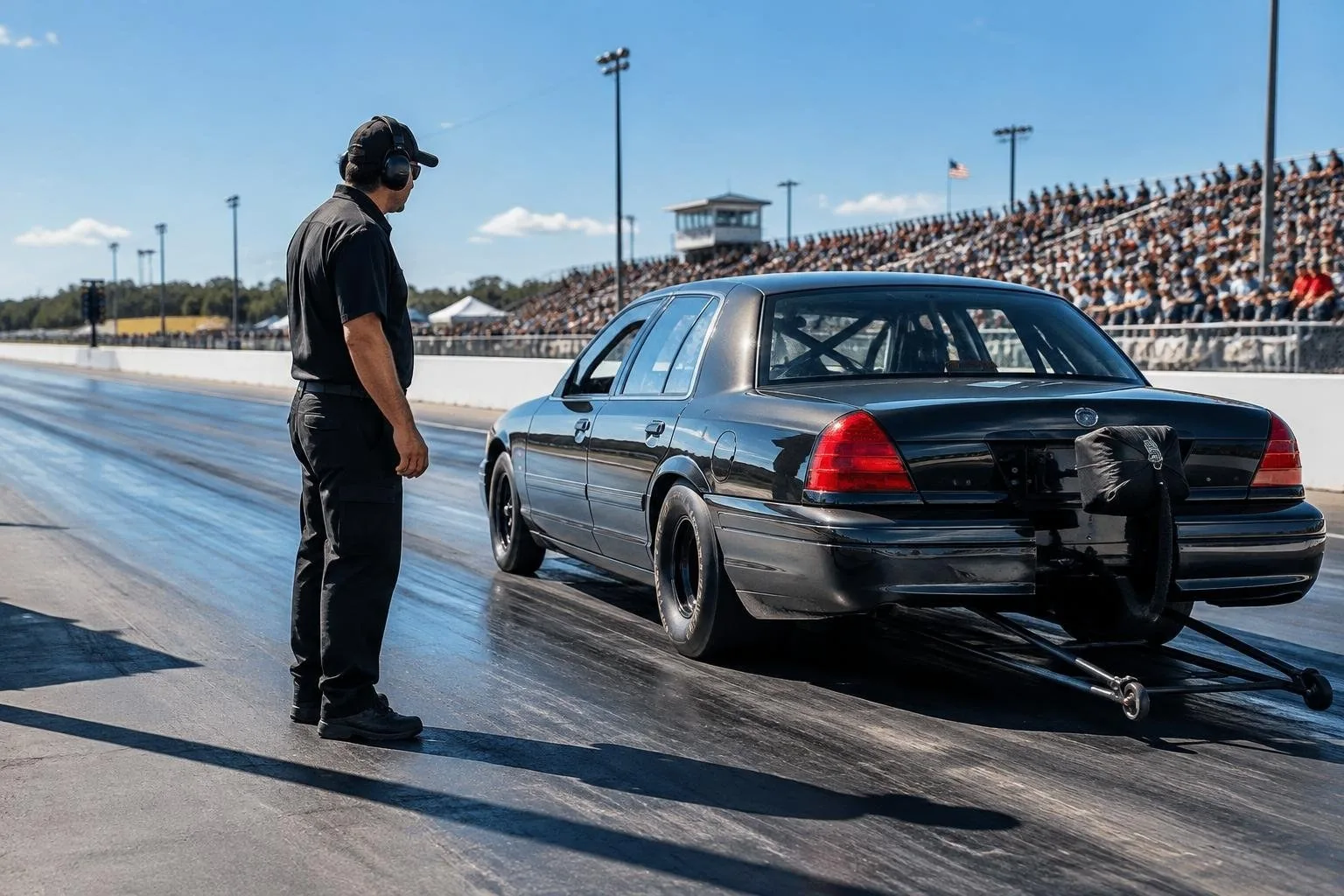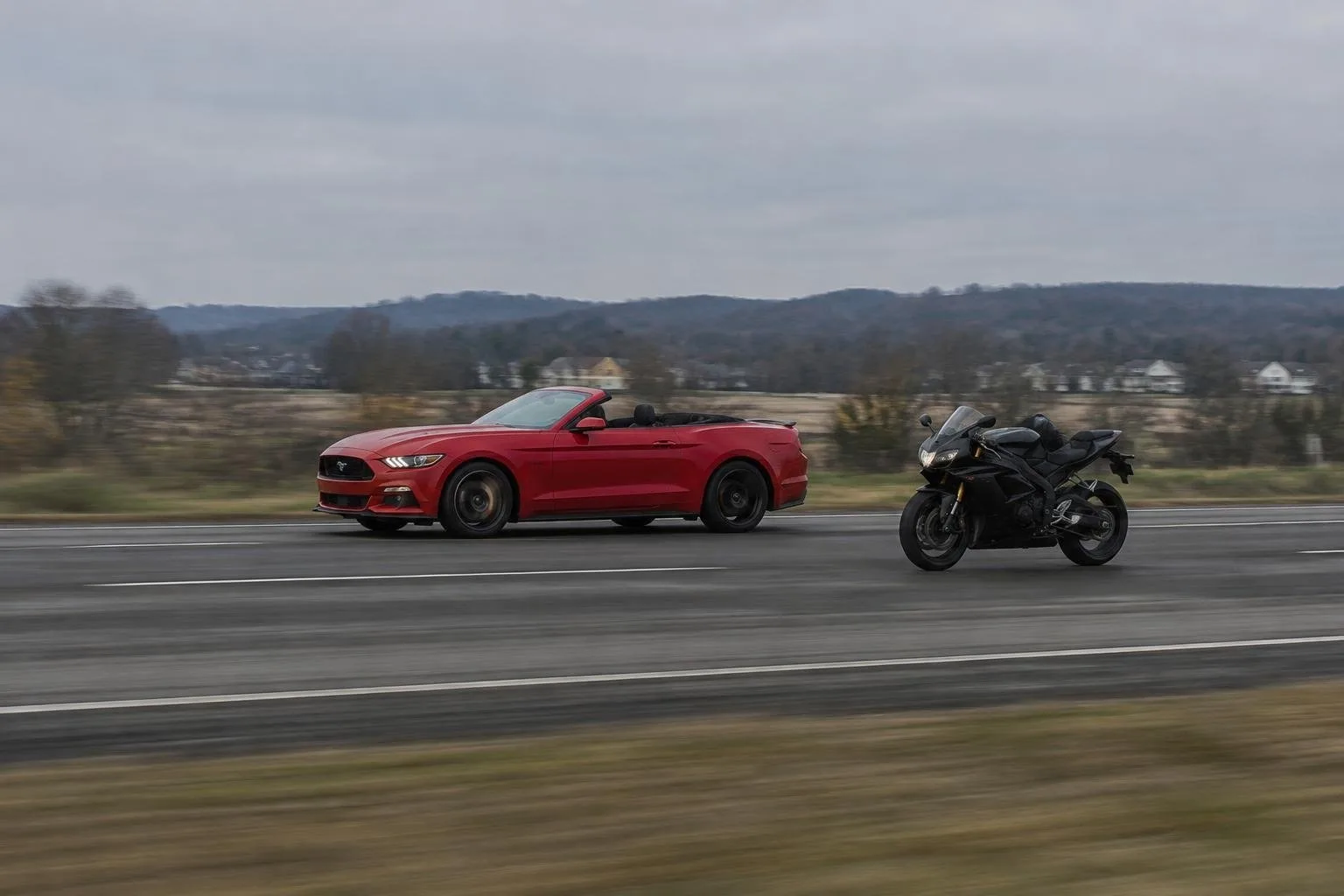
On a Tuesday evening just before 8 p.m., a Tennessee Highway Patrol trooper patrolled State Route 61 near Mariner Point Drive in Clinton, Anderson County. The officer observed a bright-red Ford Mustang convertible accelerating side-by-side with a motorcycle, a classic scenario of drag racing that violates state traffic laws. The trooper, trained to monitor high-speed conduct on rural highways, recognized the maneuver as unsafe and decided to intervene before the situation escalated further.
Following standard procedure, the trooper activated emergency lights and pulled the Mustang over. When the driver rolled down the window, the officer saw a young child seated in the front passenger position, a placement that is expressly prohibited on a convertible used for high-speed activity. The presence of the child transformed a routine traffic violation into a potential child endangerment case, prompting immediate legal action.
The traffic stop and discovery
During the stop, the trooper identified the driver as 53-year-old Cynthia Kitts. Drag racing is defined as a competitive acceleration contest on public roads, often illegal because it jeopardizes public safety. Kitts admitted to participating in the race, confirming that the Mustang and the motorcycle were engaged in a direct speed contest. The officer documented the child’s position, noting that the youngster occupied the front seat without a proper restraint system, a violation that Tennessee law treats as a misdemeanor when it occurs in conjunction with dangerous driving.
Legal repercussions
After the interview, Kitts was placed under arrest and transported to the Anderson County jail. The charges filed include a felony count of drag racing, reflecting the seriousness of operating a vehicle in a high-risk contest on a public highway, and a misdemeanor count of child endangerment for exposing a minor to the hazards of reckless driving. Tennessee statutes prescribe substantial penalties for both offenses, ranging from fines and license suspension to potential incarceration, especially when a child is involved.
Law enforcement officials emphasized that the combination of a high-speed race and an unrestrained passenger creates an unacceptable risk to the broader community. The case serves as a reminder that felony drag-racing statutes exist to deter drivers from turning public roads into makeshift racetracks, and that child-safety laws are strictly enforced when minors are placed in dangerous situations.
Broader safety concerns
Incidents like this highlight ongoing challenges for highway patrol agencies tasked with curbing illegal street racing. While drag racing may appear thrilling to participants, the presence of a child in the vehicle underscores how quickly such activities can cross the line into criminal conduct. Community outreach programs and increased patrols on known racing corridors aim to prevent future occurrences, but enforcement remains a critical component of public safety. The outcome of Kitts’ case will likely influence how aggressively local authorities pursue similar violations in the future.