
Argomenti trattati
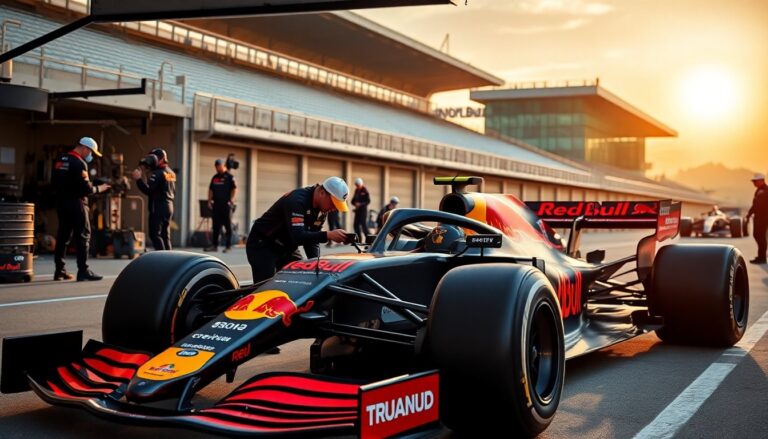
As the countdown to the 2026 Formula 1 season progresses, significant changes are expected, particularly for the Red Bull Racing team. This season marks a new era for Red Bull, which will utilize its own power unit for the first time since acquiring Jaguar in 2005. This transition is not merely a technical upgrade; it represents a strategic move to enhance the synergy between the car’s chassis and engine. However, questions remain regarding the competitiveness of this new combination in the immediate future.
The differing timelines of Ford and Audi in their Formula 1 journeys further underscore the dynamics at play in the sport. While Ford prepares for a fresh start, Audi has been meticulously planning its entry into the championship. Understanding these timelines is crucial for grasping their potential impact on the drivers, particularly Max Verstappen, who is set for another exciting season.
Red Bull’s new chapter with its own power unit
Red Bull’s decision to develop its own power unit is a bold move that could yield long-term benefits. By manufacturing its own engine, the team can ensure tighter integration with the car’s overall design, potentially optimizing performance. This approach allows for specific tuning and adjustments that a third-party engine supplier may not accommodate. However, the immediate concern for the team and its supporters is whether this new engine can deliver the same level of performance that has characterized Red Bull’s recent success.
While the long-term vision is promising, short-term challenges cannot be overlooked. Red Bull’s engineering team faces the substantial task of ensuring that the new power unit meets the rigorous demands of Formula 1 racing. This is a delicate balance, as the team must produce not only a reliable engine but also one that can compete with established giants like Mercedes and Ferrari.
The competitive landscape in 2026
As the 2026 season approaches, the competitive landscape is expected to evolve dramatically. Teams such as Mercedes and Ferrari are actively enhancing their power units and car designs, intensifying the race for supremacy on the grid. The pressure is on for Red Bull to not only keep pace but to reclaim its status as a championship contender, particularly after a challenging 2026 season where they fell short.
With Max Verstappen at the forefront, expectations are exceptionally high. Verstappen, who has been a dominant force in recent seasons, will be looking to recover after narrowly missing the title in 2026. His experience and skill will be pivotal as Red Bull navigates the uncertainties of a new power unit.
Examining Ford and Audi’s strategies
Ford’s strategy in entering Formula 1 contrasts sharply with Audi’s methodical approach. Ford’s timeline is characterized by a sense of urgency, aiming to establish itself swiftly within the sport. This rapid entry could lead to potential pitfalls, especially if the development process is rushed. The focus on delivering a competitive car quickly may overshadow the meticulous engineering required for success in such a demanding environment.
Conversely, Audi’s approach is rooted in careful planning and a long-term vision. By taking the time to build its infrastructure and understand the intricacies of the sport, Audi aims to create a robust foundation for its racing ambitions. This strategy may offer advantages, particularly in terms of reliability and performance consistency as the team transitions into the highly competitive arena of Formula 1.
Implications for drivers and teams
Both teams’ strategies carry significant implications for their respective drivers. For Verstappen, the shift to a new power unit presents both opportunities and challenges. He will need to adapt quickly and provide feedback to the engineering team to refine the new engine’s performance. His ability to communicate effectively with the technical staff will be crucial in ensuring that the car meets his driving style.
As Ford and Audi prepare for their respective campaigns, the pressure mounts on all drivers to deliver results. The evolving landscape in Formula 1 means that every race will be critical, not just for individual teams but for the championship as a whole. As teams like Red Bull, Ford, and Audi prepare to compete on the track, fans can anticipate an exhilarating season filled with unexpected twists and fierce competition.