
Argomenti trattati
Esapekka Lappi’s return to Rally Sweden signals recalibrated approach
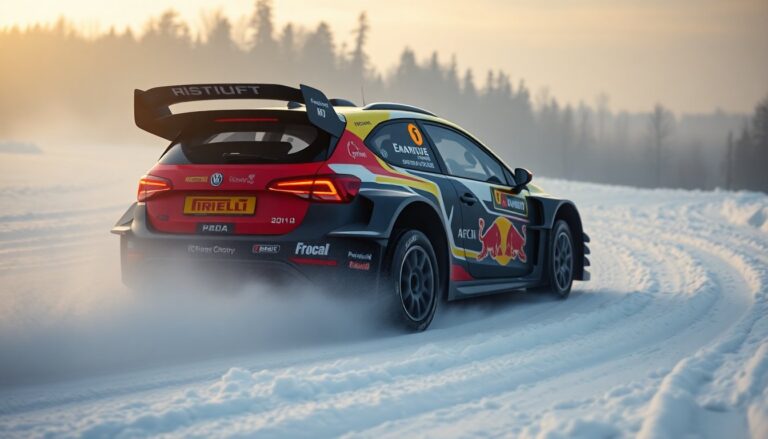
Esapekka Lappi returned to the top tier of rallying at Rally Sweden and displayed a markedly different competitive mindset. The driver rejoined the world rally Championship as a guest entrant after stepping away from full-time duties. His performance suggested a mentality governed by freedom rather than necessity.
The shift in outlook produced tangible effects. Lappi delivered measured speed and provided useful technical feedback to the Hyundai squad. He also assumed an unexpected leadership role within the team, influencing setup choices and strategy discussions.
On the results sheet his finish read sixth place, but his demeanour suggested satisfaction beyond the position. Team members credited his input and composure as positive contributions to Hyundai’s event performance.
Team members credited his input and composure as positive contributions to Hyundai’s event performance. Over the weekend he combined a measured race pace with clear collaboration inside the crew. He matched speed with restraint when necessary to preserve tyres and protect team positions. He provided concise, actionable notes on tyre behaviour and setup that engineers could deploy between stages. On the final day he accepted tactical compromises that prioritized the team’s points haul over individual stage wins. Those elements — pace, team play and technical feedback — help explain why his response appeared grounded in professional satisfaction rather than simple relief.
Mental shift and its impact on performance
The weekend reflected a deliberate mental shift from all-or-nothing aggression to strategic consistency. He showed greater patience on mixed-surface stages and reduced unnecessary risk on split-second decisions. That discipline produced steadier stage times and fewer mechanical strains on the car.
Team dynamics improved as a result. Clear communication cut the time spent testing setup changes between loops. Engineers reported faster turnaround on adjustments, and co-drivers benefited from simpler, more reliable notes. Collective decision-making replaced last-minute solo gambles.
The psychological effect extended beyond one event. By demonstrating adaptability and prioritizing the crew’s objectives, he reinforced a template for teammates contesting close championship battles. Hyundai officials said his approach materially supported the team’s result at the event and provided a framework for future rallies.
Hyundai officials said his approach materially supported the team’s result at the event and provided a framework for future rallies. The most visible change on his return was a calmer mindset. He arrived without the pressure to secure a permanent seat and with the stated aim to contribute and enjoy the driving. That shift allowed him to concentrate on extracting consistent pace from the Hyundai i20 N Rally1 Evo. He also adapted quickly to Hankook tires and the demands of cold conditions.
The calmer mental space translated into measurable gains on stage. He frequently outpaced full-season team-mates and produced steadier splits over extended runs. Engineers and crew members noted faster in-stage problem solving and fewer mistakes under pressure. The episode illustrated how reduced external stress can improve on-stage concentration and decision-making, and how a settled driver can become a performance multiplier for the team.
Freedom as a performance multiplier
The absence of long-term contractual pressure produced a measurable effect on performance. Freed from career-at-risk urgency, Esapekka Lappi delivered self-critical assessments without panic. That composure enabled precise, technical feedback to engineers and calm experimentation with setup changes.
Team engineers credited his focused input on tyre behavior and low-temperature preparations with improving collective knowledge for future rallies. The driver’s role shifted from individual contender to stabilizing presence in the service park, aiding consistency across the crew.
On-stage results and the team dynamic
On the stages, the settled approach translated into steadier pace management and fewer costly errors. Lappi’s measured driving reduced the incidence of aggressive recoveries that had previously disrupted tyre life and balance.
Within the team, that steadiness fostered clearer communication and faster problem resolution during service stops. Engineers reported more actionable data from Lappi’s debriefs, allowing technicians to prioritise adjustments with greater confidence.
The combined effect was a modest uplift in stage times and a more resilient team rhythm. Observers noted that a driver no longer encumbered by long-term contract pressure can function as a performance multiplier by improving both car setup and crew coherence.
Building on the absence of long-term contract pressure, Esapekka Lappi again proved his value at Rally Sweden. He registered the fastest raw times within the Hyundai squad across multiple stages. The
When team priorities required it, Lappi deliberately eased to allow a full-season team-mate to pass. The move was filmed and later discussed openly with engineers and drivers. That concession cost a marginal personal gain but served the manufacturer’s broader objective.
Strategic compromises and value to the squad
The episode illustrated a practical trade-off between individual pace and collective outcome. Lappi’s decision reinforced his role as a team player and underscored the importance of experience in race-day judgement. His input on setup and clear communication with the crew also contributed to improved coherence across the team.
Hyundai’s gap to the dominant Toyotas remained visible on timesheets. Yet Lappi’s performance and measured cooperation offered a template for extracting more from the package over a full event. Team directors noted the benefit of having a driver focused on manufacturer objectives as well as stage speed.
Team directors adjusted the pace on the final day to allow Adrien Fourmaux to move ahead. Esapekka Lappi confirmed the decision and outlined the reasoning. He said the change preserved valuable manufacturers’ points while allowing him to race cleanly and protect a strong personal finish. The interaction between drivers was professional and cordial. The episode illustrated how Lappi tempered competitive instincts with a responsibility to the team. That combination increased his value beyond pure stage speed.
Long-term implications and personal balance
The episode carries implications for team strategy in forthcoming events. Preserving manufacturers’ points can influence championship standings and resource allocation. Engineers and team managers gain latitude to prioritise collective outcomes without unduly penalising an individual driver.
For Lappi, the decision reinforced his role as a team-oriented competitor. Without the pressure of a long-term contract, he can align personal performance with manufacturer objectives. Team sources say that ability to combine pace with tactical discipline strengthens his appeal for future selections.
Sporting directors noted that such cooperation can set a precedent within the squad. Clear communication and mutual respect between drivers and management reduced on-stage risk while safeguarding the team’s broader goals. That balance of speed and strategic restraint may shape how teams approach tight championship scenarios.
That balance of speed and strategic restraint may shape how teams approach tight championship scenarios. Beyond the rally, Lappi’s recent decisions reflect a deliberate career rhythm. He stepped back from a full-season programme to recharge and reassess priorities. The result was a return to a small number of selected events rather than a continuous campaign.
He framed the programme as limited and emphasised family and variety in sporting activity. He said enjoyment of the craft guided his choices. For professional drivers and team staff, the approach underlines that sustainable performance often depends on scheduled recovery and clear boundaries between career pressure and personal life.
Teams facing compressed calendars may view Lappi’s model as a case study in managing workload and preserving form. The strategy also presents questions about how partnerships and contracts adapt when top drivers prioritise selective participation over full-season commitments.
The decision to race selectively also raises questions about how partnerships and contracts will adapt when top drivers prioritise partial programmes. Teams and sponsors must balance short-term visibility with long-term championship goals.
For Hyundai, measured ambition reduced exposure to mechanical risk while preserving points needed in a tight title fight. Engineers could focus on reliability and set-up for specific stages. That pragmatic approach helped the team manage resources across a demanding winter event.
Commercial partners face different calculations. Shorter appearances concentrate media attention, but they also limit cumulative brand impressions across a season. Contract clauses are likely to evolve to reflect flexible entry lists and performance-based incentives.
Sporting governance may respond as well. Regulators and series organisers could review entry rules and participation requirements if selective programmes become more common. The objective will be to maintain competitive integrity while accommodating modern driver schedules.
On a personal level, Lappi left Sweden appearing satisfied rather than relieved. His composed demeanour after the final stage suggested that measured ambition delivered both team benefit and professional fulfilment.
Teams will now prepare for the next rounds with that balance in mind. Expect negotiations over workload, calendar choices and contractual terms to feature prominently as the season progresses.