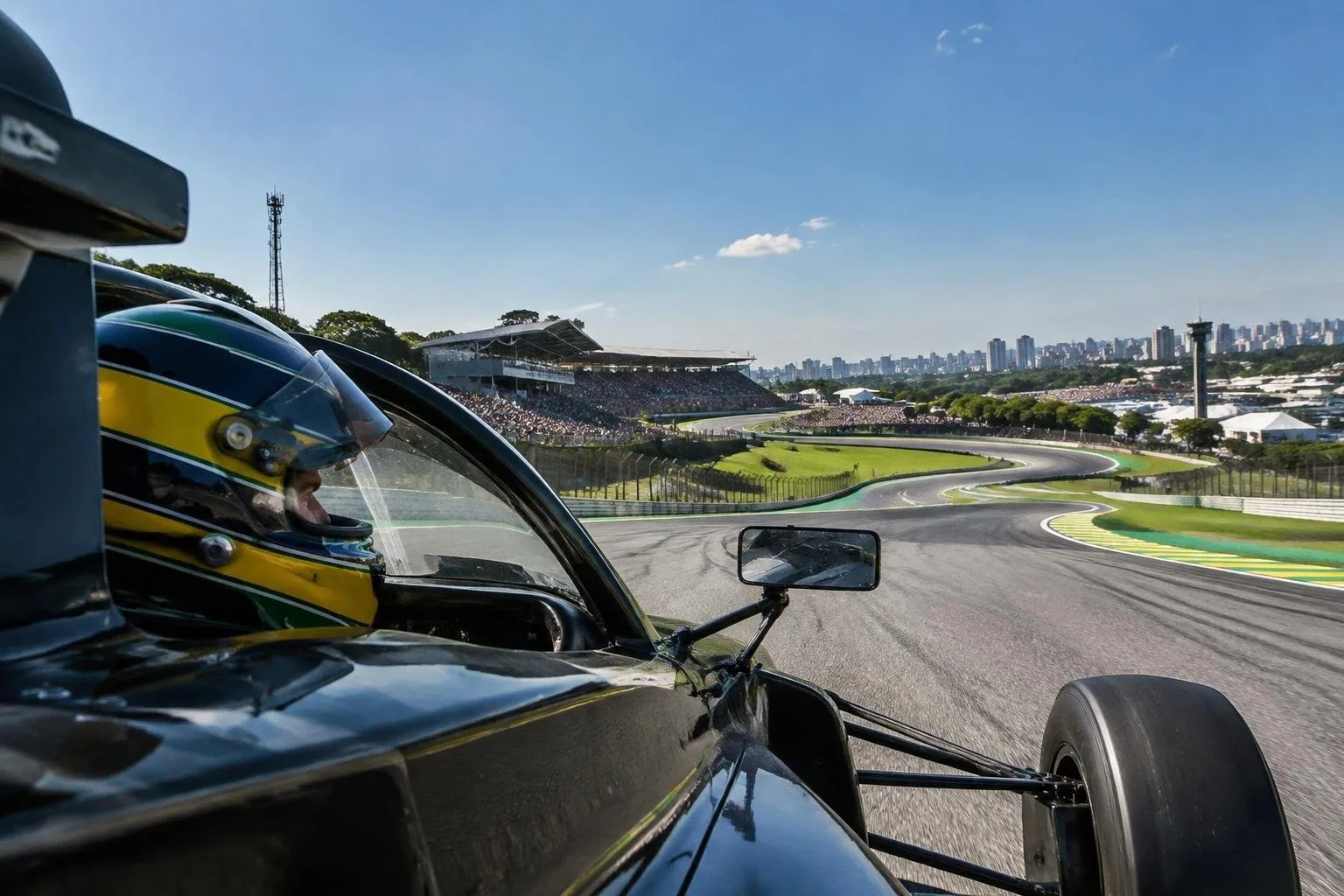
The Brazilian Grand Prix at Interlagos delivered two storylines that dominated the post-race analysis. On one side, Charles leclerc of Ferrari was handed a five-second penalty for a late-race encounter with Liam Lawson. On the other, Max Verstappen of Red Bull recounted a remarkable climb from the twenty-first grid slot to a second-place finish, highlighting both the car’s potential and its shortcomings.
Leclerc-Lawson contact and the ensuing penalty
During the final laps in São Paulo, Leclerc attempted an over-take on the New Zealander at the Juncão corner. The manoeuvre resulted in a light but decisive nudge that sent Lawson sideways, allowing the Monegasque to briefly claim the position. Race officials later assessed a five-second penalty, dropping Leclerc back to eighth place. Lawson, representing the Racing Bulls, reacted sharply, recalling a similar incident from Leclerc’s GP2 days and suggesting the move might be a recurring habit.
Despite the sanction, two world champions offered a more lenient view. Max Verstappen, speaking with Lando Norris and Isack Hadjar in the post-race debrief, described the contact as “rubbing is racing,” a line lifted from the 1990 film *Days of Thunder*. By invoking the quote, Verstappen signalled that a mild brush-off is an accepted part of high-speed competition, especially when it occurs while battling for a racing line.
Lando Norris echoed a similar sentiment, emphasizing that drivers constantly trade places and that a brief touch does not automatically merit a penalty. Both Verstappen and Norris stressed that intent and the degree of impact should guide stewards’ decisions, rather than a strict zero-tolerance rule.
Verstappen’s charge from the back of the grid
Red Bull’s campaign at Interlagos began under a cloud of technical penalties. A power-unit change forced Verstappen to start from grid slot 21. The first lap was hampered by a sluggish clutch release, which left the Dutch driver stuck behind a wall of traffic in the opening three corners. Nonetheless, he quickly found rhythm, clawing his way into the top ten within two laps.
After the initial stint on medium tyres, Verstappen switched to the soft compound. The transition exposed a pronounced oversteer problem in the fast sweepers, prompting a series of radio complaints about a loss of aerodynamic grip. Verstappen speculated that a component failure or unexpected aerodynamic degradation might be to blame, noting that the car behaved markedly differently from the opening phase.
Mid-race, teammate Isack Hadjar briefly overtook Verstappen following a strategic “swap position” manoeuvre on lap 38. The Algerian driver capitalised on a brief power advantage, but the order was restored shortly after, with Verstappen reclaiming second place. Hadjar ultimately finished on the podium, securing his fourth career podium finish.
After crossing the line, Verstappen praised the effort: “I could have done better than second place.” He explained that the early clutch error and the subsequent oversteer limited his ability to fight for victory, but he remained pleased with the points haul, especially given the challenges posed by the wet-intermediate tyre change later in the race.
The 2026 São Paulo Grand Prix therefore highlighted two contrasting narratives: a heated debate over the legality of a late-race shove, and a demonstration of how a driver can transform a back-of-the-grid start into a podium result despite mechanical hiccups.