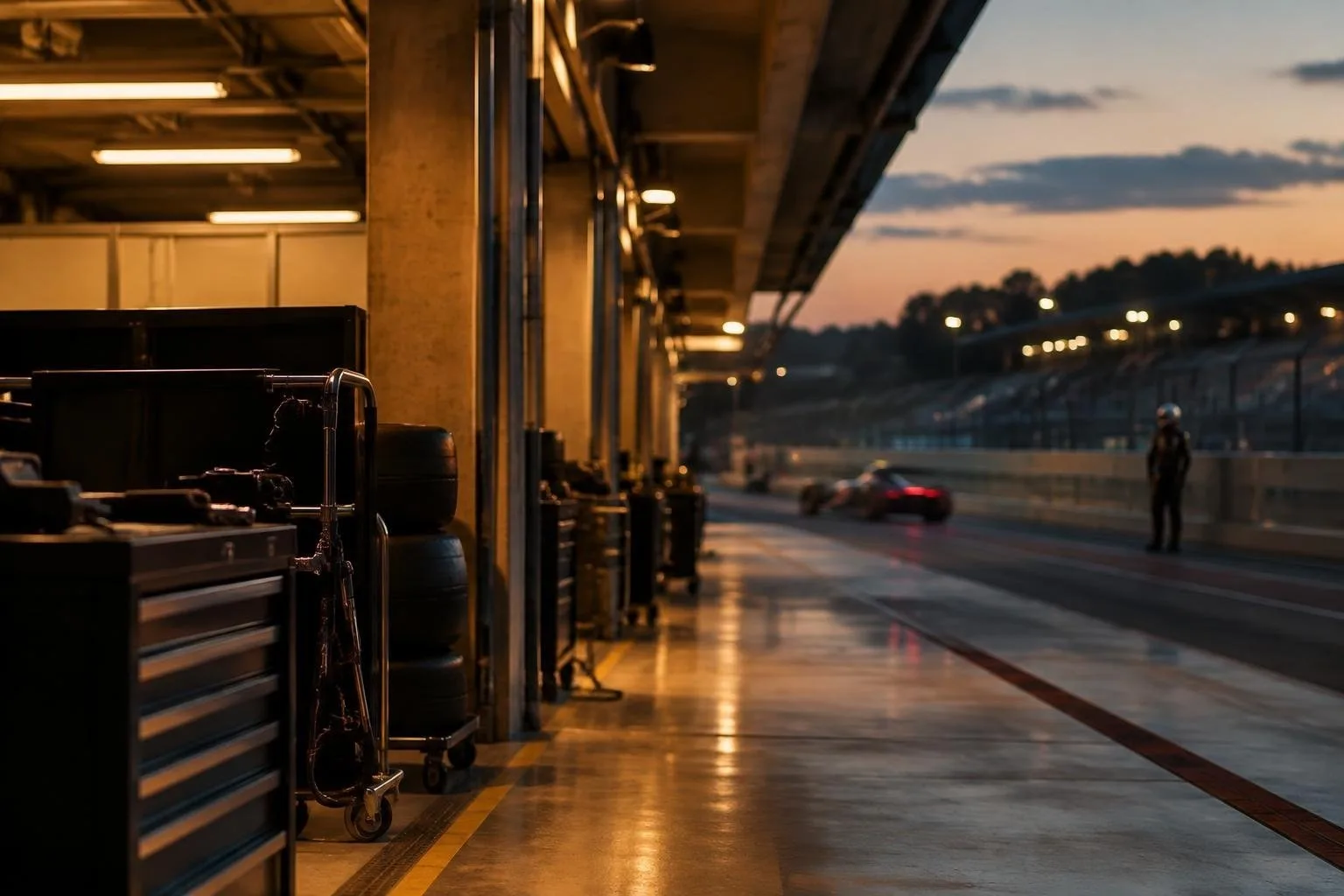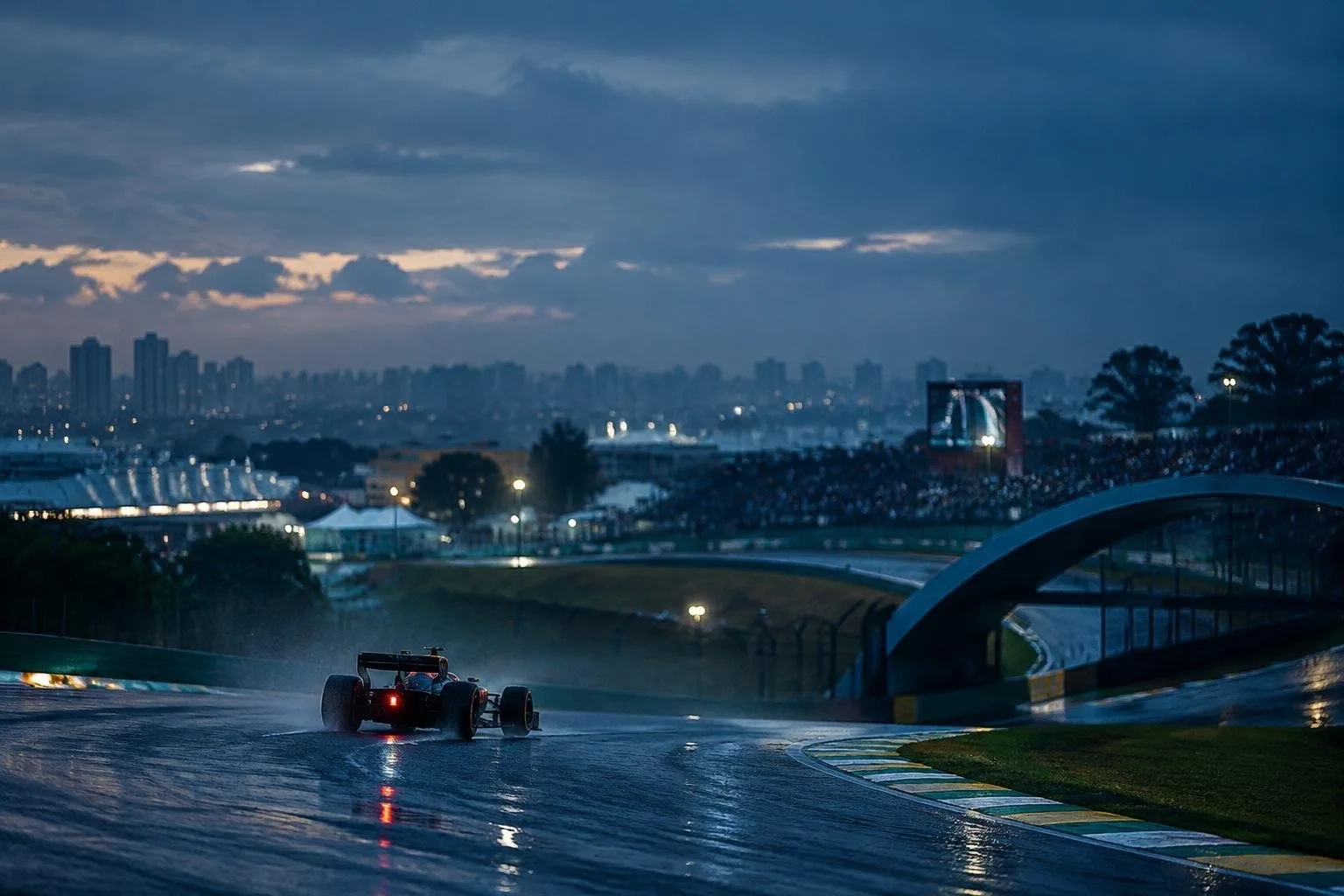
The 2026 FIA Formula 1 São Paulo grand prix unfolded under a sky that could not decide between sunshine and a deluge. As the cars lined up for qualifying at the legendary Interlagos circuit, a sudden squall forced officials to deploy two red flags, halting the session while water turned the asphalt into a slick mirror. When racing finally resumed, the track was still drying, and drivers had to choose between full wet and intermediate compounds while battling a ticking clock and an increasingly hostile weather pattern.
British driver Lando Norris proved decisive. Taking advantage of the brief window when the track offered the best grip, he lapped the circuit in 1:27.470, edging Mercedes’ George Russell by just 0.204 seconds. Norris’ lap secured his second consecutive pole at Interlagos, a feat that underlines his reputation as a wet-weather specialist. Behind him, Mercedes rookie Kimi Antonelli claimed the second spot, while the third row was completed by Red Bull’s Isack Hadjar. The top-ten also featured impressive runs from Racing Bulls’ Liam Lawson and seasoned campaigner Nico Hülkenberg.
Rain-soaked qualifying crowns Lando Norris on pole
The opening segment of qualifying, Q1, began with the circuit already saturated from a heavy downpour. Less than three minutes in, officials called an red flag as standing water made the track unsafe; both Antonelli and Hadjar reported that their race suits were drenched after a brief stint on the wet tarmac. When the session restarted, all twenty-two drivers were equipped with full-wet tyres. Visibility was reduced to a mist of spray, but as the rubber warmed, lap times began to tumble.
Early leaders included Valtteri Bottas and Sergio Pérez on the Cadillac-powered machines, with Max Verstappen briefly setting a 1:37.932 before being overtaken by Fernando Alonso. The top-four shuffled several times, seeing names such as Nico Hülkenberg, Lewis Hamilton and Oliver Bearman appear on the timesheets. By the end of Q1, Norris emerged on top with a 1:30.939, while a handful of drivers—including Franco Colapinto, Gabriel Bortoleto and Lance Stroll—failed to improve and were eliminated.
Q2 started with fifteen drivers remaining, as Verstappen elected to sit out to preserve his tyre allocation, knowing a substantial grid penalty awaited him. The conditions continued to evolve, prompting teams to contemplate a switch to intermediate tyres. Charles Leclerc briefly led the session, but the New Zealander Liam Lawson was the first to change compounds, instantly carving out a 1.6-second gap over rivals. The session was abruptly halted again when rookie Rafael Câmara lost control and crashed into the barrier, bringing out a second red flag and sealing the list of drivers who would not progress to the final segment.
In the decisive Q3, darkness gathered over Interlagos and rain intensified. Teams scrambled to set a competitive lap before conditions deteriorated further. Fernando Alonso set an early benchmark on intermediates with a 1:30.311, only for Lawson, Norris and Russell to surge ahead. After a flurry of laps, Norris managed to extract a 1:27.470, a time that held despite the worsening weather. Russell’s lap of 1:27.674 placed him second, while Antonelli, despite being a relative newcomer, secured third with a lap only 0.625 seconds off the pace.
Practice session hints at tight battle between Verstappen and Antonelli
Earlier on the same day, the final free-practice session—FP3—offered a glimpse of the speed differentials that would shape the weekend. Max Verstappen topped the timing sheets with a 1:11.622 on the soft compound, edging out Mercedes rookie Kimi Antonelli by a razor-thin 0.025 seconds. McLaren’s Lando Norris was third, 0.131 seconds behind the Dutchman. The top five drivers were separated by less than three-tenths of a second, underscoring how closely matched the front-running cars were on a drying track.
Behind the leaders, a series of grid penalties loomed large. Ferrari exceeded its internal-combustion-engine allocation on both Lewis Hamilton and Charles Leclerc, each receiving a ten-place drop. Red Bull faced penalties for Verstappen’s power-unit, turbocharger and exhaust usage, accumulating a cumulative 30-place sanction that would force him to start at the back of the grid. Cadillac’s Sergio Pérez also saw his power-unit components replaced, resulting in a loss of grip and a further penalty.
Mid-session, Lance Stroll suffered an ERS fault after just seven laps, curtailing his run. Hamilton experienced unusual vibrations and smoke from his power unit, prompting an early stop. As the field switched to the soft tyre for their final laps, Russell briefly broke the 1:12 barrier, only to be eclipsed by Norris, Antonelli and Verstappen in quick succession. The final practice order highlighted the depth of the midfield, with Racing Bulls’ Arvid Lindblad and Liam Lawson occupying seventh and eighth, while Red Bull’s Isack Hadjar settled in ninth.
Team reactions and grid penalties reshape the weekend
McLaren’s camp hailed Norris as a “wet-weather master”. Team principal James Key praised the driver’s composure, noting that the Brit managed to stay calm, keep the tyres and car at optimal temperature, and avoid mistakes while the track swung between wet and drying. “We felt stronger on the intermediates than on the full wets, and Lando delivered when it mattered most,” Key remarked, adding that the team will have to adapt quickly if Sunday’s race turns dry.
Oscar Piastri, who qualified twelfth after missing out on a final lap due to a red-flag interruption, expressed disappointment but remained optimistic. “The wet was tricky, especially early on. If the race stays dry we have a good chance, but we’ll need to push hard overnight,” he said, hinting at a possible climb up the order.
Mercedes, despite a five-place penalty for Russell, focused on extracting performance from the new power-unit package. Their engineers emphasized the importance of tyre strategy once the rain subsides. Meanwhile, Ferrari’s double penalty left both Hamilton and Leclerc starting well back, turning the team’s attention to race-day strategy and potential safety-car opportunities.
Overall, the combination of erratic weather and a cascade of component-related penalties transformed the São Paulo weekend into a tactical chess match. Midfield teams such as Racing Bulls and Alpine found themselves in striking distance of the front row, while the headline-making drivers prepared for a race that could swing dramatically with every drop of rain.