
The German Grand Prix reaches its middle mark of the season at the Sachsenring, a venue that has hosted the World Championship for the twenty-seventh time. Historically, Germany has staged a remarkable total of 85 Grands Prix because during the Cold War two separate rounds existed—one in West Germany and one in East Germany. The very first German round took place at Solitude in 1952 and reportedly drew some 400,000 spectators, a vivid reminder of the sport’s early public appeal. Over the years the event moved among circuits such as Schotten, the Nürburgring and Hockenheim, each adding its own chapter to the country’s motorcycle racing story.
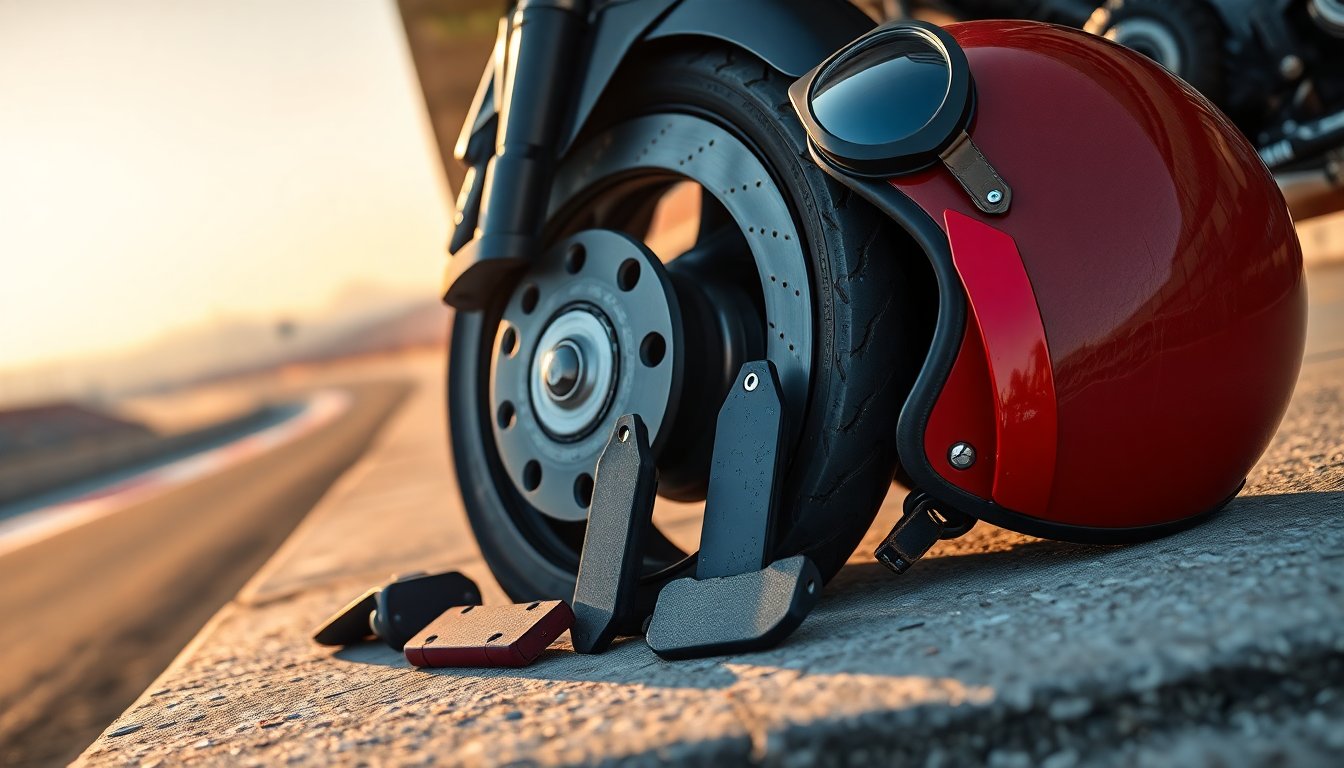
Beyond heritage, Sachsenring is a technical test for both riders and components. The track measures 3.671 km and, according to technicians from Brembo, ranks as moderately demanding for braking systems. On a scale from 1 to 6 it receives a value of 3 for the difficulty index, which reflects cumulative braking work and peak demands in each lap. Riders spend roughly 21.5 seconds per lap actively braking, and the layout’s eight braking areas are split into two High, two Medium and four Light zones, a mix that calls for versatile brake setup and consistent cooling strategy.
Historical significance and memorable firsts
Germany’s place on the calendar is full of milestones, including an early technological breakthrough tied to Brembo. A notable historic result came at the 1978 West German Grand Prix on the 22.8 km Nordschleife, where Virginio Ferrari scored a premier-class victory on the Gallina team’s Suzuki RG 500. That machine used Brembo hardware: 38 mm 2-piston calipers, a 15.87 mm axial Brembo master cylinder, and two 280 mm cast iron front discs. That win marked the first time a top-class World Championship race was won by a bike carrying Brembo braking equipment, a starting point for a long relationship between the brand and Grand Prix success.
What the Sachsenring demands from brakes
From a technical perspective the circuit is not the harshest on the calendar but it does combine many short, intense braking episodes with lower-speed corners that expose components to repeated thermal cycles. The 3.671 km layout forces teams to balance bite and thermal resistance: too aggressive a setup can overheat discs, while conservative choices compromise lap time. Brembo’s analysis highlights the need to modulate pressure and pad feel across mixed zones so riders can maintain performance throughout a race distance. Effective cooling, material selection and careful master cylinder calibration are all part of the engineering response to the track’s characteristics.
The single most punishing point
The sharpest test for the brakes at Sachsenring is the corner immediately after the finish line. There bikes decelerate from 298 km/h down to 70 km/h in about 5.2 seconds, covering roughly 243 meters while the rider exerts approximately 5.4 kg on the lever. Peak deceleration reaches around 1.4 g, brake fluid pressure can spike to 11.6 bar, and carbon disc temperatures climb to about 640°C. Those figures demonstrate why specific materials and component tolerances are essential for reliability and consistent lap performance under race conditions.
Rider dominance, career progression and current Moto2 trends
The Sachsenring rewards certain riding styles, and one clear beneficiary has been Marc Marquez. It is one of only five circuits run counterclockwise on the calendar, a direction that historically suits his approach. Marquez put together a run of ten consecutive German Grand Prix wins: success in 2010 (125cc), in 2011 and 2012 (Moto2), and an unbroken string from 2013 to 2019 in MotoGP. The 2026 race was canceled and Marquez added another victory in 2026, extending his tally to eleven straight wins at this venue, all achieved with Brembo braking systems. He also secured ten consecutive pole positions here from 2010 to 2019, underlining his qualifying mastery at the track.
Moto2 graduates and current equipment choices
There is a clear pattern of Moto2 winners using the German GP as a springboard to MotoGP: Alex Marquez (won in 2019), Remy Gardner (2026), Augusto Fernandez (2026), Pedro Acosta (2026) and Fermin Aldeguer (2026) each claimed the Moto2 title at Sachsenring before moving up to the premier class the following season. In the current Moto2 field Brembo hardware is widespread: all riders use finned calipers, about 90% opt for Brembo master cylinders, 80% choose Brembo brake pads and roughly 30% run Brembo steel discs, with teams free to select either finned or standard variants depending on cooling and feel requirements.


