
Argomenti trattati
The Formula 1 paddock kept busy during the quiet part of the season as teams supported tyre development programmes. At the centre of this activity was Lewis Hamilton, who returned to Ferrari’s private facility to help Pirelli refine their wet products. While no grands prix were scheduled that week, manufacturers and squads used the pause to gather controlled data and accelerated development work away from race weekends. The session forms part of a broader testing sequence that followed earlier running by Red Bull and Racing Bulls in Japan and precedes additional tests planned at a historic European venue.
Ferrari’s Fiorano circuit provided a contained environment for repeatable programmes, with engineers able to monitor variables closely. The team and driver focused on specific rubber compounds and construction options, giving Pirelli feedback that only real on-track mileage can produce. Despite being a private test rather than competitive running, the effort demanded endurance and precision, with every lap contributing to tyre maps, performance windows and safety assessments. The work also underlines how manufacturers and tyre suppliers collaborate between races to keep performance and reliability moving forward.
Fiorano session: what was done on track
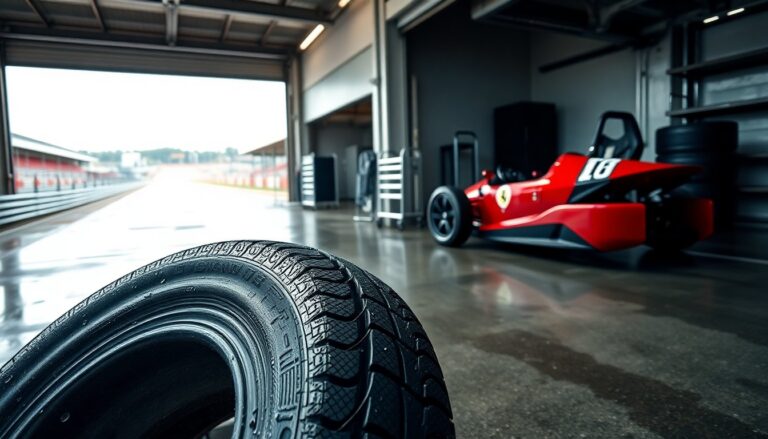
At Fiorano the work centred on developing wet-weather compounds for future use in mixed and rainy conditions. On Thursday Hamilton completed 142 laps, covering roughly 423 kilometres, during runs that alternated between full wet spec tyres and intermediate prototypes to explore crossover behaviour. To make results consistent, the circuit surface was deliberately dampened using an irrigation system, which allowed engineers to reproduce similar track states across multiple runs and collect comparable telemetry. That controlled approach is crucial when distinguishing tyre behaviour from car setup or environmental noise.
Why these tests matter
Tyre testing like the Fiorano programme helps Pirelli expand the operating range and predictability of their products. By logging long stints on different compounds, teams and the supplier can refine tread designs, rubber compounds and construction to suit a wider span of rainfall intensities. The data informs how a tyre performs in terms of grip, aquaplaning resistance and durability across temperatures — all elements that influence race strategy and safety. In addition to lap times, engineers assess washout characteristics, wear patterns and how a tyre transitions between soaking and drying phases.
Controlled conditions and repeatability
Using an artificial watering setup at Fiorano gave the test organisers the ability to replicate specific wet states repeatedly, eliminating much of the variability found in natural weather. That repeatability is essential when comparing iterations of a tyre design or when contrasting an intermediate product against a full wet one. With a consistent baseline, lap-to-lap telemetry and driver feedback become far more valuable, enabling Pirelli to draw stronger conclusions about tread effectiveness, temperature bands and grip evolution throughout a stint.
Where the programme heads next
Before or after the Fiorano activity, the wider testing cycle included runs by other teams: Red Bull and their sister operation stayed in Japan for a two-day programme, and both Mercedes and McLaren were preparing to continue Pirelli’s work at the Nurburgring on April 14-15. Those forthcoming sessions will build on the insights from Fiorano, providing different track surfaces and layouts to evaluate tyres under varied loading and spray patterns. Together, the staggered tests form a comprehensive data set that helps the tyre supplier refine products for multiple circuits and weather scenarios.
What teams and tyre suppliers gain
Beyond immediate development goals, these exercises strengthen the collaboration between teams and their tyre partner. Drivers like Hamilton provide subjective sensations that, when combined with high-resolution telemetry and thermal imaging, give a holistic view of tyre behaviour. The information gathered at Fiorano and in subsequent tests feeds into race preparation, helps define pit stop strategies for wet races, and contributes to long-term safety standards. For fans, it means more predictable and reliable tyre performance in variable conditions, and for teams it reduces uncertainty when weather plays a decisive role in a grand prix.