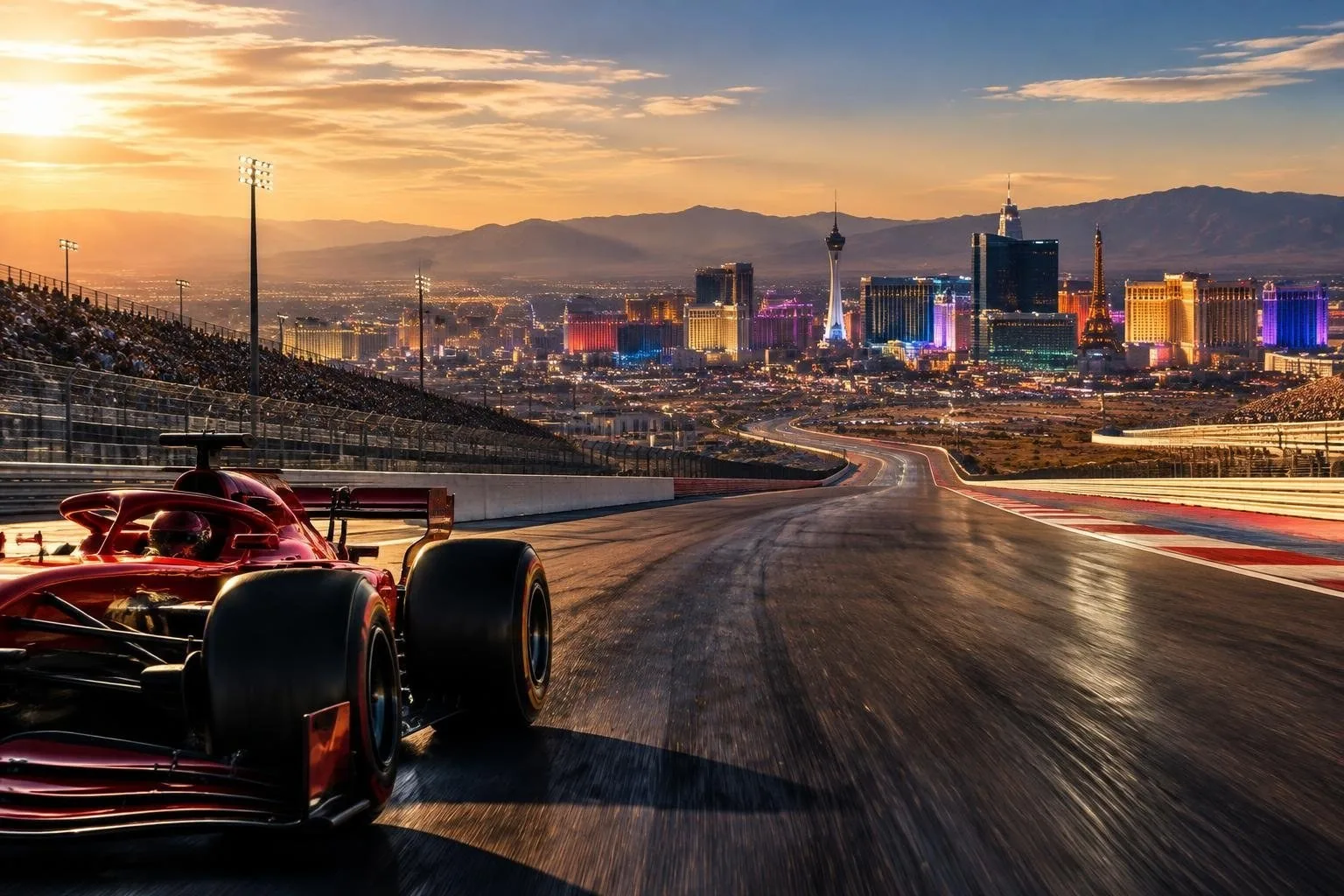
The Las Vegas Formula One Grand Prix delivered a spectacle of artificial chaos and genuine controversy for Lewis Hamilton. While Max Verstappen took the victory for Red Bull, the narrative for the Ferrari driver was defined by two separate penalties that stripped him of a potential podium finish. Hamilton described the first sanction as “really harsh,” a sentiment that underscores the growing tension between driver intent and steward interpretation on the Strip Circuit.
Penalties Define Hamilton’s Race
Hamilton’s afternoon began with promise despite poor qualifying results. He reported feeling strong pace in the car and believed strategy could lift him up the order. That momentum stalled when he engaged Lando norris of McLaren. During their battle, Hamilton defended his position through Turn 8, leaving the track and retaining the advantage over the McLaren. The stewards deemed this a lasting benefit, handing down a ten-second penalty.
“I avoided a collision with Lando and got a 10-second penalty for it, which was really, really harsh,” Hamilton stated after the race. He felt the punishment contradicted the effort required to keep the cars apart, noting that he had good pace and thought they could catch up to the leaders. The penalty forced him into a defensive posture for the remainder of the stint, disrupting his rhythm and strategic options.
Ferrari Internal Conflict Escalates
The second incident involved Hamilton’s own team mate, Charles Leclerc. On Lap 13, Leclerc attempted an inside move at Turn 7, resulting in contact between the two Ferraris. Unlike Hamilton’s earlier infraction, Leclerc received the ten-second penalty for causing the collision. This dropped Leclerc from sixth on the road to tenth in the final classification, while Hamilton finished seventh.
When pressed on whether Ferrari needs stricter internal regulations following this latest contact, which echoes their clash at the Mexico City Grand Prix, Hamilton refused to engage directly. “I’m definitely not going to get into the stuff with Charles because that’s for the team to deal with,” he said. He emphasized that he has done all he can and said everything possible regarding the situation, leaving the resolution to the Scuderia’s management.
“That’s for Ferrari to decide,” Hamilton added in comments to Sky Sports F1. “Obviously, I’ve done all I can, and I’ve said everything and more. And it’s been difficult. So all I can do is just show up and give it everything I can.”
Strategic Deficits and Missed Opportunities
Beyond the penalties, Hamilton highlighted a fundamental performance gap that complicates Ferrari’s race craft. He noted that the car lacked sufficient straight-line speed to compete without slipstream assistance. “We needed a tow. We always had to be in a tow in order to be in the fight,” he explained. This dependency made overtaking difficult and left them vulnerable to being passed or held up, reducing their ability to execute independent strategies.
Despite these hurdles, Hamilton maintained that the raw pace was there for a top-three finish. “I really think today we could have had a podium,” he admitted, pointing to the need to beat the McLarens as a primary objective before the incidents unfolded. The result is a bitter pill for a team showing signs of progress but hindered by both regulatory interpretations and mechanical limitations.
As the season moves toward its conclusion, the focus shifts to how Ferrari will manage the friction between its drivers. With championships already decided, the remaining races serve as testing grounds for 2030 regulations, where simpler engines may reduce battery management concerns. For now, however, Hamilton remains focused on execution, hoping that background discussions within the team will eventually resolve the recurring clashes that have marred their recent performances.