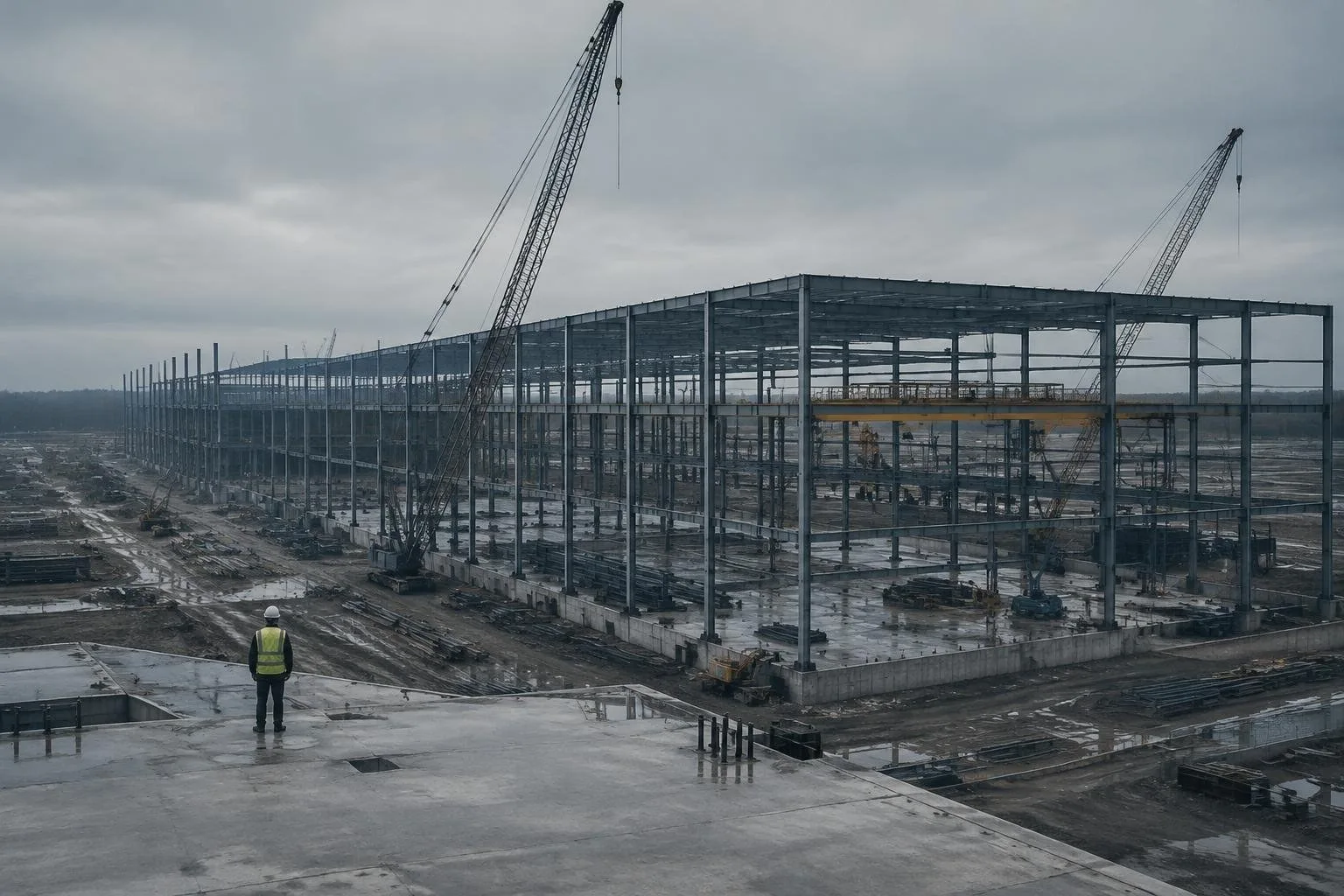
Honda Motor Co. disclosed a $3 billion commitment to build a fourth automobile assembly facility in central Ohio. The plant will sit between the automaker’s existing East Liberty and Marysville sites, and is slated to start operations in 2029. With a designed capacity of 240,000 vehicles per year, the new factory will push Honda’s U.S. output to roughly 1.3 million units annually, reinforcing its long-term foothold in the American market.
The announcement arrives as the company celebrates five decades of manufacturing in the United States. Executive Vice President Bob Nelson highlighted the venture as “one of Honda’s most advanced plants worldwide,” noting that it will generate more than 2,000 new American jobs. Although the specific model lineup remains undisclosed, the facility will be engineered to handle gas-powered, hybrid, and fully electric powertrains, offering the flexibility to shift production according to market demand.
Hybrid-focused expansion across the continent
Beyond Ohio, Honda is upgrading several other North American sites to support its hybrid strategy. In Alabama, the company will enlarge its Lincoln plant, adding capacity for a new V-6 hybrid engine and re-tooling the Anna Engine Plant to produce next-generation Atkinson-cycle four-cylinders. The Ohio transmission plant is also being modified, converting an existing line into a second production line dedicated to next-generation hybrid systems for compact and midsize models.
Georgia’s transmission facility will complement these efforts by manufacturing hybrid modules for larger vehicles, while a joint venture with LG Chem in Jeffersonville, Indiana, continues to supply battery cells for both hybrid and all-electric applications. Collectively, these projects aim to raise the North American hybrid-powertrain output by roughly 250 percent in Ohio alone.
Economic ripple effects and state partnership
The Ohio Tax Credit Authority has approved a sizable tax incentive for the project, and JobsOhio announced the deal without revealing the exact figures. Governor Mike DeWine, the ninth Ohio governor to work with Honda, praised the investment as a continuation of a half-century partnership that has repeatedly expanded the state’s manufacturing base.
Honda’s commitment also dovetails with its broader educational and workforce initiatives in the region, including a $132 million contribution to research facilities and endowed chairs at The Ohio State University, as well as collaborative programs with community colleges. These efforts are intended to sustain a pipeline of skilled labor capable of operating the plant’s advanced automation and data-driven production systems.
In May 2026, Honda outlined a plan to launch fifteen new hybrid models globally by 2030, with North America earmarked as the primary market. The Ohio plant, together with the upgrades in Alabama and Georgia, will form an integrated manufacturing network that couples vehicle assembly with expanded engine and hybrid-system production, positioning the company to meet the anticipated surge in demand for efficient, electrified transportation.
Overall, the $3 billion Ohio investment signals Honda’s confidence in the United States as a cornerstone of its future growth, offering a blend of job creation, technology upgrades, and a clear roadmap toward a more electrified vehicle lineup.