
Argomenti trattati
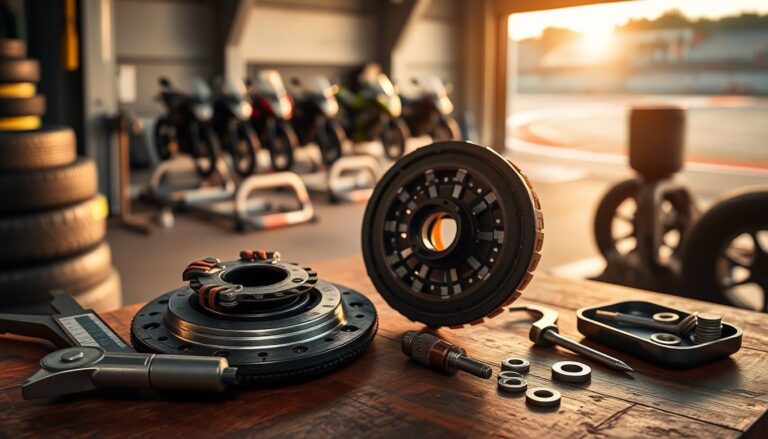
The clutch on a race bike is deceptively small and often out of sight, yet it sits at the center of several performance battles every weekend. In this episode of the Oxley Bom MotoGP Podcast, Mat Oxley invites Peter to examine that compact mechanism and to explain why it matters so much to both riders and engineers. The conversation explores how the clutch influences starts, cornering and the final fine-tuning that separates podium contenders, and it reframes the clutch as a precision instrument rather than a simple on/off control.
Listeners get a mix of direct observation and technical reasoning: some claims are supported by measured data, while others come from careful interpretation of team behavior and component choices. Alongside the core chat, the show acknowledges collaborators and the creative elements that shape the episode—such as music from The Nextmen and production support. If you want a deeper technical appreciation of MotoGP machinery, this episode is designed to be both accessible and technically satisfying.
Why the clutch remains a performance lever
At first glance the clutch looks like a tool used only at the race start, and it is true the lever plays a vital part on the grid. However, its influence extends to corner entries and traction management where tiny adjustments alter a lap time by tenths. Technicians consider it one of the last mechanical options to refine: while engine mapping, suspension and aerodynamics soak up most development, the clutch provides nuanced control over power delivery. For riders, manipulating the clutch—either with the lever or via electronic assist systems—becomes a matter of feel and timing, translating mechanical behavior into human confidence when braking and exiting a bend.
How MotoGP clutches differ from road-bike systems
Race bikes use clutch designs optimized for repeatability and rapid modulation under extreme loads, not for the longevity and comfort expected of production machines. In MotoGP, materials and construction prioritize weight savings, heat tolerance and precise engagement characteristics. Engineers balance friction surfaces and springs to produce predictable slip windows at low speeds and firm lock-up at full acceleration. The result is a component that behaves consistently across dozens of high-stress starts and aggressive downshifts, giving riders a dependable reference when experimenting with corner technique or launch control strategies.
Materials and mechanisms
The choice of composite plates, backing materials and actuation geometry is a constant in the race to improve clutch performance. Teams select friction materials that tolerate sudden temperature swings and preserve a stable coefficient of friction; they also design plates to shed heat effectively. Mechanically, some MotoGP clutches incorporate advanced multi-plate arrangements or refined pressure plate profiles to tune the slip window—the range where controlled slipping is possible. Those small changes in plate thickness or surface treatment can change how a rider perceives the bike under deceleration and initial acceleration.
Adjustability and rider control
Adjustable elements give riders and crew chiefs a way to tailor the clutch response for circuits and individual preference. Settings change how the bike behaves at low revs, how it transitions out of a corner, and how it launches from a standing start. Some riders prefer a clutch that offers more bite for aggressive launches, while others want smoother modulation to manage rear traction mid-corner. Teams often experiment in practice sessions to map clutch behavior into an overall setup that complements engine delivery, electronics and tyre characteristics, making the clutch part of an integrated performance package.
Practical tips from the paddock
From the pit lane perspective, the clutch is handled as both a mechanical and a setup variable. Crews monitor wear and heat, swap components between outings and log rider feedback about engagement feel. Riders use small lever movements at low speeds to influence chassis rotation and keep tyres within their ideal grip range. In short, the clutch becomes a tool for fine control, not just a starter device: when teams are chasing marginal gains, it is often the component that allows riders to coax out the last usable tenths on a qualifying lap.
Listen, learn and get involved
If this summary sparks curiosity, the full conversation on the Oxley Bom MotoGP Podcast goes deeper into specific observations and technical reconstructions. The show encourages listeners to check the website for episodes, subscribe on platforms, or support via Patreon for bonus content. A nod to collaborators—such as music contributions from The Nextmen and production partners—recognizes the craft behind the podcast. For brands seeking access to a focused MotoGP audience, contact points through Smash Brand Group are offered, while fans are invited simply to press play and hear the clutch explored with both clarity and enthusiasm.