
Valentino Rossi describes a life that moves between the analogue and the digital: from neighborhood antics in tiny three‑wheelers to serious hours on a professional simulator. He explains how a modern gaming setup has become a training tool, how family and hometown ties shaped his path, and why even the most decorated riders carry rituals and fears. The portrait that emerges mixes humour, humility and the practical details of a champion adapting to new tools and old instincts.
This piece follows three themes that recur in Rossi’s reflections: formative experiences and family influence, the rise of virtual training and endurance driving, and the emotional landscape—superstition, fear and legacy—that accompanies a long career. Throughout, Rossi names specific machines, places and moments that explain why he returned to Tavullia, rebuilt his organization, and continues to mentor young talent through his academy.
From childhood mischief to a racer’s identity
Growing up, Valentino Rossi says the fun was always in the journey rather than the destination. He recounts commuting to school on a scooter until the cold prompted his father to suggest an Ape, the little three‑wheeled van that became the playground for him and his friends. Those collisions, crowded parking and a day that ended with both vehicles impounded are part of the lore that turned adolescent play into a serious appetite for speed. The story is a reminder that many motorsport beginnings are improvisational, noisy and social—far from the professional paddock.
Family influence and the karting spark
Rossi credits his father, Graziano, a former racer who moved from bikes to cars, with igniting his ambitions. Early memories include driving karts in improvised industrial spaces and being taken out for laps as a treasured moment between father and son. Those outings cemented the idea that he was a racer first and foremost; there was no Plan B. That single‑mindedness later translated into a professional life where every weekend was a team effort yet contained solitary, emotional moments with the machine.
Simulators, cars and the endurance experience
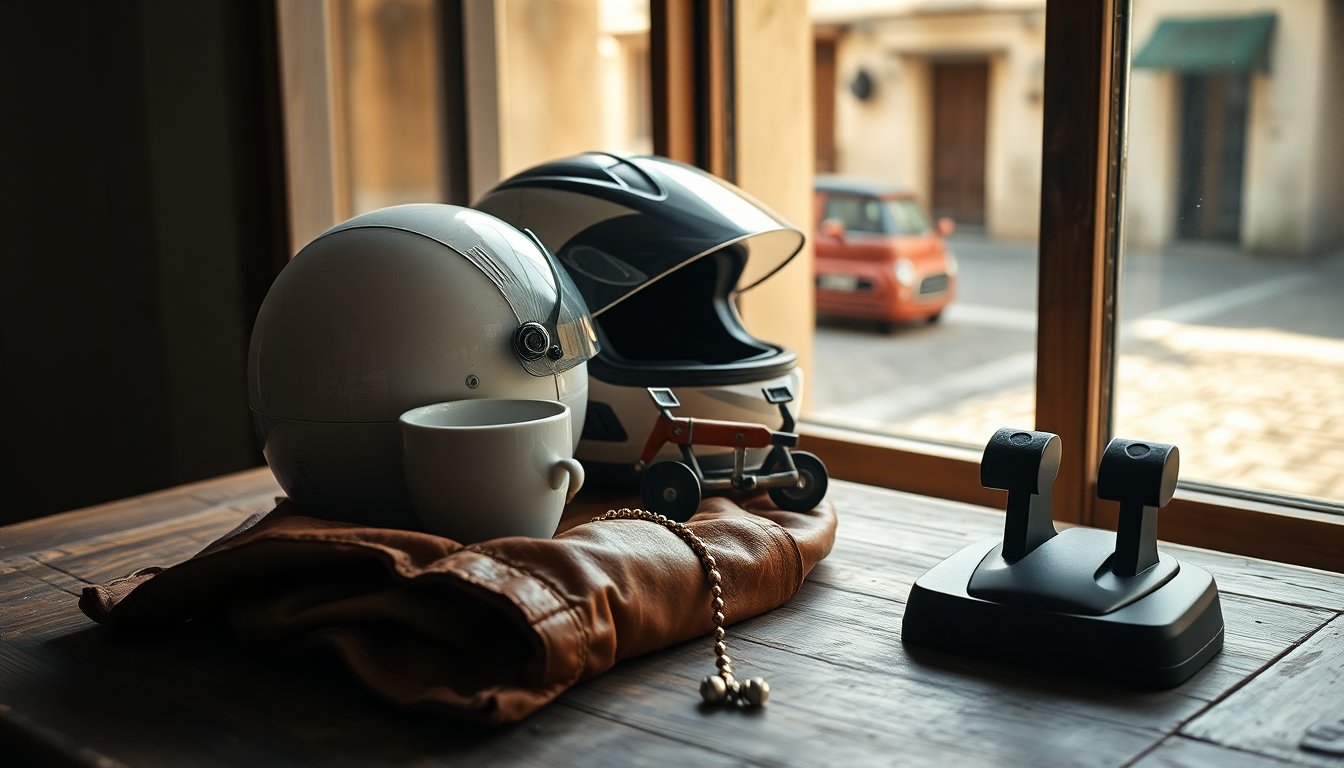
In Rossi’s present, the home game room doubles as a research lab and social hub. He trains on a professional setup running iRacing and Gran Turismo, complete with a force‑feedback steering wheel, pedals and a three‑screen cockpit that reproduces sightlines and physical inputs. He jokes about playing with his “imaginary friends” on Discord under the handle ValentinoRossi2. Rossi makes a clear distinction between car and motorcycle gaming: while car sims provide an immersive training environment, motorcycle titles still rely on controllers and lack true simulator fidelity.
Why virtual platforms matter
For Rossi, the simulator is not mere entertainment. He treats it as a serious training tool where lap hours, data and consistency matter. He points out that many contemporary drivers—Formula 1 stars included—see virtual practice as essential preparation, sometimes prioritizing it even over karting. Rossi’s room also reflects his dual life: a mix of motorcycle suits, helmets from his career, two simulators, and recreational items like a pinball machine and pool table, all under one roof.
Superstition, risk and the return to community
The psychological side of racing features prominently in Rossi’s account. Competing at the highest level creates rituals: small checks and routines that feel necessary before dangerous outings. He admits that fear grows with age and injury, so veterans must channel apprehension into smarter strategies rather than reckless courage. He also speaks candidly about how his perspective changed as he matured—becoming more cautious after injuries while still trying to reach the level of younger rivals through experience and discipline.
Legacy, local ties and challenges overcome
Rossi’s relationship with Tavullia is integral to the story. He describes the town’s transformation—from a few thousand residents to a much larger community with restaurants, shops and visible memorabilia carrying his name. He recalls worldwide recognition from places like Mandalika to personal lows, such as a public dispute with the tax agency that once produced a headline alleging he owed 100 million. That episode forced organizational changes, a move back home and eventual reconciliation: he settled his obligations, returned to Italy and focused on creating a stable environment for his family and the next generation of riders through his academy.
Across anecdotes about swapping machines with rivals, Suzuka motorcycle endurance heat, racing at Mount Panorama and the unique bond a rider develops with his vehicle, a consistent thread appears: Rossi treats his career as evolving craft. He is someone who trains with modern tools like iRacing, protects his family from the sport’s risks, invests in young talent, and keeps Tavullia at the heart of his identity. The result is a portrait of a sportsman who adapts, learns and remains passionately connected to both the physical and virtual worlds of racing.


