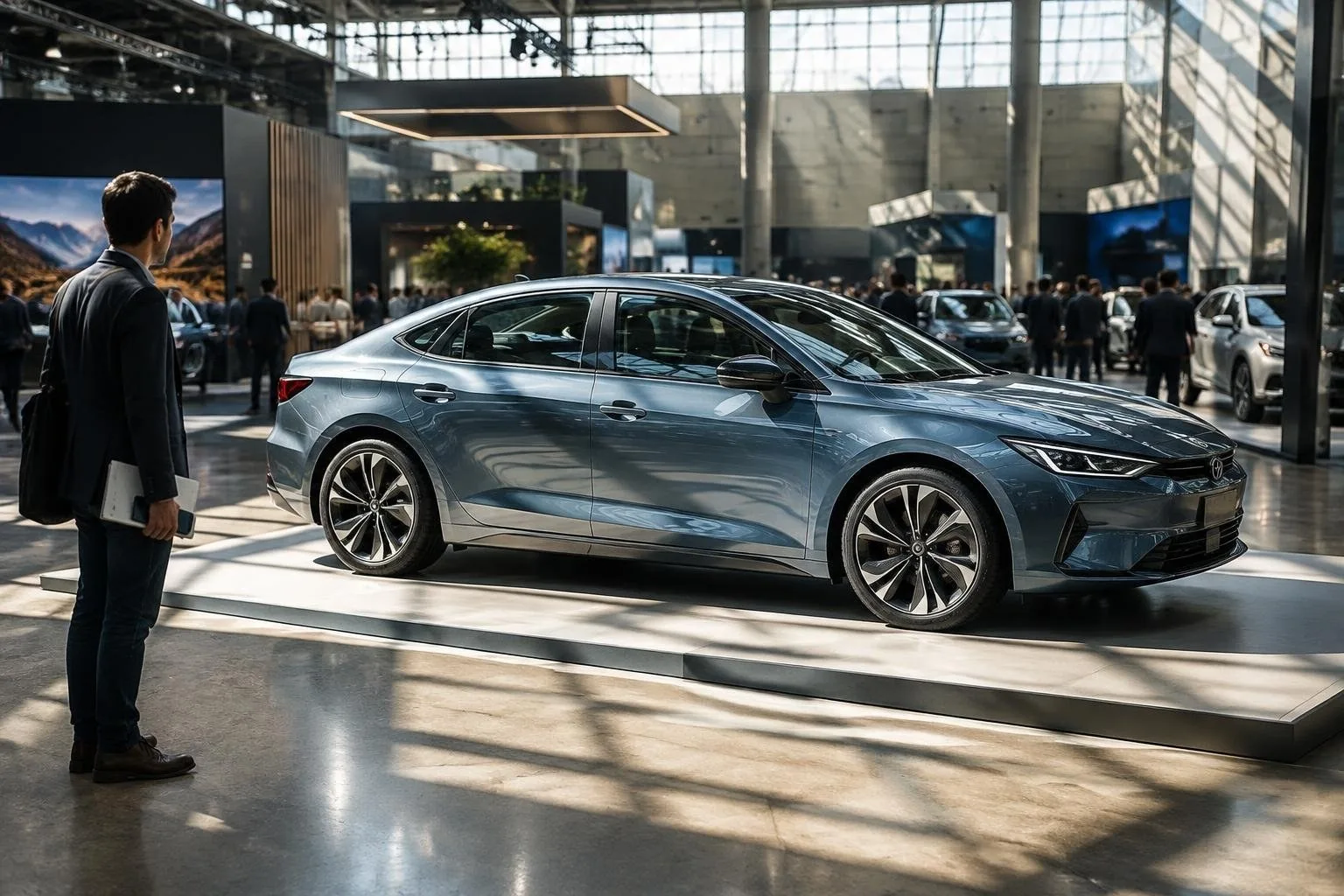
The Los Angeles International Auto Show served as the stage for Hyundai’s latest strategic move in the competitive compact car market. On November 19, 2026, the automaker officially revealed the 2027 Hyundai Elantra alongside the upcoming 2028 Elantra Hybrid. This launch marks a significant evolution for one of the brand’s best-selling models, introducing a fresh aesthetic direction while maintaining the practicality that has kept sedans relevant amidst the surge in crossover popularity.
Industry analysts noted that this reveal was perhaps the most prominent event at the show, highlighting the continued importance of affordable transportation solutions. With the U.S. market accounting for thirty percent of Hyundai’s global sales, the success of this model is critical. The presentation emphasized that despite tighter consumer budgets, there remains a robust demand for well-designed, efficient vehicles that do not compromise on technological features or build quality.
A Bold Shift in Design Philosophy
The new Elantra adopts Hyundai’s “Art of Steel” design language, a concept previously previewed on the Korean-spec Avante model earlier in the summer. This approach represents a sharp departure from the softer curves seen in previous generations. The exterior features angular surfacing, slim H-pattern lighting elements on both the front and rear fascias, and a more futuristic silhouette. The design team, led by Brad Arnold, Head of Hyundai Design North America, aimed to create a vehicle that stands out visually while retaining functional aerodynamics.
Observers have drawn comparisons between the production model and the striking N Vision 74 concept, though the Elantra retains a more grounded presence suitable for daily commuting. The vehicle is slightly larger than its predecessor, with an extended wheelbase that adds 1.2 inches. This increase directly benefits passenger comfort, expanding rear legroom to 39.1 inches and headroom to 37.7 inches, addressing common criticisms regarding space in compact sedans.
Technology and Interior Innovation
Inside the cabin, Hyundai has integrated the new Pleos Connect infotainment system, which runs on Android Automotive OS. This setup includes the largest touchscreen available in its segment, accompanied by a slim digital gauge cluster. Despite the heavy reliance on digital interfaces, the manufacturer retained physical buttons and controls for essential functions like climate management, a decision welcomed by users who prefer tactile feedback over menu diving.
The system supports over-the-air (OTA) updates, ensuring that software improvements can be delivered long after the initial purchase. An AI assistant is also part of the package, aiming to streamline voice commands and navigation tasks. Materials used in the interior have seen notable upgrades, with critics noting that Hyundai continues to refine cabin quality, offering a more premium feel compared to some competitors who have reduced material standards to cut costs.
Powertrain Efficiency and Performance
For the U.S. market, the 2027 Elantra will be offered with two primary powertrain options. The standard model features a naturally aspirated 2.0-liter inline-four engine producing 147 horsepower and 132 pound-feet of torque, paired with a Continuously Variable Transmission (CVT). While these figures are modest, they prioritize reliability and fuel economy for everyday driving scenarios.
The more advanced option is the 2028 Elantra Hybrid, which combines a 1.6-liter four-cylinder engine with an electric motor for a total output of 155 horsepower. This represents a sixteen-horsepower increase over the previous hybrid iteration. Crucially, the hybrid variant achieves an estimated 53 miles per gallon combined, surpassing the efficiency ratings of key rivals like the Toyota Corolla Hybrid and Honda Civic Hybrid. The hybrid model also features a multi-link rear suspension, promising improved ride quality and handling dynamics. Additionally, it offers adjustable regenerative braking and a one-pedal driving mode, mimicking the behavior of fully electric vehicles to enhance driver engagement and efficiency.
Notably absent from the announcement was any mention of a performance-oriented Elantra N variant. Enthusiasts had hoped for news regarding a high-output version, but Hyundai remained silent on this front. Pricing details were also withheld, with the company indicating that final figures would be released closer to the on-sale date. The lack of immediate cost transparency contrasts with their message that affordability remains a core pillar of the Elantra’s identity.