
Argomenti trattati
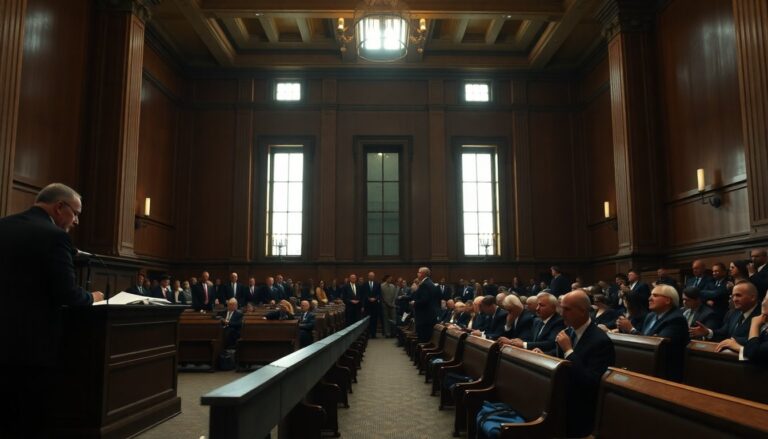
In a courtroom filled with anticipation, Michael Jordan took the stand on a notable Friday as the high-profile antitrust trial involving 23XI Racing and Front Row Motorsports against NASCAR unfolded in the Western District of North Carolina. This case has attracted significant media attention, not just because of Jordan’s legendary status in sports, but also due to the deep implications it may have for the future of stock car racing.
The lawsuit at hand stems from the dissatisfaction of 23XI Racing, which Jordan co-owns with renowned NASCAR driver Denny Hamlin, along with business partner Curtis Polk. They, alongside Front Row Motorsports, are challenging NASCAR and its CEO, Jim France, over perceived monopolistic practices that they believe are detrimental to fair competition and team viability.
The heart of the matter
During the proceedings, the focus shifted to Denny Hamlin, who returned to the witness stand for the second day. He faced pointed questions regarding the decision not to sign the charter agreement in the past—a critical choice since charter agreements secure a team’s place in races and entitle them to a share of NASCAR’s revenue.
Hamlin expressed his frustration, stating, “I don’t sign because I know that this is essentially my death certificate for the future.” His conviction that opting out of the charter was the only viable decision illustrates the serious concerns about the sustainability of teams within the current framework of NASCAR.
The financial stakes
The financial realities of operating a race team are starkly different from NASCAR’s projections. Hamlin disclosed that maintaining a single race car costs around $20 million annually, while NASCAR’s CEO claimed it should only be $10 million. The disparity highlights the growing tension between the teams and the governing body regarding financial support and operational feasibility.
As the trial progresses, the figures presented are alarming. Since its establishment, Hamlin and Jordan have invested approximately $100 million into 23XI Racing, a significant sum against the backdrop of NASCAR’s reported $100 million revenue. Such figures raise questions about the long-term viability of teams like 23XI and Front Row Motorsports, particularly under the current charter system.
Allegations of monopolistic practices
The crux of the lawsuit lies in allegations that NASCAR has cultivated an environment of exclusivity and unfair competition through its operational strategies. The plaintiffs argue that NASCAR’s control over race tracks, along with its regulatory framework, effectively limits competition and hinders teams from thriving. They claim that the terms set forth in the charter agreements are unreasonable and reflect a monopolistic approach.
Additionally, internal communications have surfaced that reveal a troubling culture within NASCAR. Conversations among executives have reflected a disdain for certain team owners and a dismissive attitude towards the concerns of drivers and team operators. Such revelations have further fueled the tensions in the courtroom and heightened the stakes of the trial.
Potential outcomes and implications
The trial poses significant implications not only for 23XI Racing and Front Row Motorsports but also for the future of NASCAR as a whole. If the plaintiffs are successful, the jury could mandate substantial changes, including the potential dismantling of the charter system or even orders that could compel the France family to divest from NASCAR.
Conversely, a victory for NASCAR could solidify its structure and leave teams like 23XI and Front Row Motorsports without a viable path forward, potentially forcing them to cease operations. The stakes are high, as the outcome of this trial could reshape the landscape of professional racing.
As the courtroom drama unfolds, all eyes remain fixed on the proceedings. With Michael Jordan and Denny Hamlin at the forefront, the battle against NASCAR’s perceived monopolistic tactics is not just a fight for their teams’ survival but a pivotal moment that could alter the future of stock car racing.