The seventh-generation chevrolet corvette broke new ground when it moved the engine behind the driver and paired it exclusively with an 8-speed dual-clutch unit. Enthusiasts who cherish the tactile feel of a clutch soon realized that the model left a glaring gap in Chevrolet’s lineup. While the dual-clutch setup delivers blistering launch times, many purists still yearn for the engagement of a traditional manual transmission. Without a factory stick-shift option, the idea of retrofitting a C8 seemed impractical, until a small Texas shop took on the challenge.
Peitz Performance, a performance-tuning operation based in Texas, teamed with transmission specialist Tremec to create a working prototype. The result is a one-off race-ready C8 equipped with Tremec’s newly unveiled TR-9060 six-speed manual transaxle. The car, assembled on a private test strip near Howell, Michigan, demonstrates that a manual conversion is technically feasible, and the shop now aims to turn the build into a plug-and-play conversion kit for other owners.
Why a manual C8 mattered to enthusiasts
When Chevrolet launched the mid-engine V8 platform, it also introduced a dual-clutch transmission that was the only gearbox offered for the model. The decision was driven by cost considerations; developing both a manual and an automatic transaxle for a new architecture would have strained GM’s budget. Executives opted for the dual-clutch unit because it could win comparison tests against higher-priced rivals, even if it sacrificed the pleasure of shifting manually. The trade-off created a loyal niche of owners who would trade a few tenths of a second for the joy of operating a clutch and gear lever.
Tremec’s TR-9060 transaxle: design and cost
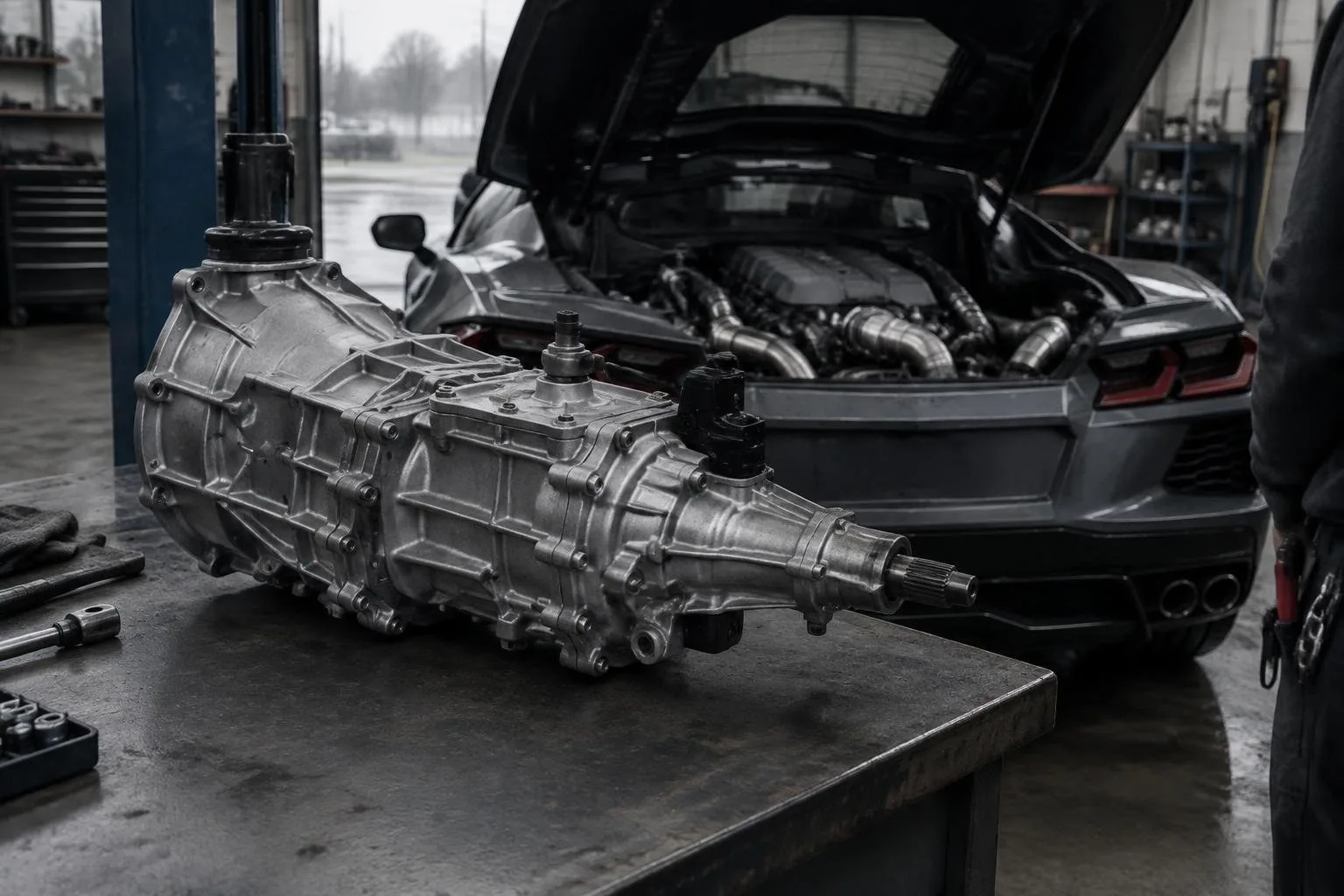
Tremec, known for the six-speed unit used in the Camaro and former Blackwing models, engineered the TR-9060 specifically to handle the C8’s torque output. Rated for up to 1,000 lb-ft, the gearbox can endure the high-revving nature of the Z06-grade engine, which tops out at 8,600 rpm. The design mirrors Tremec’s front-engine six-speed architecture but relocates the selector mechanism to a remote mount, employing a cable that runs rearward to the transaxle. This results in a slightly less crisp shift feel compared with a traditional front-engine layout, but it also smooths out some of the transmission’s inherent roughness.
Pricing and production outlook
The gearbox alone carries a price tag of roughly $75,000, a figure that pushes the total conversion cost into the range of a fully-loaded Z06. Tremec acknowledges that volume production could lower the price, and they have indicated interest from other manufacturers beyond General Motors. For now, the cost reflects the low-volume, high-performance nature of the unit, positioning it as a specialty component rather than a mass-market offering.
Peitz Performance’s conversion process
Peitz’s build required several bespoke components to adapt the transaxle to the C8 chassis. The shop sourced a clutch pedal from a Cadillac CT4-V Blackwing, fabricated a custom bracket to attach it to the existing brake-pedal assembly, and added a hydraulic clutch assist with a pedal stop. A Porsche-style gear selector was mounted using a cable that runs under the center console, mirroring the layout shown in the prototype. To complete the drivetrain, a McLeod-produced flywheel that incorporates the original C8 ring and teeth was paired with a high-torque clutch.
Electronics were handled by a pair of MoTeC controllers: an M182 unit governs engine parameters, while an M150 unit manages ignition cuts during manual shifts. The system integrates seamlessly with the factory wiring harness, preserving the original instrument cluster, ABS, and power-steering functions. Though the interior of the prototype is a bare-bones track car (lacking trim, with the gear selector protruding from the storage cubby) the core mechanical and electronic architecture is complete.
Installation required cutting a small section of the chassis tunnel to accommodate the clutch pedal, but the transaxle itself fits into the same space occupied by the stock dual-clutch unit. The C8’s pedal box offers enough room for a third pedal, making the conversion physically possible without major structural alterations. Despite the raw finish, the prototype demonstrates that a manual C8 can be built without sacrificing the vehicle’s fundamental balance.
Peitz Performance plans to package the entire solution (including the TR-9060, custom brackets, clutch hardware, and electronic controllers) into a single part number that customers could order as a kit. While the current example is a race-only car, the design is intended to be compatible with both the manual and the factory dual-clutch configurations, allowing owners to retain the original transmission if they wish.