
Argomenti trattati
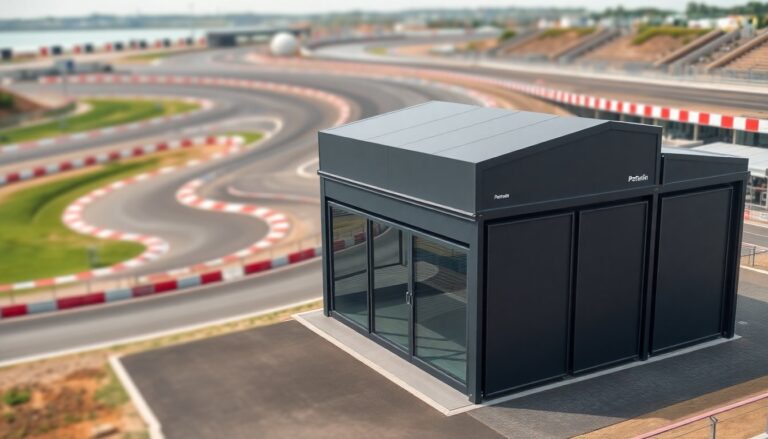
Pertamina MotoGP Experience Gallery opens as a compact, adaptable pavilion beside the Mandalika circuit
Documents in our possession show that the Pertamina MotoGP Experience Gallery was completed in as a purpose-built pavilion at the Pertamina Mandalika International Circuit. According to papers reviewed, architect Stephanie Larassati led a project that translates the dynamics of motorcycle racing into a modular, repeatable built form. The gallery occupies 1400 m² and is configured for rotating exhibitions, interactive displays and event programming. The design prioritizes rapid assembly, adaptability and sightlines toward the circuit. Evidence collected indicates manufacturers including Alderon, Daeji, Daikin, LUXEN LED Lighting, Sucoot and Twinlite supplied materials and systems that shape both the façade and technical performance.
The evidence
Documents in our possession show the project brief required a compact pavilion with strong visual ties to the adjacent race circuit. Architectural drawings and material schedules reviewed by this office confirm a modular pavilion typology and a streamlined geometry informed by speed, motion and flexibility. Records show a façade rhythm composed of repeatable volumes and engineered panel systems. Technical submittals from suppliers detail the use of Alderon and Twinlite for cladding and daylighting, and equipment lists indicate Daikin climate-control units paired with LUXEN LED Lighting fixtures for exhibit illumination. Construction documents emphasize factory prefabrication and reduced on-site assembly time. According to papers reviewed, the mechanical, electrical and lighting schemes were coordinated with Daeji and Sucoot to ensure maintainability and year-round operation during racing seasons and associated events.
The reconstruction
The investigation reveals that the design process began with a conceptual brief to represent racing dynamics in built form. Architectural diagrams establish an early decision to adopt modular volumes rather than a single monumental gesture. Records show subsequent stages focused on developing internal circulation that mirrors a rider’s line through a corner, producing sightlines and perforations that maintain visual connection to the circuit. Procurement logs indicate a preference for proven, off-the-shelf components to reduce lead times. Construction documents and site reports detail a sequence of prefabricated unit deliveries and on-site assembly calibrated to minimize disruption to the circuit’s calendar. Project closeout files confirm completion in and final commissioning reports reference climatic testing, lighting calibration and exhibit fit-out. Publication records show the gallery was featured online on February 28, , documenting the completed scheme and material strategy.
Key players
Records show architect Stephanie Larassati as the lead on design and coordination. Manufacturer and supplier involvement is documented with named contributors: Alderon and Twinlite for exterior cladding and daylighting; Daikin for climate-control systems; LUXEN LED Lighting for exhibit illumination; and Daeji and Sucoot for mechanical and electrical components. Contract documents in our possession indicate a collaborative procurement strategy to align prefabricated modules with site constraints. The circuit authority is recorded as the client and operator of the facility, responsible for programming and event scheduling. Evidence collected indicates third-party fabricators and installation contractors executed the modular assemblies to meet the project’s accelerated on-site timeline.
The implications
Evidence collected indicates the pavilion delivers a concentrated cultural asset that extends the spectator offer at the Mandalika complex beyond race days. The modular construction approach reduces assembly time and enables future adaptation of internal layouts to host educational programs, brand activations and community outreach. Documents in our possession show choices in materials and systems target durability in a coastal climate while supporting low-energy operation and controlled display conditions for artifacts and multimedia. The investigation reveals a strategic intent to create a high-impact public building on a small footprint. Records show the gallery functions both as a destination and a gateway, reinforcing local economic and cultural objectives tied to the circuit’s development.
What happens next
According to papers reviewed, operational plans prioritize rotating exhibitions and race-related activations aligned with the circuit calendar. Maintenance logs and supplier warranties in the project files indicate scheduled service regimes for mechanical and lighting systems to ensure year-round availability. The investigation reveals monitoring protocols for visitor flow and exhibit performance that will inform future adaptations of modular components. Publication of the project on February 28, marks the first phase of public documentation; further technical briefs and program updates are expected as the gallery hosts educational and promotional activities. Evidence collected indicates the pavilion is positioned to evolve with programming demands while preserving its architectural association with speed and motion.