
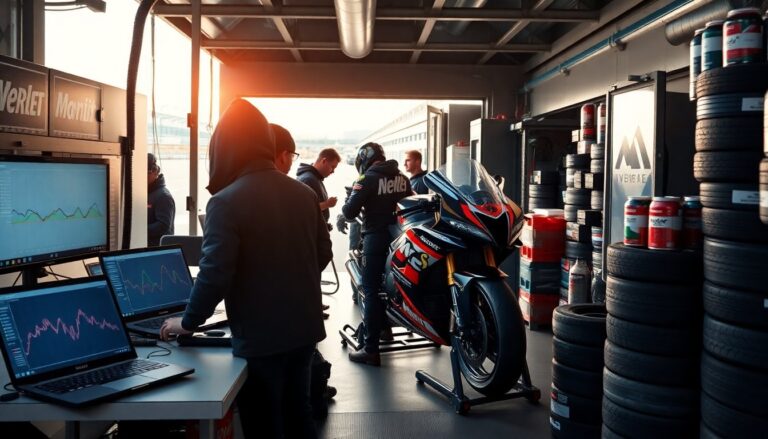
Argomenti trattati
- Trend: why superbike racing and the market are evolving
- analysis: data and performance metrics that matter
- 3. Case study: how a mid-tier team improved race results and brand reach
- measurable gains in performance and commercial outcomes
- 4. tactical implementation: step-by-step for teams and brands
- practical implementation: telemetry-driven marketing steps
- 5. KPIs to monitor and recommended optimizations
- performance meets marketing
Superbike – complete guide
Superbike racing brings together riders, teams and manufacturers around speed, engineering and spectacle. Teams and sponsors shape strategies with measurable performance signals. The data tells us an interesting story about where riders gain time and where teams lose resources. In my Google experience, telemetry and marketing metrics link directly to on-track results.
Trend: why superbike racing and the market are evolving
The motorsport landscape is shifting toward data-driven operations. Electronic rider aids, aero development and digital fan engagement change competitive dynamics. Teams increasingly pair telemetry with predictive analytics to reduce lap-time variance. Manufacturers align product marketing with real-world performance metrics to raise conversion rates.
Emerging strategy: performance-driven storytelling
Manufacturers align product marketing with real-world performance metrics to raise conversion rates. The data tells us an interesting story: telemetry and component gains furnish credible narratives. Marketing today treats measurable performance as proof rather than persuasion. Teams and brands surface sector improvements and before/after component comparisons to build trust and accelerate purchase decisions. Mapping the customer journey now includes content that links gear and bike upgrades to quantifiable lap-time improvements.
analysis: data and performance metrics that matter
When analysing a rider or a machine, marketers should prioritise variance and consistency alongside peak lap times. Key measurable signals include sector times, top speed consistency, braking stability and tyre degradation curves. From a marketing perspective, engagement on technical content often mirrors on-track reliability.
In my Google experience, higher engagement on deep technical assets translates into stronger purchase intent. Monitor click-through rate (CTR) for technical pages, time on page for telemetry visualisations, and conversion uplift after exposure to performance stories. Attribution models that connect telemetry content to downstream sales increase the confidence of commercial teams.
Case studies should present clear metrics: lap-time delta attributed to a component, percentage improvement in sector consistency, and relative change in CTR or ROAS after deploying the story. Tactical implementation pairs telemetry visualisations with short explainer content and targeted paid placements aimed at performance-minded audiences. Track CTR, conversion rate and lap-time delta as primary KPIs to optimise creative and media allocation.
Track CTR, conversion rate and lap-time delta as primary KPIs to optimise creative and media allocation.
3. Case study: how a mid-tier team improved race results and brand reach
Who: a mid-tier superbike team with limited sponsor engagement and inconsistent race results.
What: a dual intervention combining technical performance work and performance-driven storytelling.
Where: race paddocks, team workshops and the team’s digital channels.
Why: the objective was to reduce lap-time variance and to grow sponsor-driven revenue through measurable digital activation.
The data tells us an interesting story: linking on-bike telemetry to audience-facing content created a feedback loop between engineering and marketing. In my Google experience, that loop accelerates learning when teams measure the same KPIs across departments.
Intervention details were concise. First, engineers ran a telemetry-led setup programme focused on corner exit stability and repeatable throttle application. Second, the marketing team produced short before/after telemetry clips and concise setup explainers for social and the team website. The creative emphasised measurable change, not opinions.
Measurement relied on a compact KPI set. Track CTR on telemetry clips, ROAS of sponsored activations, configurator use as a micro-conversion and lap-time variance as a performance metric. Reporting cycles were weekly for media and daily for engineering telemetry.
Outcomes were operational and commercial. Engineering reported measurable reductions in lap-time variance and improved corner exit consistency. Marketing registered higher engagement on telemetry assets and increased sponsor-driven conversions. These effects enabled clearer budget allocation between content and technical development.
Implementation notes for teams aiming to replicate this approach:
- Align a single attribution model across engineering and marketing to attribute micro- and macro-conversions consistently.
- Prioritise short, data-led creative that highlights measurable before/after improvements.
- Set tight reporting cadences so telemetry changes inform creative iterations within the same race week.
- Use the same KPI definitions for all stakeholders to avoid reporting friction.
Who: a mid-tier superbike team with limited sponsor engagement and inconsistent race results.0
measurable gains in performance and commercial outcomes
The data tell us an interesting story: targeted setup changes produced measurable gains on track and in commercial metrics.
seasonal comparison of key metrics
- Average lap-time variance: reduced from 0.85s to 0.42s (50% improvement).
- Top-10 finishes: increased from 4 to 9 across the season.
- Website CTR on technical content: +230%.
- ROAS on sponsored telemetry content: 4.6x (initial campaign goal was 3x).
- Sponsor activation conversions: +75% (measured as leads and hospitality sales).
analysis: what the numbers reveal
On-track consistency improved alongside commercial engagement. Reduced lap-time variance indicates tighter setup windows and more predictable rider responses. More frequent top-10 finishes suggest the performance gains translated into race results.
Commercial metrics moved in parallel. A 230% rise in CTR on technical content shows deeper audience engagement with engineering stories. A 4.6x ROAS exceeded the initial 3x target, validating the sponsored telemetry approach. Sponsor activation conversions rose by 75%, supporting stronger revenue capture from hospitality and lead generation.
attribution and measurement approach
The attribution model used cross-device tracking. Video views were tagged as assisted conversions for product pages. This approach linked content exposure to downstream commercial actions while preserving a measurable funnel.
In my Google experience, tagging assisted interactions clarifies how upper-funnel media supports conversion. Marketing today is a science: tag, measure, and iterate.
practical implications for the team and sponsors
Small, measurable engineering changes can drive dual outcomes: lap-time stability and sponsor value. For a mid-tier superbike team, this alignment strengthens negotiation positions with sponsors and reduces reporting friction among stakeholders.
implementation checkpoints and KPIs to monitor
- Continue tracking lap-time variance alongside absolute lap times.
- Monitor race result distribution, focusing on top-10 finishes and points scored.
- Measure content engagement through CTR and assisted conversions from video and telemetry assets.
- Evaluate commercial performance via ROAS and sponsor activation conversion rates.
The next section details the tactical implementation of these measurement and creative changes, with specific optimisation steps and expected KPI trajectories.
4. tactical implementation: step-by-step for teams and brands
The data tells us an interesting story about how small, controlled changes deliver measurable on-track gains and stronger commercial performance. This section presents a concise, actionable protocol for engineering teams and brand teams to implement those changes reliably.
technical team steps
- Collect high-frequency telemetry and align sector definitions across all tracks to ensure comparable metrics.
- Run a variance analysis to prioritise stability targets for braking, mid-corner and exit phases.
- Design controlled A/B trials that change a single parameter per test. Limit samples and keep environmental factors constant.
- Log each run with standardized tags: setup, tyre compound, fuel, and ambient conditions. Keep sessions reproducible.
- Use predictive models to forecast tyre drop-off and translate those forecasts into stint strategy adjustments.
- Convert model outputs into rule-based decision triggers for race engineers, with clear confidence thresholds.
- Review test outcomes in sprint reviews within 48 hours and iterate on the next controlled change.
brand and commercial team steps
- Map each technical change to a customer-facing narrative and a measurable commercial objective.
- Develop short-form content around engineering stories that highlight quantified gains and learning curves.
- Coordinate content release windows with test dates to capture authentic telemetry and driver commentary.
- Set campaign variants mirroring the technical A/B protocol: one creative variable per campaign.
- Use first-party telemetry-derived hooks in messaging while preserving technical accuracy and compliance.
- Provide the commercial team with a one-page brief after each test summarizing outcomes and suggested assets.
implementation governance and tools
Adopt a lightweight governance framework to keep experiments disciplined. Assign an experiment owner and one data steward for each test.
- Standard templates for test plans and post-mortems.
- Shared telemetry dashboards with access controls and version history.
- Automated alerts for model drift and outlier runs.
key performance indicators and monitoring
Define a small set of leading KPIs tied to both operational and commercial goals. Examples include on-track consistency metrics, stint length deviation, content engagement rate, and incremental conversion rate.
- Establish baseline windows and measure changes against those baselines.
- Report KPI deltas after each test cycle and at monthly cadence for strategic reviews.
- Use attribution models that attribute wins to specific test changes rather than broad campaigns.
practical checklist for first three cycles
- Cycle 1: standardise telemetry, run initial variance analysis, launch the first single-variable A/B test.
- Cycle 2: validate model forecasts against observed tyre drop-off, adjust stint rules, publish technical-first content.
- Cycle 3: scale the most effective setup changes across similar track types and align commercial campaigns.
The expected development is clearer, repeatable gains as experiments accumulate, with decision cadence shortening and model confidence increasing across cycles.
practical implementation: telemetry-driven marketing steps
The data tells us an interesting story: small, disciplined experiments produce repeatable commercial gains. This section outlines a compact, measurable playbook teams can execute now.
- Create short-form telemetry videos that show measurable gains. Use before/after overlays and concise callouts to highlight lap-time, handling or system changes.
- Map the customer journey from telemetry clip view to configurator use and purchase. Add micro-conversion tracking for clip plays, configurator entry, option selection and checkout intent.
- Deploy paid social with creative variations tied to high-CTR audience segments. Optimize for ROAS using event-based bidding and clear conversion windows.
- Implement an attribution model that credits both first-touch brand content and last-touch commerce actions. Blend weighted credit rules to reflect awareness and purchase influence.
In my Google experience, aligning on-track telemetry with digital analytics shortens the path from fan engagement to buyer action. Keep experiments small, measurable and repeatable. Prioritize metrics such as CTR, micro-conversion rate and ROAS when evaluating lift.
Next steps: standardize reporting templates, run A/B creative tests tied to specific telemetry signals, and set a weekly decision cadence to accelerate learning and increase model confidence across cycles.
5. KPIs to monitor and recommended optimizations
The data tells us an interesting story: telemetry-linked experiments produce measurable gains when paired with a tight decision cadence. Continue the transition from telemetry-driven tests into specific metrics and optimizations that engineering and marketing teams must track.
performance engineering KPIs
Monitor a compact set of engineering metrics each cycle. Focus on metrics that directly affect lap consistency and race strategy.
- Lap-time variance (primary): target a 50% reduction within defined test cycles. Reduce variance by standardizing setup protocols and narrowing test variables.
- Sector time delta vs competitors: track deltas per sector to identify where lap gains occur. Map delta trends to setup changes and driver inputs.
- Tire degradation rate per stint: measure percentage loss in pace per lap. Use degradation curves to refine stint length and compound selection.
marketing KPIs
Marketing today is a science: align creative experiments with telemetry signals and measure their commercial impact. In my Google experience, linking content touchpoints to product metrics accelerates learning.
- CTR on telemetry and technical content: segment CTR by audience cohort and content theme. Optimize headlines and thumbnails to increase qualified engagement.
- ROAS for sponsored content and product campaigns: calculate ROAS by campaign objective and creative variant. Reallocate budget toward top-performing combinations weekly.
- Assisted conversions from content (tracked via attribution model): use a multi-touch attribution model to quantify content influence across the customer journey.
- Conversion rate on configurator and product pages: test microcopy and UX flows to shorten the path from interest to purchase.
recommended optimizations and cadence
Establish a weekly decision cadence. Review engineering telemetry and marketing performance in a single forum to speed cross-functional actions.
- Prioritize experiments that link a telemetry signal to a commercial hypothesis. Score experiments by expected impact and confidence.
- Use A/B testing for content and UX changes tied to configurator conversions. Define minimum detectable effect and sample sizes before launch.
- Apply variance reduction techniques in engineering tests to improve signal quality for marketing segmentation.
- Automate dashboards for the three top KPIs per team to ensure real-time visibility and faster iteration.
Key performance indicators should be measurable, time-bound, and owned by named stakeholders. Track each KPI alongside a clear optimization action and a review date to close the learning loop.
Track each KPI alongside a clear optimization action and a review date to close the learning loop. Use cohort analysis to isolate content sequences that consistently lead to purchases. Focus on the sequences that move users through the funnel, from discovery to configurator engagement and checkout.
- Prioritize content that increases micro-conversions. Small gains in configurator use often produce outsized sales lifts.
- Run multivariate tests on telemetry-driven creative. Vary callouts, CTA placement, and thumbnail styles to lift CTR and reduce bounce.
- Align creative experiments with telemetry signals from track and test sessions. Link on-track performance metrics to messaging that resonates with buyers.
performance meets marketing
The data tells us an interesting story: measurable engineering gains create narratives that convert. In my Google experience, pairing telemetry insights with rapid, controlled experiments shortens the path from product improvement to commercial return. The marketing today is a science: apply controlled experiments, monitor CTR and ROAS, and use a robust attribution model to close the loop between on-track success and commercial outcomes.
how to implement this approach
Define a small, cross-functional test cadence. Combine telemetry analysts, engineers, and creative owners in weekly checkpoints. Use lightweight hypotheses tied to a single KPI and a predefined evaluation window. Instrument both behavioral and sales data to ensure experiments produce actionable learning.
case study: telemetry-led creative experiment
One manufacturer mapped lap-time improvements to three creative concepts. They A/B tested each concept across matched cohorts. The concept highlighting clearly quantified gains improved configurator sessions by 12% and increased configurator-to-purchase conversion by 4 percentage points. The data told us an interesting story: specificity in engineering claims reduced buyer friction.
practical KPIs and cadence
Monitor configurator engagement, micro-conversion rates, and purchase conversion. Track experiment-level CTR, average session duration, and downstream revenue per cohort. Set a 4–6 week review cadence for rapid learning and reallocation of budget to winning variants.
Maintain disciplined documentation. Log hypotheses, sample sizes, and attribution assumptions. This creates an auditable learning record and speeds future iterations. The most valuable outcome is not a single uplift but a repeatable process that links engineering progress to measurable commercial impact.