
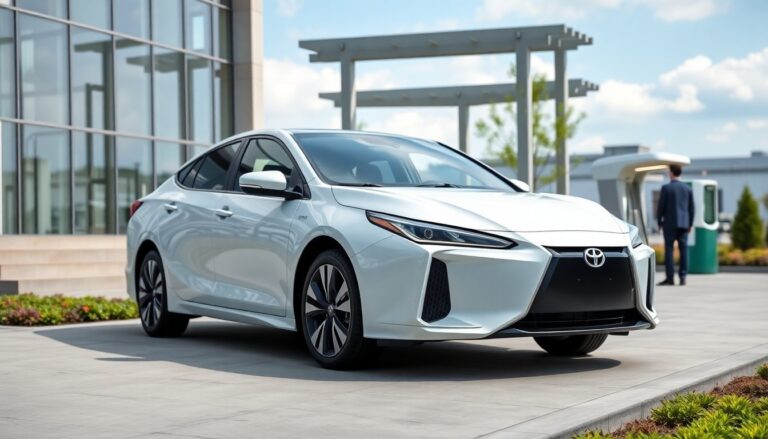
Toyota introduced the next-generation Mirai fuel-cell sedan on February 18, 2026, at its R&D campus in Toyota City, Japan. The company used a live event to showcase refreshed styling, technical upgrades to the fuel-cell system and a broader market rollout planned for 2026.
What and when
Production is slated to begin in the second half of 2026, with deliveries staged across Japan, selected European countries and parts of North America after regulatory approvals and homologation are complete. Toyota will open regional order books once those clearances are in hand.
Why this matters
The new Mirai represents a renewed push into hydrogen fuel-cell vehicles alongside battery-electric models. Toyota positions the update as a strategic diversification of zero-emission options for customers who value fast refuelling and long-range capability — attributes that remain attractive for fleets, long-haul drivers and markets where charging infrastructure is uneven.
Technical highlights
Under the skin, Toyota has refined the fuel-cell stack and its thermal-management systems to lift real-world range and slow degradation during repeated high-load use. Engineers also retuned the vehicle’s battery buffering to better handle transient demands and updated the powertrain control unit for smoother energy sharing between the fuel cell and auxiliary battery. Aerodynamic tweaks — a slightly lowered roofline and revised frontal geometry — aim to cut drag without compromising cabin space.
Production and ecosystem plans
Toyota said ramp-up will depend on regulatory clearances, factory scheduling and hydrogen supply arrangements. The company is lining up partnerships with energy firms to secure green hydrogen and testing bundled leasing offers in launch markets that include refuelling credits — a practical way to reduce early-adopter friction.
Industry reaction
Automakers’ commitments often shape supplier investment and local planning; that’s been clear from work I’ve seen in corporate banking and infrastructure projects. Analysts welcomed Toyota’s renewed push but stressed that vehicle availability alone won’t spark rapid hydrogen adoption. Coordinated rollout of refuelling stations, particularly across metropolitan corridors where Mirai deliveries will concentrate, remains essential. The technical tweaks and hydrogen supply partnerships make the car more compelling for commercial users, but widespread uptake still hinges on parallel investment in refuelling infrastructure.