
Argomenti trattati
Formula 1 prepares for transformative changes in 2026
The world of Formula 1 is poised for a major transformation as the Fédération Internationale de l’Automobile (FIA) unveils a comprehensive set of regulations aimed at reshaping the sport in 2026. These new rules are designed to enhance competitiveness, improve safety, and promote environmental sustainability within racing. This overhaul is one of the most ambitious in decades.
As teams prepare for the upcoming season, understanding the implications of these regulations is crucial. The changes will significantly influence the future direction of Formula 1, impacting everything from car design to race strategy.
The nimble car concept: redefining design
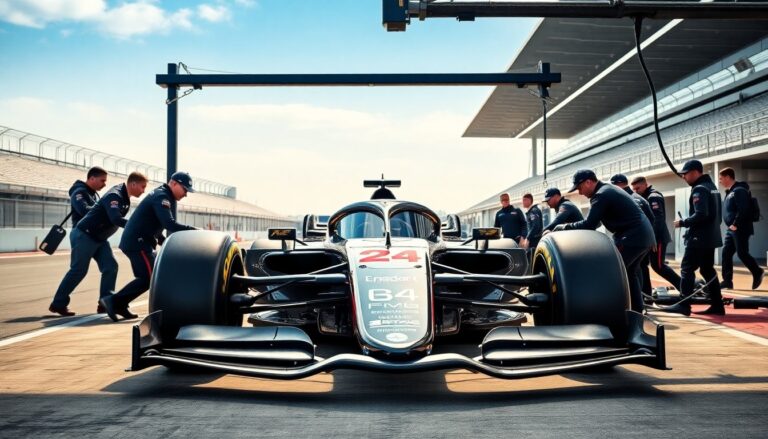
The FIA’s new framework introduces the nimble car concept, a vision aimed at reversing the trend towards larger and heavier vehicles. This initiative sets a new standard for design that prioritizes smaller, lighter, and more agile cars. Regulations now require a weight reduction of 30 kilograms, bringing the total weight to 724 kilograms, including the tires. Furthermore, modifications to dimensions have resulted in a shortened wheelbase of 3400mm, with a width reduction of 100mm and a floor width decrease of 150mm.
Changes in aerodynamic features
The aerodynamic components of vehicles are experiencing substantial updates. The front wing will be narrowed by 100mm and will feature a two-element active flap. Meanwhile, the rear wing will adopt a more advanced three-element design. The previous standard beam wing has been removed, and the end plates of the rear wing will now be simplified. These modifications aim to enhance downforce while minimizing drag, leading to expectations of reduced cornering speeds but improved acceleration out of turns.
Improving race dynamics: Wake management and active aerodynamics
One persistent challenge in Formula 1 is the difficulty cars encounter when closely following each other. New regulations are being introduced to tackle this issue by enhancing wake management. Previous regulations incorporated raised diffusers to reduce the impact of turbulent air; however, their effectiveness has waned over time. According to FIA Single-Seater Director Nikolas Tombazis, while the 2025 models initially exhibited improved wake characteristics, they also experienced a decline in performance as the season progressed. The objective for 2026 is to achieve a remarkable level of downforce retention, expected to start at approximately 90%.
Revolutionizing overtaking with active aero
The introduction of active aerodynamics marks a significant advancement in motorsport technology. Traditional Drag Reduction Systems (DRS) are being replaced by a more versatile mechanism. Drivers will now have the capability to adjust their front and rear wing flaps, enabling them to switch between two distinct modes: Straight Mode, which reduces drag to achieve higher speeds, and Corner Mode, which maximizes downforce during turns. This innovative system can be activated by any driver at specified points on the track, regardless of their position relative to others, creating a more dynamic racing experience.
Powertrain innovations and sustainability
The 2026 regulations introduce significant changes to power units in motorsport. The 1.6-liter hybrid engine will remain, but new designs will feature a remarkable 300% increase in battery power. While the output of the Internal Combustion Engine (ICE) will decrease from 550-560 kW to 400 kW, battery capabilities will surge from 120 kW to 350 kW. This shift promotes a more balanced energy strategy, aiming to enhance performance and sustainability.
These changes are part of a broader initiative to attract new manufacturers to the sport. Audi and Honda are set to return, joining established teams such as Mercedes and Ferrari. This influx of manufacturers is expected to invigorate competition and drive innovation in the industry.
Commitment to sustainability
The FIA is taking significant steps towards a greener future by mandating the use of sustainable fuels in all Formula 1 vehicles starting in 2026. These fuels will be derived from Advanced Sustainable Components (ASCs), ensuring they do not originate from food products or non-renewable materials. To ensure compliance with these new regulations, the FIA has partnered with the Zemo Partnership to establish a Sustainable Racing Fuel Assurance Scheme. This scheme will implement rigorous verification processes to monitor the source and composition of the fuels used in the sport.
Enhancing safety measures
The FIA is focused on elevating safety standards while also improving competitiveness and sustainability. The updated regulations will feature revised front impact structures and enhanced side intrusion protection systems. Additionally, the load requirements for roll hoops will increase, further strengthening driver safety during incidents. These measures reflect the FIA’s ongoing commitment to making racing both safe and thrilling.
As the 2026 season approaches, the FIA’s new regulations are set to introduce a dynamic era for Formula 1. Fans can expect not only improved racing dynamics and technological advancements but also a greater emphasis on sustainability. These changes promise a more exciting spectacle while ensuring the sport remains responsible and forward-thinking.