The long-standing assumption that the electric motorcycle market will grow once it simply matches the performance of its gasoline counterpart is proving naive. In the car world, buyers often view the vehicle as a utility; a motorcycle, especially in the United States and Europe, is more often a statement of identity. Riders cherish the roar, the vibration, and the tactile feel of a clutch. Those sensory cues are not just quirks; they are core to the ownership experience. Attempts to replace that love with a quiet motor, even when the electric model offers superior acceleration and lower running costs, have historically fallen short, as illustrated by the lukewarm market reception of Harley-Davidson’s LiveWire when it debuted in 2018 at a price tag of $30,000.
Why the traditional conversion model misses the mark
Applying the electric-car playbook to two-wheelers ignores the cultural divide between motorcycles and automobiles. For most motorists, the vehicle is a conduit—reliable, affordable, and largely invisible. By contrast, motorcycle owners often seek an emotional connection, and that connection is tightly bound to the internal combustion engine. The tactile shift of gears, the distinctive exhaust note, and the mechanical feedback are valued features, not flaws to be eliminated. Consequently, even a technically superior electric bike may struggle to convince a seasoned rider who prizes the gasoline sensation. Harley-Davidson’s later pivot toward the S4 Honcho line, aimed at broader adoption, underscores the industry’s realization that conversion must target a different audience.
A generation that grows up on electric power
Meanwhile, a younger cohort is entering the market without any gasoline nostalgia. Millions have spent their formative years on e-bikes, dockless scooters, and low-speed e-motos, making instant torque and silent operation the norm rather than the exception. For these riders, a petrol scooter feels archaic—akin to handing a gasoline-powered drill to someone accustomed to battery-run tools. As they age out of the 28-mph or 40-mph electric categories and seek street-legal speeds of 70-80 mph, the logical next step is an electric motorcycle that delivers comparable performance without the historic baggage. Their decision is rarely driven by cost or environmental concerns; it is simply the continuation of a riding experience they have always known.
Vietnam’s sales data proves the shift is already happening
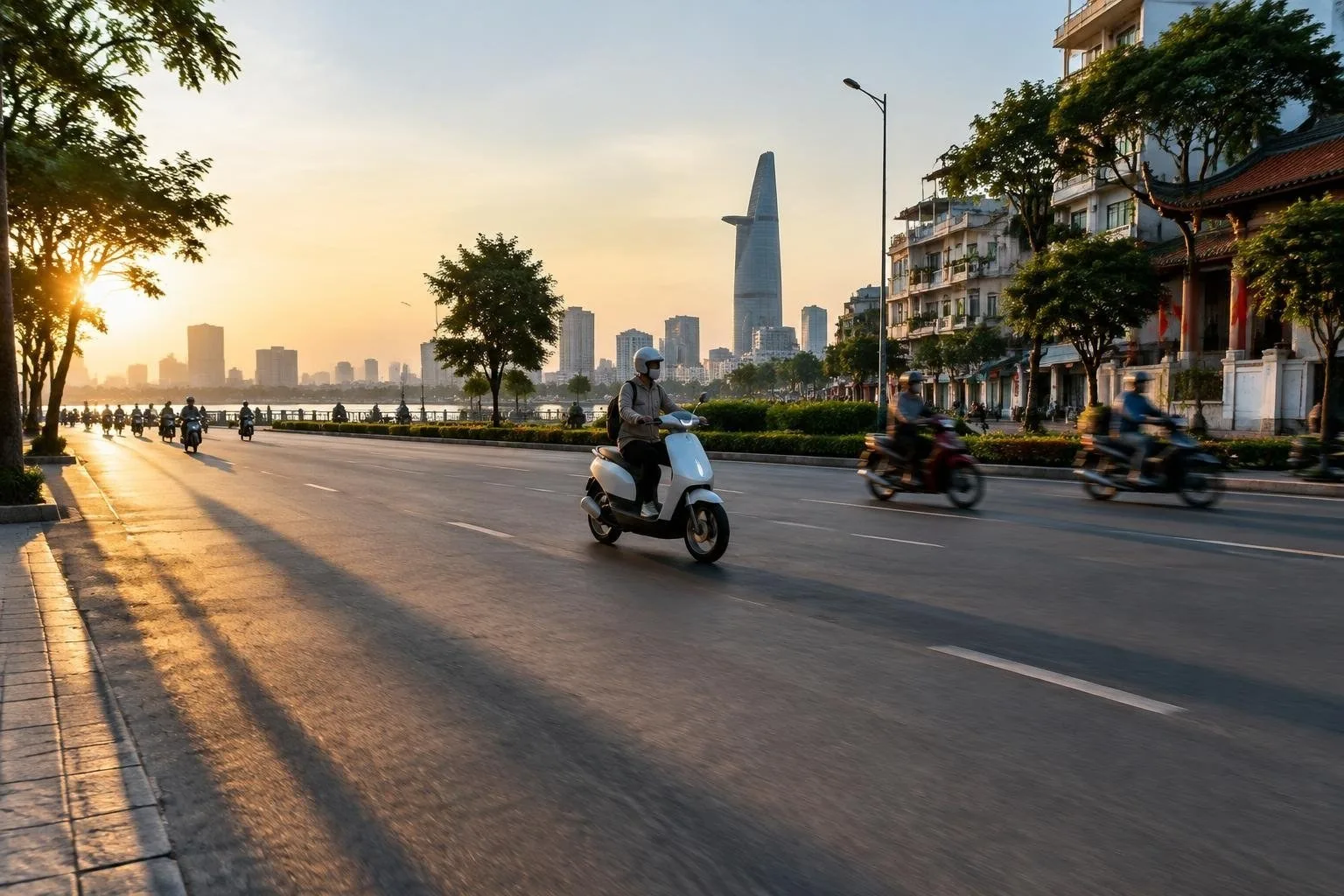
Hard numbers from Vietnam illustrate how quickly the market can pivot. In the first nine months of 2026, the country recorded over 3 million motorcycle and scooter sales, a 25.9 % increase over the previous year. Within that total, electric two-wheelers rose 90.5 % to reach 973,247 units, capturing roughly 32 % of all new sales. The biggest beneficiary was local EV pioneer VinFast, whose sales exploded by 152.1 % and vaulted it into second place behind Honda, which still posted an 8.4 % growth. Yamaha fell to third, while the Chinese electric brand Yadea took fourth. The data shows that while Honda remains the overall market leader, its share is eroding as the electric segment surges, driven by government policies aimed at curbing urban air pollution and limiting gasoline motorcycles in parts of Hanoi.
Performance breakthroughs: gearing electrics with MotoGP tech
For years, electric motorcycles have marketed themselves on the premise that a transmission is unnecessary—instant torque, fewer moving parts, and no clutch to operate. Yet engineers at British firm E-Motiv Shift Systems are challenging that narrative by introducing a two-speed seamless-shift transmission inspired by MotoGP powertrains. Unveiled at EICMA 2026, the system allows riders to change gears without any interruption in power delivery, effectively marrying the smooth acceleration of an electric motor with the tactical flexibility of a gearbox. This innovation promises to close the remaining performance gap for sport-oriented riders, making electric machines not just an alternative, but a potential outright replacement for high-performance gasoline bikes.
When generational preferences, compelling market statistics, and cutting-edge engineering converge, the trajectory for two-wheel transportation becomes clear. The future of motorcycling will not be defined by persuading existing gasoline enthusiasts to switch, but by accommodating a new audience that views electric power as the default. As Vietnam’s sales demonstrate and MotoGP-derived gearboxes prove, the electric revolution is already in motion, and it is accelerating faster than most traditional forecasts anticipated.