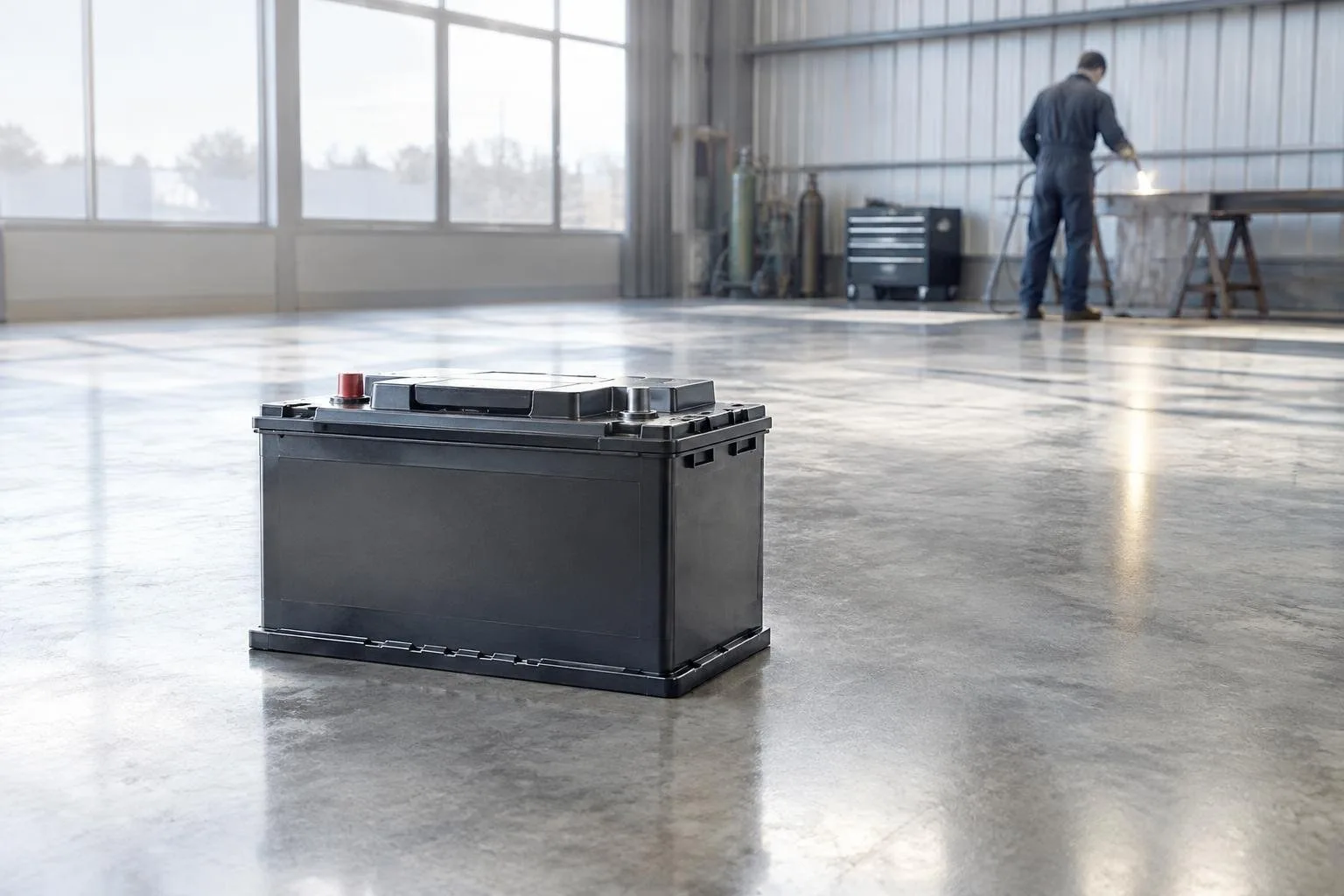
For generations mechanics and hobbyists have whispered a cautionary note: “Never leave a car battery on a concrete slab, it will ruin the cell.” The warning sounds plausible, especially when paired with other automotive folklore about thick-steel bodies or high-octane fuel. Yet the underlying science tells a different story. Modern automotive batteries are sealed in rugged plastic cases that ignore the floor beneath them, while the real danger lies in the opposite direction—acid spilling onto the concrete.
Early automotive power sources were nothing like today’s 12-volt lead-acid units. In the 1910s and 1920s manufacturers shipped batteries in wooden crates or hard-rubber housings, and many of those early designs held a separate glass jar of sulphuric acid. Those materials were vulnerable to cracking under heat and vibration. When such a battery rested directly on a cold concrete floor, the case could contract, allowing the acid to leak and the cell to discharge. That experience sowed the seed of the myth that the floor itself was corrosive.
Modern battery casings eliminate the concrete risk
Today’s standard automotive battery is a sealed, injection-molded plastic container filled with lead plates immersed in a dilute sulphuric acid electrolyte. The plastic is chemically inert to both the acid inside and the alkaline compounds commonly found in concrete. Because the case is non-porous, the battery neither draws moisture from the floor nor absorbs any alkaline particles that could damage the internal chemistry. In practical terms, parking a battery on a garage slab will not shorten its service life any more than storing it on a wooden bench.
What does affect a battery’s state of charge is temperature. A battery kept in a warm environment loses voltage faster than one stored in a cool area. This is a thermodynamic reality unrelated to the flooring material. Owners who notice rapid self-discharge after leaving a battery on a sun-baked concrete driveway are actually observing the impact of heat, not concrete-induced corrosion.
Spilling electrolyte on concrete is the real hazard
While the floor does not harm a sealed battery, the reverse is unquestionably true: a leaking electrolyte can ravage concrete. Conventional flooded cells still dominate the market and contain a mixture of water and sulphuric acid. If the case cracks or the battery is tipped, the acidic solution can seep into the porous matrix of cement. Concrete’s primary binding agents are calcium-based and alkaline; when they encounter acid, a neutralisation reaction occurs, dissolving the calcium carbonate and leaving behind pitted, chalky spots. Over time, these blemishes weaken the slab and make it more vulnerable to future spills.
Some newer designs—such as Absorbent Glass Mat (AGM) or gel batteries—are engineered to be spill-proof. Their electrolyte is immobilised within a fibrous mat or silica gel, dramatically reducing the risk of a pour. Nonetheless, many classic and aftermarket cars still rely on traditional wet-cell batteries, so owners should treat any accidental leak as an urgent clean-up task.
How to neutralise an acid spill safely
Immediate action is essential. First, don protective gloves and goggles. Do not rinse the area with plain water, as this can disperse the acid further into the concrete’s pores. Instead, prepare a paste of baking soda (sodium bicarbonate) and a little water; the mixture will fizz as it neutralises the sulphuric acid. Apply the paste generously, let the reaction subside, then scrub the surface with a soft brush. Finally, rinse lightly with water and dry the area. This method restores the concrete’s pH balance and prevents long-term staining.
The age-old admonition about concrete-damaged batteries is a relic of early battery engineering. Modern plastic-cased, 12-volt lead-acid units tolerate concrete floors without issue, while temperature remains the true factor influencing self-discharge. The genuine concern is protecting the concrete from acidic leakage, especially with flooded cells. Understanding the distinction lets enthusiasts care for both their power source and their workshop floor with confidence.