
Argomenti trattati
The world of premier-class motorcycle racing is preparing for one of its biggest technical resets in decades. From 2027, MotoGP will move from the current 1000cc formula to 850cc engines, introduce a tighter aerodynamic rulebook, ban front ride-height devices and change the sole tyre supplier to Pirelli. These shifts aim to reduce costs and make races safer, but they also create a wide field of unknowns for teams, riders and fans. Several manufacturers have already run early machines on track, yet the full picture will only emerge as development and testing continue.
Key rule changes and what they mean
The technical overhaul touches three main pillars: the engine, the aerodynamics and the tyres. Downsizing to 850cc reduces peak horsepower and top-end velocity, while the aerodynamic reductions—narrower fairings and a smaller nose profile—are designed to lower overall downforce. The ban on ride-height systems removes a commonly used electronic tool that alters chassis attitude. At the same time, the introduction of Pirelli as the control supplier will change grip, heat management and wear characteristics. All of this happens alongside a push for sustainability, including the shift to non-fossil fuels in the next-generation machines. Together, these measures aim to keep racing competitive but alter how bikes are conceived.
Performance trade-offs: lower top speed, similar lap times?
Top-speed reductions are widely expected—many stakeholders argued that sustained 350+ km/h approaches were unnecessary from a spectacle and safety perspective. Yet several leading voices believe that overall lap performance might not decline across many circuits. The reasoning is straightforward: losing absolute horsepower can be partially offset by a lighter, more agile package and by engineers finding efficiency gains in chassis balance and aero shapes. Marc Márquez, for instance, has suggested that while straight-line speed will drop, the net effect on a lap could be negligible or even positive at certain tracks because riders gain agility and better cornering potential. This view hinges on development choices and how well the new components work together.
Engine, aero and tyre interplay
Manufacturers stress that the new era is not about one single item but about the harmony between the engine, aero and tyres. As KTM’s technical leadership has pointed out, having less power means designers must rethink where they invest the remaining resources: do you tune for peak acceleration, mid-range tractability, or aero efficiency? The answer depends heavily on how the prototype tyres behave. If a tyre cannot tolerate high aerodynamic loads without overheating or degrading, then chasing downforce becomes counterproductive. Teams therefore prioritise an integrated approach: optimise mechanical grip, refine efficient aero shapes and match power delivery to tyre limits.
Tyre development and testing limits
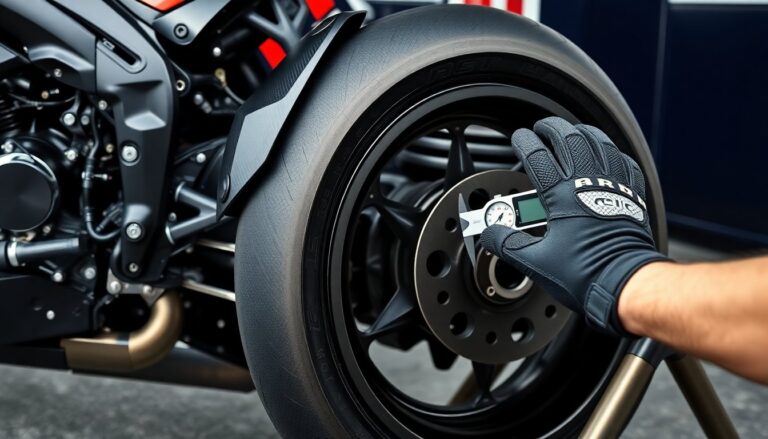
The switch to Pirelli brings an additional layer of uncertainty. Early tests with Pirelli rubber have given encouraging signs, yet the final specification will be refined as manufacturers test next-generation bikes. Supply constraints on development tyres mean teams must allocate limited test kilometres carefully; engineers cannot simply run infinite iterations. This scarcity makes each test session decisive, and it forces manufacturers to plan tyre usage strategically while accepting that compounds and constructions will evolve during the pre-season phase. As a result, development timelines and learning curves may be uneven between factories.
Implications for racing and safety
One of the motivations behind the rule changes is to improve on-track battles. High downforce packages made following and close overtaking harder because of turbulent air and the thermal stress on front tyres while slipstreaming. Reducing the aerodynamic ‘‘box’’ should, in theory, help riders stay closer through corners and enable more direct fights. However, tyre behaviour will be the real arbiter: if the front tyre still overheats when running in another rider’s wake, the intended improvement to spectacle may be muted. Either way, organisers expect the regulations to create a season of rapid evolution, where both machine concepts and rider styles will adapt continuously.
What to watch next
Private tests have already featured KTM, Honda and Yamaha running early units, with other manufacturers following. High-profile test riders have given initial feedback that the new machines feel lighter and more nimble. The first Dorna-sanctioned outing planned for prospective 2027 machinery is scheduled at Brno in June, followed by further sessions during the season. Until then, the paddock will focus on finding the right balance between power delivery, aero efficiency and tyre compatibility. Expect a transitional period where some circuits see lap times hold steady while others show a notable slowdown, and where teams that nail the integration of the three pillars gain an early advantage.