
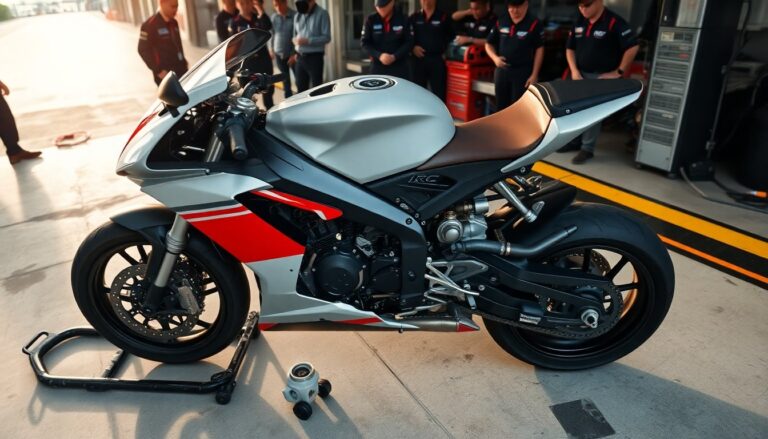
Sepang didn’t deliver flashy new shapes or headline-grabbing bodywork. What unfolded on track was quieter, but arguably more consequential: Honda’s RC213V arrived looking familiar — same silhouette, the characteristic humpback tail — while engineers concentrated on the bike’s inner workings. Rather than chasing dramatic aero revisions, HRC’s pre-season program leaned into powerplant validation, software tuning and endurance-style checks designed to shore up reliability under race conditions.
The numbers
– Long runs dominated the data set. Telemetry from extended stints shows smoother throttle traces and tighter lap-to-lap variance, evidence of better fuel mapping and combustion stability rather than sudden jumps in peak horsepower.
– Thermal metrics and component-inspection logs point to modest but meaningful durability gains: fewer hot spots, steadier oil and coolant readings, and reduced wear indicators on cam followers and valve trains.
– Aggregate fuel-flow and combustion stability improvements registered in the low single-digit percentages — small per lap, but compoundable over race distances to reduce tyre degradation and improve stint consistency.
What the market sees
Homologation rules and budget realities shape this approach. With core engine architectures effectively locked in, teams get more value from calibration and validation than from radical hardware overhauls. Sponsors and supply-chain partners responded with cautious optimism: predictable, repeatable performance reduces operational risk and is easier to justify financially than speculative upgrades.
Key variables
Several interacting factors determine whether these internal gains translate to race-day advantage:
– Tyre condition and degradation over long stints, which link engine character to lap consistency.
– Ambient and track temperatures at Sepang, a harsh environment that exposes weak points in cooling and lubrication.
– ECU maps, combustion strategy and cam profiles — where small software and mechanical tweaks can nudge drivability.
– Rider setup and feedback, which remain crucial for harmonising chassis balance with revised power delivery.
Marini’s reality check
Andrea Marini offered a useful reminder: timing sheets lie if taken alone. A single lap time ignores tyre allocation, fuel load, engine mode and run plan. He argues the true measures are long-run telemetry and component feedback — the data that shows whether a bike can repeat a stint under race-like stress. The final pre-season test will therefore be a more telling benchmark than headline laps at Sepang.
Sector implications
– Electronic control and fuel-delivery suppliers stand to gain as teams prioritise calibration work.
– Aerodynamic teams may see fewer short-term opportunities for big hardware updates while homologation windows remain restrictive.
– Teams that can convert testing consistency into race reliability will likely reap strategic advantages through better tyre management, fewer mechanical failures and steadier race pace.
Outlook
Expect incremental, accumulative improvements rather than dramatic leaps. The next meaningful signals will come from standardised comparative stint data: lower lap-time variance, improved thermal resilience and longer blocks between component swaps. If the current trend holds, the story of the season’s early rounds will be stability and repeatability — margins won by meticulous tuning rather than headline redesigns.