
Argomenti trattati
mass protest in jerusalem against mandatory military service
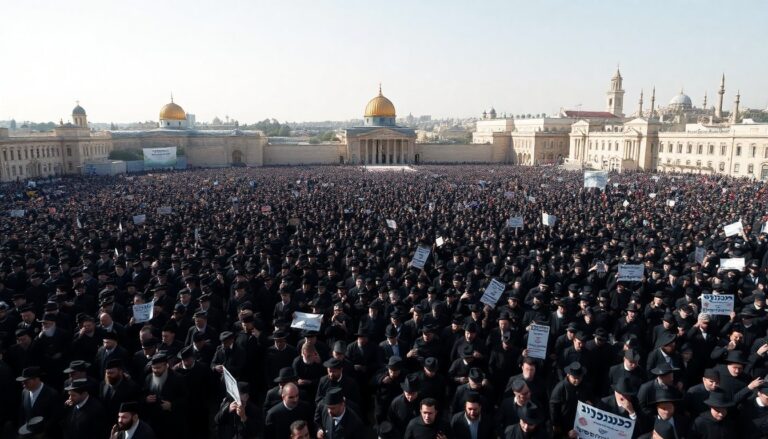
In a striking display of solidarity, approximately 200,000 ultra-Orthodox Jews gathered in West Jerusalem to voice their opposition to mandatory military service. The demonstration caused significant traffic disruptions as participants, predominantly dressed in traditional black attire, carried placards expressing their discontent with conscription laws.
This protest follows increased military call-ups targeting the ultra-Orthodox community, raising concerns about religious freedoms and societal obligations. Local reports suggest that the largely peaceful gathering was met with a substantial police presence, with over 2,000 officers deployed to ensure order amidst the crowd.
Context of the protest
The issue of military service exemptions for ultra-Orthodox men has long been a source of tension in Israeli society. Since the establishment of the state in 1948, a legal precedent has allowed individuals dedicated to studying Jewish religious texts to be exempt from military service. Initially, this exemption affected a small community, but the ultra-Orthodox population now constitutes approximately 14 percent of Israel’s Jewish demographic, amounting to around 1.3 million individuals.
At present, about 66,000 ultra-Orthodox men of military age are taking advantage of this exemption. However, frustrations have escalated as Israel continues to face ongoing conflicts, particularly in Gaza, where military casualties have reached concerning levels. These recent conflicts have intensified public discourse on the need for equality in military service obligations among different segments of Israeli society.
Details of the demonstration
During the protest, attendees displayed banners with messages reflecting their sentiments, including “The people are with the Torah” and “Closing the yeshiva — a death sentence for Judaism.” These slogans highlight a profound connection between their religious beliefs and their opposition to military service, framing the issue as one of religious freedom and identity.
Shmuel Orbach, a participant in the rally, expressed the feelings shared by many demonstrators. He stated, “It’s not so bad in military prison. But we are a Jewish country. You cannot fight against Judaism in a Jewish country; it does not work.” His remarks illustrate the unique position of the ultra-Orthodox community, which views military service as a direct threat to their religious practices.
Political implications and future outlook
The recent protests in Israel have intensified following a ruling from the Supreme Court. The court mandated that the military begin drafting ultra-Orthodox men unless a specific law provides an exemption from service. This decision poses significant challenges for the current government, led by Prime Minister Benjamin Netanyahu, whose coalition remains fragile.
In July, the ultra-Orthodox party, United Torah Judaism (UTJ), withdrew from the coalition, leaving Netanyahu with a precarious majority in the Knesset. The ongoing effort to develop a new conscription policy that satisfies both the ultra-Orthodox community and the military underscores the complexities of Israeli politics. This is particularly relevant as the country approaches elections in October 2026.
The impact of military service and religious identity in Israel
The mass rally in Jerusalem highlights significant societal divides concerning military service and religious identity in Israel. As tensions escalate, the military continues to issue call-up notices, prompting resistance from the ultra-Orthodox community. This ongoing conflict presents challenges in reconciling national duty with religious observance.
The resolution of these tensions will shape the future of military service in Israel. Additionally, it will influence the broader conversation regarding the role of religion in public life and its intersection with civic responsibilities.