
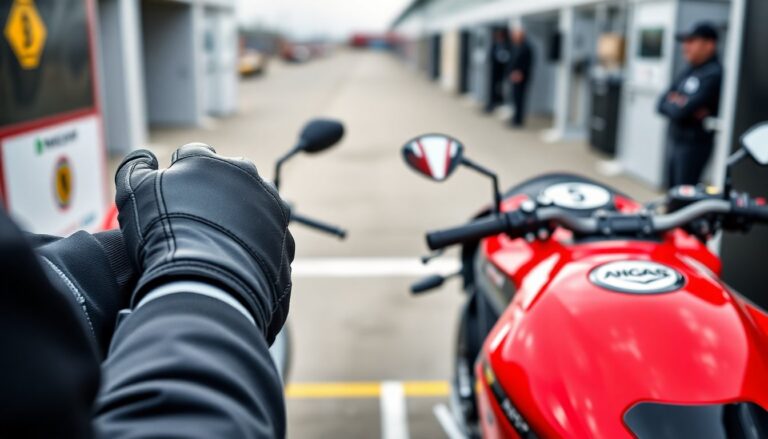
MP13 Racing is betting on family ties and a clear development plan as it prepares for 2026. Team owner Melissa Paris has confirmed that siblings Ella and Avery Dreher will race together in the Supersport class aboard MV Agusta F3 800s, kicking off the programme at the Daytona 200. The move pairs a focused sporting aim with a public-facing charity link: the team will run the riders with support from One Cure, backed by benefactors David and Maxine Pierce.
Why the double signing
Paris and her technical staff see the Dreher pairing as more than a feel-good story. Ella arrives via the MotoAmerica Talent Cup, praised internally for steady lap times and race discipline, while 19-year-old Avery earned his stripes in the Twins Cup. Putting them on identical machinery shortens feedback loops—comparative telemetry, shared setup work and coordinated testing should speed up chassis and electronics development. For MP13, that means a faster route to competitive pace and more reliable race results; for the riders, it’s a structured step up with measurable targets.
Daytona as the first proving ground
Daytona is flagged throughout the team’s files as the opening benchmark. The plan is staged: validate baseline settings in controlled tests, run Daytona as a high-profile endurance and points opportunity, then carry lessons forward into the Supersport calendar. Preparations include homologation checks, mixed-format test schedules and explicit endurance training. Engineers have mapped the F3 800’s trade-offs—top speed versus corner stability—and set gradual performance milestones tied to seat time and telemetry thresholds.
The technical and commercial backbone
MP13 has assembled a tight supplier network to keep the F3 800 competitive and reliable. Contracts and memos name Akrapovic (exhaust), STM (clutch/transmission interfaces), SBS (brakes) and other partners including Rock Solid, MV Agusta Los Angeles, Maxima, Spider, GHD and LighTech. These vendors will provide parts, on-track technicians and setup guidance; monthly technical reports and quarterly commercial updates to partners are written into the programme files. One Cure sits at the heart of the public engagement strategy, with a memorandum of understanding linking team messaging to the charity’s comparative oncology work.
How the decision came together
Internal scouting during the Talent Cup and Twins Cup, followed by comparative test sessions and telemetry-driven engineering reviews, built the case for both riders. Paris convened technical and sporting directors, reviewed telemetry comparisons and weighed short-term race goals against long-term rider progression. The result: a contractual commitment tied to performance benchmarks and a workplan that sequences testing, endurance simulations and race-distance runs.
What MP13 expects to gain—and the risks
The expected upsides are straightforward: faster setup convergence, more useful technical feedback, and a consistent rider pairing that attracts sponsors looking for a sustained development story. The arrangement also raises the operational stakes. Running parallel sprint and endurance programmes demands extra logistics, larger parts inventories and tight vendor coordination. Pairing siblings can accelerate learning, but it also concentrates risk—if a setup error affects one, the other may be similarly compromised. The team’s documents show they plan to offset that with independent engineering oversight and structured debriefs.
Immediate next steps
Watch for race entry lists, formal staff appointments and sponsor activations. MP13 has scheduled mixed-format testing, homologation checks for the F3 800 and qualifying simulations ahead of Daytona. The team will collect mileage, tyre-degradation data and fatigue metrics, then review performance at pre-defined checkpoints. Those reviews will determine whether this starts as a one-season trial or becomes a sustained development pathway that feeds higher-level competition.
A closer look at the riders
Ella’s programme emphasizes gradual adaptation: measured seat time, incremental setup changes and coaching focused on racecraft and endurance management. Avery’s elevation from Twins Cup brings close-quarters experience and racecraft that MP13 expects to translate well to Supersport. Both riders will feed telemetry and subjective input to engineers, forming the primary data loop that drives setup evolution.
Partners, reporting and deliverables
Contracts detail deliverables from technical partners—exhaust assemblies, suspension modules, brake hardware and ECU mapping—plus on-site support windows and part-change intervals. Commercial agreements tie branding and hospitality commitments to visibility at marquee events like Daytona and to performance milestones. The team’s reporting cadence—monthly technical summaries for suppliers and quarterly commercial updates for sponsors—aims to keep expectations aligned and deliver ROI for backers. The mix of technical partners, charitable outreach via One Cure, and targeted sponsorship makes the effort as much about building a sustainable development pipeline as it is about chasing immediate results. How quickly the riders hit the team’s performance thresholds—and how reliably the machinery performs—will determine whether this becomes a long-term model or a bold, short-term experiment.